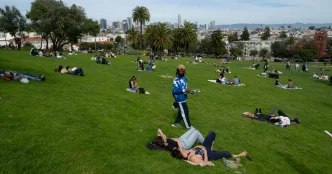
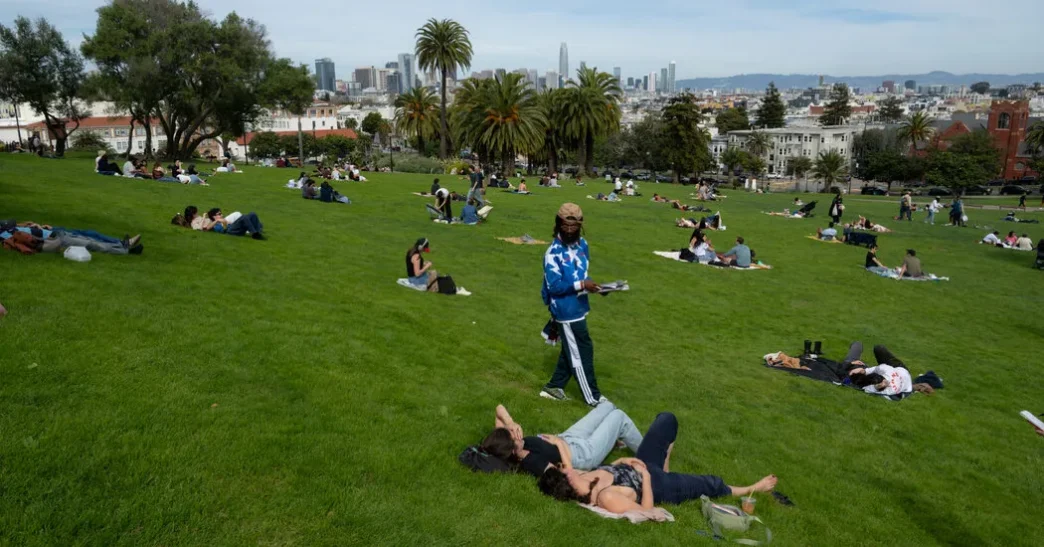
Dederek Huff scanned the grassy hillside of Dolores Park in San Francisco one day this spring and saw dozens of people relaxing on picnic blankets and park benches.
To most people, it was an idyllic scene on a sunny day. To Mr. Huff, however, it was an opportunity to earn as much as $125 from each person in the park who would sign the stack of petitions under his arm.
“How y’all doing?” Mr. Huff asked as he approached a group of friends on a blanket. “Are you registered to vote?”
With his ease talking to strangers and his knack for reading a crowd, Mr. Huff used the same skills he said he had developed in a very different setting: selling party drugs on the Las Vegas Strip.
He had come to San Francisco because word had spread that campaigns were paying big money to place measures on the November ballot. So much, in fact, that Mr. Huff said he found he could make more money dealing democracy than dope.
“This is better than drug money,” said Mr. Huff, who has had drug-related arrests in Nevada, records show.
Mr. Huff was part of a small army of petition circulators who fanned out to shopping centers and street corners this spring, becoming the main reason that the ballots sent to California voters this month are stuffed with statewide initiatives.
California’s direct democracy system began over a century ago as a populist reform meant to empower citizens and bypass the special interests that controlled the State Legislature. Over the years, though, ballot measures have morphed into a sprawling industry fueled by moneyed interests that spend whatever it takes to put their ideas before voters.
This year, campaigns had to collect nearly 900,000 valid signatures to qualify a measure for the November ballot. To hit that number, most initiative efforts had to hire companies that specialize in this slice of the political process. The firms, in turn, contracted with smaller companies that paid people like Mr. Huff for each verified signature.
A flurry of spending was set off in January when a health care workers union began circulating petitions to put the billionaire tax on the ballot. That prompted a coalition of billionaires to flood the marketplace with three countermeasures that could void the tax initiative if they were to receive more votes in November.
Campaigns paid as much as $15 per signature, drawing a raft of enterprising workers — and some alleged fraudsters — to take part in this political underworld. It turned into a bonanza for workers like Mr. Huff, who said he made $43,000 in three months.
“That’s the most money I’ve made in three months of my life,” said Mr. Huff, 38.
All told, California ballot measure campaigns spent $126.5 million on circulating petitions during the first half of the year, four times as much as they spent in the same period in 2024, the last regular election year, according to state campaign finance reports.
As the price per signature doubled in March, a Facebook group for petition circulators lit up with excitement. Commenters called it a legendary season and punctuated their posts with money bag emojis. They shared pictures of invoices for tens of thousands of dollars as they submitted heaps of petitions. Employers recruited circulators from other parts of the country, sometimes offering housing or transportation.
But reports of bad actors and concerns of fraud also permeated the group. Workers posted warnings about managers who didn’t pay them and people who stole signed petitions. Some veteran petitioners expressed fear that the high price for signatures this year was spurring scams.
Things become so frenzied that men in ski masks handed out $5 bills and slices of pizza to people who signed petitions in a San Francisco neighborhood known for drug addiction and homelessness. And last month, three people were criminally charged after they were accused of paying people to sign petitions using stolen identities on Skid Row in Los Angeles.
The enforcer
In one pocket of Southern California, an experienced circulator with the biblical-sounding name of Third Corinthians Walker tried to instill some order. He confronted petition circulators who gave misleading information to voters or offered illegal giveaways. Then he posted their photos on the Facebook group and cited the laws he contended they were violating.
“This was the most hectic season I ever been in, in 25 years,” said Mr. Walker, 46, who lives in Redlands, Calif., about 60 miles east of downtown Los Angeles.
A lot of what he saw fell short of criminal behavior but broke the unspoken code of signature gathering, Mr. Walker said.
There were petitioners who set up tables at 2 a.m. to claim the best spot at a shopping center hours before stores opened. The “turf jumpers” who encroached on spots that other petitioners had already claimed. The “runners” who roamed parking lots and approached people as they got out of their cars.
Mr. Walker grew up in Kansas City, Mo. By the time he was 21, his felony record of gun and drug charges made it difficult to find employment. Feeling desperate, Mr. Walker saw a newspaper ad for a job promising $100 a day and went to an orientation on circulating petitions.
Over time, the work took him to places that he might never have otherwise seen: Florida, Nebraska, Ohio and, eventually, California.
“I felt like it was a blessing from the Lord,” Mr. Walker said.
Now, he runs his petition business with his mother, Melba Walker. They share a home in Southern California where, during the busy season, stacks of petitions covered the coffee table.
Mr. Walker likes the autonomy that comes with his profession, the ability to set his own hours and choose where he spends his time. He said he varies his pitch depending on the politics of the region. When he petitioned in a conservative area this year, he often led with the anti-tax measures; in liberal neighborhoods, he tended to start with the billionaire tax.
Now that it’s the offseason for petitioners, Mr. Walker keeps busy by playing video games and making graphic designs with Christian themes. He is also helping his mother write a book about their experiences as signature gatherers.
In San Francisco, Alex Carpenter, 49, made his first foray into petitioning this year after work dried up on the Northern California cannabis farm where he had spent the last several years.
Signature gathering appealed to Mr. Carpenter’s liberal activist streak, so he set up a table on a bustling corner near Golden Gate Park. It was close to his favorite coffee shop and had a lamppost where he could do pull-ups during lulls in foot traffic. He scrawled “Tax Billionaire$?” on a piece of card stock and taped it to the side of his table.
Many of the petitions on his clipboards represented causes Mr. Carpenter believed in. He liked the proposals to tax billionaires to fund health care, extend a tax hike on high-income earners to fund education and raise sales taxes to fund Bay Area transit. He focused on getting signatures for those initiatives.
He said he was still able to make close to $200 an hour, even though he didn’t actively pursue signatures for the highest compensated proposals that were backed by billionaires. Still, Mr. Carpenter had petitions for those measures on his table, in case voters took the time to get to the bottom of his stack of clipboards.
“I’m trying to make a living,” he said. “I would love to see them make it to the polls and fail.”
Have clipboards, will travel
Mr. Huff, the petition circulator who sought signatures from voters in Dolores Park, also has strong political views.
He is a conservative and considers himself a part of President Trump’s MAGA movement. He has had an interest in politics ever since he was a teenager growing up in Louisville, Ky., he said.
That didn’t stop him from trying to make as much cash as possible in San Francisco, one of the nation’s most Democratic cities and where Mr. Trump is deeply unpopular.
After he finished gathering signatures this spring, Mr. Huff returned home to Las Vegas, where he spent time with his family for several weeks and used some of his petition money to buy new furniture and get work done on his teeth.
Despite his conservative views, Mr. Huff said he would do petition work for any campaign that pays him. So when a friend offered him a job gathering signatures for liberal-backed initiatives in Colorado this summer, Mr. Huff packed his bags and went.
Then he heard that conservative interest groups were also paying for signatures in Colorado.
“‘Well, bro,’ I said, ‘You got to get me on both petitions,’” Mr. Huff recalled.
“If I’m going to Colorado, I need as much petitions in my hand as possible because, of course, I’m trying to make the most money.”
Jill Cowan contributed reporting from Los Angeles. Kitty Bennett contributed research.