Saudi Arabia attacks shut down oil pipelines, posing a threat to India as crude oil prices soar

As the conflict in the Middle East intensifies, Saudi Arabia has hit pause on its East-West oil pipeline—a 1,200-kilometer artery that once carried four to five million barrels of oil each day. The immediate fallout? Brent crude surged to nearly $108 per barrel and has stubbornly hovered around the $100 mark ever since. For India, which sources about 90% of its crude oil from abroad, much of it from Saudi Arabia, this is more than a distant headline. If oil prices stay north of $100 for long, the pressure will land squarely on India’s import bill, the rupee, and inflation.

The war’s ripple effects are now playing out in real time on the global oil market. After an airstrike, Saudi Arabia preemptively closed its vital East-West pipeline, stoking fresh anxiety over oil supplies and sending crude prices sharply higher. As the world’s top oil exporter, any disruption in Saudi output is bound to make waves. For India, already grappling with expensive crude and a weakening rupee, the stakes just got higher.

1200 km long pipeline closed

According to Saudi Arabia’s Ministry of Energy, several attacks occurred on September 10th in the Riyadh and Medina sections of the East-West Pipeline. Following this, the pipeline was shut down as a precautionary measure. According to the ministry, emergency and technical teams immediately arrived at the scene and began assessing the pipeline’s safety and damage.

Stretching 1,200 kilometers across the Arabian Peninsula, the pipeline has been moving four to five million barrels of oil each day—roughly 4 to 5 percent of the world’s total supply, by most estimates. Yet, the Saudi government remains tight-lipped about how this shutdown will affect its overall exports.

No organization or country was immediately officially blamed for the attack. However, Saudi Arabia and Iraq have said the drone strike originated from Iraq. Iran-backed militias are active in Iraq. Following the attack, Iraq removed a military commander from his post on Saturday.
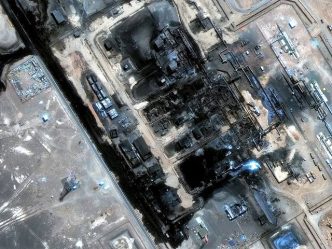
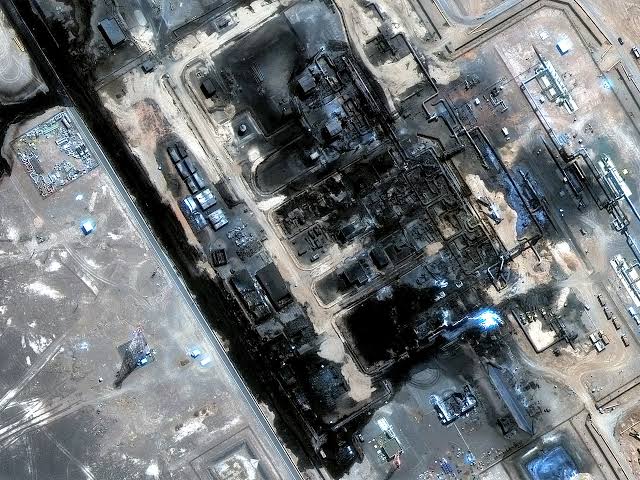
Satellite images showed black smoke rising from a section of the pipeline south of Medina. The Saudi Foreign Ministry said the attack caused damage and injured some people. A detailed assessment of the damage was underway.

Trouble already on the way to Hormuz

For Saudi Arabia, the East-West Pipeline is more than just infrastructure—it’s a strategic workaround to the Strait of Hormuz, a chokepoint that has seen tanker traffic snarled for months amid the ongoing Iran–U.S. standoff. On a typical day, nearly 20 percent of the worl’’s oil tradethreads its way through this narrow passage.e.

In moments like these, the pipeline offers Saudi Arabia a way to sidestep the bottlenecks at sea and keep oil flowing to its customers. But with this latest attack, the market is suddenly worried about the vulnerability of not just one, but several critical supply routes at once.

Bab-el-Mandeb also faces increased threat

Another major concern for the oil market is Yemen and the Bab al-Mandeb Strait. Iran-backed Houthi rebels have captured the port of Mocha on Yemen’s Red Sea coast, bringing them closer to the Bab al-Mandeb Strait.

This strait forms a crucial link in the chain connecting the Red Sea to Europe—a lifeline for oil and global commerce alike. Any serious disruption here would send shockwaves far beyond energy markets. Saudi-backed Yemeni forces are now scrambling to hold the line against the Houthi advance, threatening to unravel the fragile ceasefire struck in 2022. Meanwhile, oil prices have barely budged from the $100 mark, and at the height of the conflict, Brent crude even touched $125 per barrel.

Now, the fear is that if trouble escalates along the Strait of Hormuz or Bab-el-Mandeb, oil could once again break through the $120 barrier. In a worst-case scenario, some analysts warn, prices might even rocket to $150 per barrel.

The biggest concern for India is the oil import bill.

India is the world’s third-largest oil consumer and buys approximately 90% of its crude oil needs from abroad. This is why rising international oil prices directly impact India’s import bill.

From April to July, India’s crude oil import bill soared by over 56 percent, hitting $63.4 billion—up from about $40.5 billion a year earlier. If oil stays above $100, the monthly tab will only grow, widening trade and current account deficits and piling more pressure on the rupee.

Why is Saudi Arabia important for India?

For years, India has relied heavily on West Asian crude, with Saudi Arabia supplying about 13 percent of its imports last year. But now, Russian oil has emerged as a significant alternative.

In August, India imported around 2.1 million barrels of Russian crude each day—roughly 45 percent of its total oil intake. That share may dip a bit this month, but Russia is still on track to cover about 40 percent of India’s needs.

This gives India a slight edge over countries more dependent on Gulf oil shipped by sea. Still, no one is insulated from the sting of rising prices.

China’s rising oil purchases pose a challenge to India

India faces another headache: China’s appetite for oil is growing. While Russian crude remains a lifeline for India, China is stepping up its own purchases from Russia and elsewhere. Analytics firm Kpler notes that Chinese refineries are ramping up orders. If both giants start bidding for the same barrels, prices could climb even higher.

Difficulty facing the government

Soaring crude prices leave the Indian government with a tough call: hold petrol and diesel prices steady and risk ballooning losses for state-run oil firms, or raise prices at the pump and stoke inflation. Refiners are already feeling the pinch. There’s no easy way out.
The impact of higher oil prices won’t be limited to petrol and dThe fallout from pricier oil doesn’t stop at the fuel pump. Higher oil and gas prices also drive up fertilizer production costs, adding to the government’s subsidy burden. fertilizer subsidies this fiscal year. Officials estimate this expenditure could nearly double if energy prices remain high for a prolonged period. This means that higher crude oil prices could have multiple impacts, from the government’s coffers to farmers.

Will there be an oil shortage in India?

Right now, India’s challenge isn’t a shortage of oil, but the price tag. Russian supplies offer some cushion against Gulf disruptions, and India can still tap other sources. But if the conflict drags on and key sea routes stay at risk, global supplies could tighten and prices could climb. That would mean a bigger import bill, more strain on the rupee, and a tougher battle to keep inflation in check.

The attack on Saudi Arabia’s pipeline is more than a blow to one nation’s infrastructure—it’s a stark reminder of just how fragile the global energy system has become, especially with both the Strait of Hormuz and Bab-el-Mandeb under strain. Russian oil may offer India some breathing room, but if crude stays above $100, the combination of costly imports, a sliding rupee, rising inflation, and ballooning government spending could spell real trouble for the economy.


Add a Comment

Leave a Reply

Your email address will not be published. Required fields are marked *

Keep Up to Date with the Most Important News

By pressing the Subscribe button, you confirm that you have read and are agreeing to our Privacy Policy and Terms of Use
Wired Terra