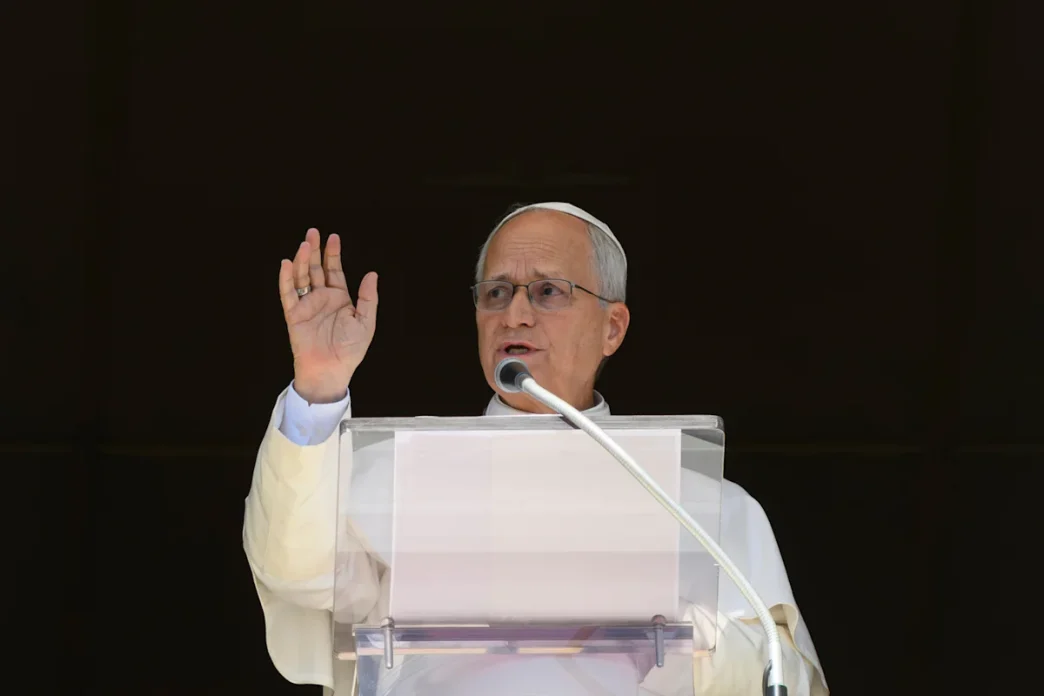
Pope Leo XIV has been diagnosed with lung cancer after having surgery to remove a nodule, or growth, on his right lung, according to a statement the Vatican shared with CBS News. The Vatican noted that his diagnosis of pulmonary adenocarcinoma was “as suspected from pre-operative tests.”
During the 90-minute surgery, doctors at Rome’s Gemelli Hospital ultimately removed the lower lobe of his lung. It’s called a “radical resection,” as the Vatican noted, and is designed to completely remove the cancer. It’s not yet clear what stage the pope’s cancer is or whether he may require further treatment. Determining that will require further testing of the tumor. But for the 71-year-old pontiff, the first step — and a critically important one, experts tell Yahoo — is to recover.
As extreme as the procedure sounds, life without part of a lung can be surprisingly normal, according to two experts.
The lobes of the lungs
There are a total of five lobes, or sections, in a pair of lungs: three in the right lung and two in the left. Pope Leo XIV’s surgery removed approximately 20% of his total lung tissue, estimates Dr. Sudish Murthy, section chair of thoracic surgery at Cleveland Clinic, who was not involved in the pope’s care.
Advertisement
Advertisement
The lower lobes of the lungs receive slightly more blood flow than the upper ones because of gravity, Murthy explained. “But they all do essentially the same function, so if you have one lobe taken out, you would not lose some unique aspect of lung function,” he tells Yahoo.
Why is a lobe removed?
The initial announcement of Pope Leo XIV’s surgery said that it was purely to remove a nodule. However, Murthy and Dr. Thomas Bauer, chief of thoracic surgery at Jersey Shore University Medical Center, say that the very fact that he was scheduled for surgery to remove the nodule means that his doctors already suspected cancer (as noted in the Vatican’s later statement).
“It’s frequently known preoperatively, but ultimately the final decision is made by the surgeon,” based on the size and location of the abnormality, and what doctors discover during the operation, Bauer explains. “So I’ve got to believe they had a strong indication preoperatively that this was going to be the case,” he adds.
Lung nodules themselves are very common, and the vast majority — about 95% — are benign. The American Thoracic Society estimates that a lung nodule will eventually be detected in around half of adults who undergo chest X-rays or CT scans. Research shows they’re even found in 42% of non-smokers aged 45 or older. Nodules are typically too small to cause any symptoms. If a nodule looks suspicious or grows over time, doctors may take a sample of it to see if it’s cancerous, but most people don’t have to undergo this test.
Advertisement
Advertisement
When health care providers determine that a nodule should be removed, it means two things: It’s suspected to be cancerous, and the patient is healthy enough to recover from surgery. The fact that the pope underwent surgery “suggests that he has sufficient vigorous vitality to be able to tolerate it,” Murthy says.
Doctors look at factors like the patient’s pulmonary, or lung, function, their cardiovascular health and overall health and fitness — including what Murthy calls “the eyeball test,” adding: “You know illness when you see it, but you know health when you see it too.”
The pope is not known to be a smoker, has not been reported to have any other health conditions and lives an active life traveling and playing tennis, according to Reuters.
What is life like after losing a lobe?
After the removal of the lower lobe of his right lung, Bauer, who was not involved in the pope’s treatment, estimates that the pope will lose about 20% of his lung function.
Advertisement
Advertisement
But you may be surprised to learn — as this health reporter was — that “for most healthy people, this will not limit [their] ability afterward,” he adds. Bauer has had patients who went on to run marathons after having a lobe of their lung removed.
That’s because the lungs have a built-in redundancy, and most of us aren’t using them to their full potential. Bauer might ask a patient what their normal 10-mile runtime is, and they will respond that they don’t run that far. The “reserve” of lung function is likely enough to support an otherwise healthy person’s activities, he says. For a competitive cyclist, however, losing even a small share of their lung capacity can have dramatic effects on their high-intensity performance. But “going to work, going to church meetings, traveling, as the pope does — he is probably going to be able to get back to that,” Bauer says.
In fact, “at a month [post-op], you can get back to work,” he notes.
The pope’s treatment plan will depend on the results of the pathology performed on the removed tumor and surrounding lymph nodes. But based on the information released by the Vatican thus far, Bauer says the pontiff probably has an early-stage lung cancer “that likely will not require further treatment.”
Advertisement
Advertisement
The words “lung cancer’ or even “lung nodule” can be scary, and some people avoid getting checked due to fear and the stigma around smoking. Others simply don’t know they’re eligible: Surveys suggest as many as 84% of people at high risk for lung cancer don’t know about the only screening method: a low-dose CT scan.
Screening is recommended for adults ages 50 to 80 who have a smoking history of at least 20 pack-years (meaning, they smoked about a pack a day for 20 years), currently smoke or quit within the past 15 years. But fewer than 20% of those who meet the criteria actually get screened with a chest CT, which is often covered by Medicare.
Lung cancers caught by preventive CT scans before symptoms arise are typically early-stage diseases and have very good prognoses. When lung cancer is caught by screening at this stage and fully removed by surgery, 80% or more of patients are still alive five years later, according to Murthy and some studies.
Even without part of a lung, they can go on to “enjoy what I consider a fairly normal lifestyle after recovery,” says Murthy.