One meal, two people. Before first responders arrived, one of the diners turned his phone over and placed it on the tablecloth facing the screen. Those who interpret it as unbeliefBut the explanation is different: he wants Get rid of notifications and incoming calls And constant pressure is available at all times. At the end of the day, it’s just an explanation, and it’s not supported by any scientific tests that study its motivations.
What is researched is through experiments Effects of having a cell phone in sight.
At the University of Essex, Andrew Przybylski and Netta Weinstein They conducted an experiment with a pair of strangers who talked to each other for ten minutes with either a phone or a notebook on a nearby table.
In their work, published in the Journal of Social and Personal Relations, the telephone was associated with less intimacy and lower quality conversations, and in a second experiment, with less trust and empathy, though only when they were talking about something personal: There was no difference with a trivial matter. Then another group of scientists, now out of the UK, brought the comparison into real conversation.
Shalini Mishra of Virginia Techobserved 100 real conversations between two people in informal settings. Those that took place without any visible device were rated better. “Eye contact decreases in the presence of mobile devices”Researcher brief.
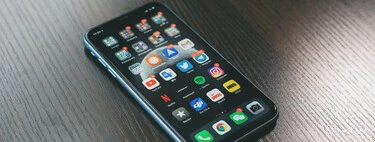
Matt Johnson, Professor at Hult International Business Schoolcompiled some of these works in his essay ‘The Psychology of the Face-Down Phone’. According to the experiments it collected, it is not necessary to use the device to influence attention and the more difficult the task, the more pronounced the effect.
Also reviews its experiments Elizabeth Dunn (University of British Columbia): Sitting in a coffee shop in groups of three to five, those with their phones on the table (anyone can do this!) felt more distracted and enjoyed the encounter much less.
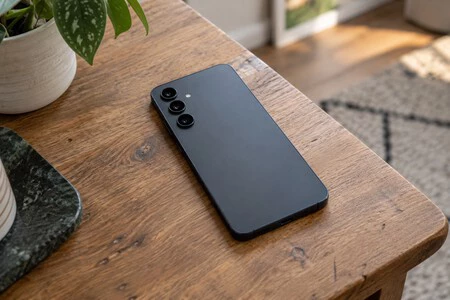
And what’s with the habit of putting your cell phone face down?
The best-known test for this is that of “cognitive loss” (“brain drain”). Adrian Ward of the University of Texas at Austin and colleaguesin which 520 students took a series of memory and reasoning tests. The cell phone was placed either in another room, or in the participant’s pocket or bag, or on the table, where they were instructed to place it face down at a marked spot on the desk.
Those who put it on the table were the ones who did the worst on the test. According to work published in 2017, the mere presence of a smartphone reduces available cognitive capacity, even when it is not being used or thought about.
Those who placed it in another room had the best resultsThose in the pocket or purse receive intermediate results. Turn the phone over and the issue remains there. In a second experiment from the same work, the effect was maintained by turning off the phone completely, which was reviewed in May 2026.
Is the evidence enough?
not at all A direct replication of the experiment University of Western OntarioPublished in Acta Psychologica in October 2022, it was found that the effect was not replicated: there was no difference between keeping the cell phone on the table, in the pocket or outdoors.
However, a University of Augsburg team A meta-analysis published in Behavioral Science in September 2023 pooled 22 studies and found effects, particularly its test Memory and attentionWeaker in general work and stronger in research done in Asia than in Europe and North America.
Also, caution is advised when drawing conclusions about who keeps their cell phones face down, as they may do so for a variety of reasons: education, habit, or pure convenience.
How gestures serve something else
The easiest way to turn off your phone is to silence it. This option is available on Google Pixel phones function Mute when turningThat arrived on the Pixel 2 in November 2019 with a Digital Wellbeing update and enabled Do Not Disturb mode when you put the phone face down.
D iPhone owners do not have this feature built-inBut focus mode can be activated manually or programmed to turn on itself at a specific time. The latter is useful if there is a specific time of meal or meeting.

Finally, there is no setting, neither on iPhone nor Android, that eliminates the distraction of having your phone nearby during meals or meetings. In experiments at the University of Texas at Austin, what worked best was to put the phone in another room; The Western Ontario replication did not find that difference, and the Augsburg meta-analysis found effects, particularly in memory and attention.
Picture | Image GPT