By Joe Brock
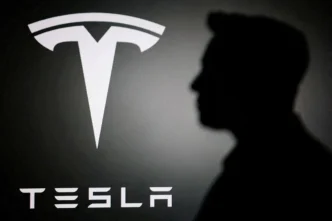
Oct 21 (Reuters) – Elon Musk believes a merger between Tesla and SpaceX is a good idea, he said on Tuesday, publicly backing an idea that would create one of the most valuable companies in the world, worth about $3.5 trillion.
While electric-vehicle maker Tesla and rocket company SpaceX were once seen as largely separate businesses, the lines between them have blurred as Musk expands into artificial intelligence, robotics, advanced manufacturing, satellite communications, and computing infrastructure, including data centers on Earth and potentially in orbit.
Here’s what a potential merger could mean:
WHY WOULD MUSK DO THIS?
A merger would create a single company at the center of Musk’s long-term vision: an integrated technology and manufacturing empire spanning AI, energy, robotics, communications, and transportation on Earth and beyond.
“I do think there’s a lot of merit to combining the companies as we are pretty much in the superintelligence singularity, and there’s a lot to be gained from cooperating on developing superintelligence software, chip design, the Terafab obviously, robotics, mass-to-orbit with the Starmind constellation (of orbital data centers), connectivity,” Musk said on Tuesday.
Bringing the companies together could also simplify decision-making. Many of Musk’s projects already cut across multiple companies, requiring approvals from separate boards and shareholders. A combined company would give management more freedom to deploy capital, engineering talent and infrastructure where it sees the greatest opportunity.
Musk has long argued that he needs greater influence over Tesla to pursue its AI and robotics strategy. He owns nearly a fifth of Tesla and holds voting control at SpaceX. A merger could consolidate his influence.
WHAT DOES IT MEAN FOR INVESTORS?
Tesla shareholders would gain access to SpaceX’s rapidly growing Starlink broadband operation, launch services business and future space ventures. SpaceX investors would gain ownership of Tesla’s vehicle, energy storage, autonomous driving and robotics businesses.
A merged company could also become one of the world’s most valuable corporations, with a market value of about $3.5 trillion, combining leadership positions in automobiles, robotics, satellite communications, launch services, energy storage and AI infrastructure.
Supporters would likely argue that the combined company could allocate capital more efficiently across businesses that are increasingly interdependent.
Critics, however, argue that investors would be assuming exposure to a much broader range of technical, regulatory and execution risks, some of which have little connection to one another.