Opposition to data centers, an issue barely on anyone’s radar in the 2024 election, has now united voters across the political spectrum.
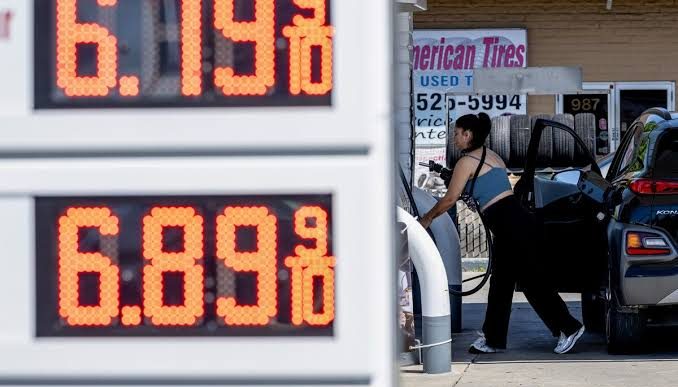
According to a May Gallup poll, more than 70% of Americans are opposed to AI data center construction in their local area. It makes sense when you consider that this midterms cycle is heavily focused on rising living costs. Data centers — facilities that store, process and distribute digital data, and have become more common in the AI era — use up massive amounts of water and electricity, raising concerns that the costs will be passed down to local communities in the form of electric bill hikes and water rate increases.
The Data Center Opposition Project, which tracks the rise of grassroots nonprofits in the U.S. that are against the development of data centers, recently found that more than 200 new groups popped up between June and August of this year, suggesting the issue has salience with voters across the country.
Advertisement
Advertisement
Heading into the midterms, that could be a major problem for candidates and incumbents who have supported data center projects. And in many cases, their opponents are making sure voters are well aware of their positions.

Yahoo
President Trump has strongly supported data centers. He views them as key to winning the AI race against China, but also for economic growth and the creation of local jobs. “If they want to be successful and rich, with far lower taxes and jobs all over the place, let Data Reign,” he wrote in an August Truth Social post. On the flip side, progressives like Rep. Alexandria Ocasio-Cortez and Sen. Bernie Sanders have proposed a national moratorium on new AI data centers “until strong national safeguards are in place.”
Ohio will soon be home to what the Trump administration calls the “world’s largest AI data center.” SB Energy, a development company, will build and own the site, with OpenAI leasing it for 20 years. Nvidia announced a $1.5 billion investment in SB Energy as part of the deal. The PORTS-Pike Technology Campus, as the Ohio data center project is known, is slated to begin construction this year. And like many data centers, it’s in a rural area near Piketon, a village of roughly 2,200 residents about 70 miles south of Columbus, where there is ample space for the sprawling facility.

From left: Masayoshi Son, chairman and CEO of SoftBank Group Corp., and Commerce Secretary Howard Lutnick at a groundbreaking for a new data center in Piketon, Ohio.
(ASSOCIATED PRESS)Residents there have mixed feelings about the project. Some are being offered significant sums of money for their properties, which may mean a piece of land that’s been in their family for generations. Samantha McCaughey, a barista at the Village Brew Coffee House in Piketon, told Yahoo that her grandfather is weighing a six-figure offer for the family’s nearly 100-acre property near the data center site.
Advertisement
Advertisement
“They’ve lived there their whole life, so it’s really difficult for them,” McCaughey said. “They’re still kind of on the fence, but I mean, with everything going on, is it worth even staying if everything is changing?”
Data centers turn political in Ohio
In June, a citizen-led effort to put a statewide data center ban on the November ballot fell short. However, 18 communities in Ohio will have data center measures on their local ballots this year. Half of the petitions ask voters to decide whether to ban any centers that draw more than 25 megawatts of energy from the local grid per month. And there are more than 100 moratoriums on new data centers in communities across the state. An August poll from Bowling Green State University found 78% of Ohioans support these temporary moratoriums.
Ohio ranks fourth among states with the most operational data centers, and the issue has been a centerpiece of former Democratic Sen. Sherrod Brown’s ad campaign against incumbent Republican Sen. Jon Husted. An AdImpact analysis of spending on campaign ads this cycle found Democrats far outspent Republicans on data center-themed ads, with most of them either attacking the centers or linking a candidate to the center’s potential negative impacts. Brown’s campaign spent $2.4 million on data center-themed ads. Those included attacks on Husted for his past support of data centers, repeating the label given to him as “the face of data centers in Ohio.” In recent months, however, Husted has worked to put guardrails on them.

Democratic U.S. Senate candidate Sherrod Brown speaks during a campaign rally on Oct. 17, 2026.
(Michael M. Santiago via Getty Images)“They’re devouring our farmland, sucking up our water, and using our energy,” Brown says in one ad, where he accuses Husted of giving huge tax breaks to companies like Meta, which is building a 715,000-square-foot data center in northwest Ohio. “I’m fighting to give you a voice to make sure these data centers don’t flood our communities and raise our electric rates.”
Advertisement
Advertisement
And indeed, the water and electricity-guzzling facilities are needed to power artificial intelligence. According to a 2025 report from the International Energy Agency, the typical AI data center consumes as much electricity as 100,000 households every year. The agency predicts the largest data centers under construction will use 20 times that amount.
The facilities also consume vast amounts of water, in part because they need to cool their processor chips. According to the Environmental and Energy Study Institute, large data centers may use up to five million gallons of water per day. A Bloomberg analysis found that in areas with “significant data center activity,” wholesale electricity prices rose as much as 267% from 2020 to 2025. Those costs are being passed along to utility customers.

A drone captures construction underway on Meta’s new data center in Middleton Township, Ohio, in May 2026.
(REUTERS / REUTERS)Axios reported in August that an internal memo from the National Republican Senatorial Committee said strong opposition to data centers had become damaging to Husted’s reelection bid. In addition, the race may be a warning signal for other candidates. “If [Husted] loses and data centers get the blame, politicians across the country will take notice — and they will not go near the next one,” the memo says. “This has become a sleeper issue for the entire election cycle.”
Recent polling averages show Brown leading Husted by around 3 percentage points and the nonpartisan Cook Political Report has rated the race as a toss up.
Advertisement
Advertisement
Husted’s campaign secretary, Tom Evans, noted in an email to Yahoo that Husted had introduced the Senate companion bill to the Ratepayer Protection Act (RPA), which passed the U.S. House on Sept. 16 by a vote of 417-3. The RPA would require state utility regulators to consider adopting a federal standard under which large data centers would cover the extra costs of upgrades — potentially preventing those costs from getting passed along to other customers.
A vote on Husted’s bill was blocked by Senate Democrats, who said it didn’t go far enough. “Sherrod Brown and his friends would rather play politics and stick Ohio families with higher electric bills than pass a commonsense solution,” Evans said to Yahoo, pointing to Brown’s earlier support of a data center project in 2015.

Sen. Jon Husted campaigns in Ohio on Oct. 15, 2026.
(Jeff Swensen via Getty Images)While some Ohio communities have pushed back hard against new data centers, in Piketon, locals still seem uncertain.
“Residents have been asking good questions — hard questions — about data centers and we are asking good, hard questions too,” Pike County Commissioner Tony Montgomery told Yahoo. “We have set no deadline on considering this project and have involved public officials throughout the county in our review.”
Weighing the costs
McCaughey said she likes Piketon’s “cozy” vibe and is a little wary of the coming growth, but that she sees the upside as well. “It’s cool seeing how things are going to grow and how many people are going to have jobs that might otherwise have been struggling,” she said.
Advertisement
Advertisement
Local officials say they expect an estimated 35,000 temporary construction jobs and 2,500 permanent jobs to be created. Meanwhile, data center operators argue that when one of them enters a community, other businesses, including tech companies, financial institutions and retail companies, usually follow.
Brown told Yahoo that local governments shouldn’t offer tax breaks as incentives for developers to build data centers in their communities. “They’re billionaires. They don’t need tax breaks to come in,” he said, adding that local residents should have a say in decisions about data center proposals. “Local communities have just been run over in this.”
He added that local communities should make sure any agreements require data centers to pay for their own power usage.
When asked about rural landowners near data centers who are debating whether to sell or stay, Brown advised those who decide to sell to “make sure they drive a hard bargain, and that [the data centers] are responsible with the land.”
Data centers take center stage in the midterms
Ohio isn’t the only state where data centers have become a political issue — and Brown isn’t the only candidate spotlighting his opponent’s support for them in the midterms races.
Advertisement
Advertisement
Democrat Abdul El-Sayed, who is running for the Senate in Michigan, has criticized his Republican opponent Mike Rogers for his investments in companies tied to data centers (the sound of a data center is all you hear in one of El-Sayed’s campaign ads). In August, Rogers called for a one-year moratorium on new data center development. Meanwhile, officials in Wayne County, which includes Detroit, recently voted to advance a proposed 1.5 million-square-foot Google data center.
In Florida, which ranks 12th among the states with the most data centers currently operating or planned, Democrat David Jolly and Republican Byron Donalds have both run ads on the issue in the gubernatorial race. Jolly has called for a moratorium and criticizes Donalds for receiving donations from AI and data center companies. Donalds has called for companies building the data centers to absorb their costs.
This is an idea that continues to gain traction even among those who support data center construction.
On Wednesday, Trump posted on Truth Social that he had “come to a very strong conclusion” — that new and large data centers should “make their own electricity, and give or sell excess back to the local community, or grid” if companies want to make them popular. The comment signals how prominent the issue has become for voters.
Advertisement
Advertisement
Some candidates have been hearing more from constituents concerned about proposed projects as they meet face-to-face. At a town hall in his southwestern Pennsylvania district on Oct. 17, Rep. Chris Deluzio said communities should have a voice in decisions related to data centers.
“I don’t think you should get steamrolled by these corporations,” Deluzio said. “There’s a lot of money in this industry. I don’t think they need our public money.”
Governors in some states that welcomed data centers have recently pumped the brakes in response to the public backlash. Gov. Josh Shapiro of Pennsylvania signed an executive order in August tightening permitting requirements for large data centers. The order requires local approval before certain new projects can receive state permits, and removes existing projects from the state’s fast-tracked permitting process. That provision applies to a $20 billion commitment Amazon made last year to build multiple AI data centers across the state, which Shapiro embraced at the time.

Anti-data center demonstrators protest at the Pennsylvania Capitol on Oct. 6, 2026.
(AP Photo/Marc Levy)And in Virginia — a state whose northern region has become known as Data Center Alley — Gov. Abigail Spanberger presented a set of legislative proposals that would curb data center development. Her “Data Center Accountability Framework” stops short of a statewide moratorium, but includes plans to lower energy costs, promote clean energy and put environmental protections in place. It would also bar non-disclosure agreements (NDAs) between local governments and data center developers. Many argue NDAs prevent residents from learning details of data center proposals until late in the process.
Advertisement
Advertisement
NDAs have been used in data center projects across Virginia, researchers at the University of Mary Washington found. And Virginia has had data centers long before the facilities became associated with AI. In 1998, two years after AOL moved into Loudoun County, Va., Equinix built the region’s first data center partly to help store the internet service provider’s data. Amazon built its first data center in Loudoun in 2006.
According to the county’s website, Loudoun boasts “the highest concentration of data centers anywhere in the world.” In fiscal year 2026, its data centers brought in $1.2 billion in property tax revenue, it says. That number is projected to climb to $1.3 billion, or 40% of the county’s overall budget, in 2027.
With the midterms looming, an October New York Times/Siena University poll found that while data centers are not the top issue for most Ohio voters, it’s a bigger midterm issue there than in four other states — Alaska, Iowa, Kansas and Texas — that were surveyed. Most Ohio voters are opposed to new data center construction, and more of them said they trusted Brown to handle the issue over Husted.
For her part, McCaughey said her family is accustomed to living in a rural area, and she doesn’t want to see that go away. “My dad loves going out and hunting and just being in the woods,” she said. “Knowing that it would be lost is really sad.”