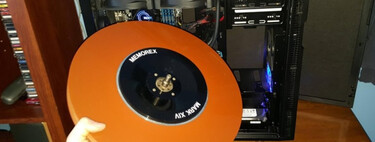
The concept of “throwing away” fully functional computer components that are nearly half a decade old may make little sense if we think about the second-hand market and even reducing electronic waste. For many companies, though, it makes sense, at least when it comes to hard drives.
Every year, millions of storage devices are forced to go to a single destination: destruction. And it doesn’t matter if they still work and even if sold, they can return a significant amount of money to their former owners. It’s a practice that never ceases to amaze at this point.
StellarInfo, based on data from the United States National Renewable Energy Laboratory (now renamed Rocky Mountain National Laboratory), notes that at least 20 million disks are destroyed annually in that country. This scenario is repeated over and over again in different parts of the world and usually has one thing in common: it is driven by companies and governments.
Names in the tech universe like Amazon, Microsoft and Google, as well as government departments or all kinds of offices, banks and security companies often rely on the destruction of storage devices as an effective and hassle-free solution to protect confidential data from ending up in the wrong hands.
As the Financial Times points out, these are business hard drives that are typically operated in data centers and are replaced after a certain period of time. And not necessarily at the end of their useful life, but about five years after purchase, when the warranty usually expires.
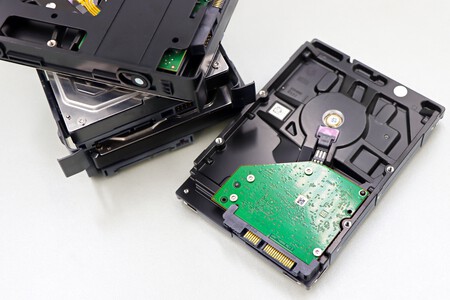
Those who practice such practices prefer, above all, Uninterrupted operation To avoid leakage of their systems and data, two situations that, if offending happens, can translate into million-dollar losses, either due to interruption of their services or fines for non-compliance with data protection.
The business of destroying everything
Faced with this scenario, an entire business has sprung up that aims to provide hard drive destruction services. Some companies, like Sims Lifecycle Services, even offer on-site destruction to keep hard drives from getting lost along the way, which is a real concern for some customers of these services.
Some experts, however, maintain that this type of practice is not the best option. If you really want to destroy data, there are digital ways to achieve this, which opens the door to safe reuse of devices. Faced with this situation, the IEEE Institute of Electrical and Electronics Engineers presented three possible options in 2022 with its IEEE 2883 standard.
In view of promoting the circular economy of storage media, it promotes various methods of secure data erasure (sanitization). Let’s, in general terms, look at each of their propositions.
From the IEEE they indicate that disk shedding methods are no longer available fully effective. That’s because, they say, sophisticated laboratory techniques offer the possibility of extracting data even from small 2-millimeter pieces of hard drive platters. Destruction should be used only after other methods have been applied, they suggest.

Although three options are presented, the institute highlights that the most important is purification. This is a method that prevents data recovery even using sophisticated equipment. And, since the disk is not destroyed, it can be reused, even outside the original owner’s orbit. Over time we will know if these options can improve.
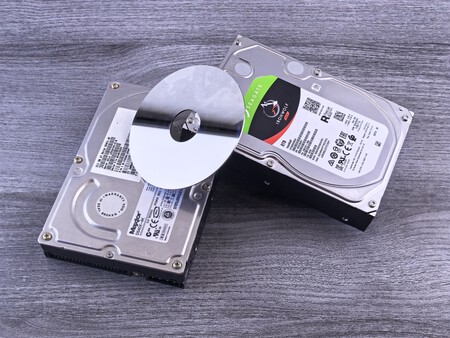
Since then, there has been a movement in that direction. In September 2025, the American NIST published Revision 2 of its Media Sanitation Guide (SP 800-88), which replaces the 2014 guide and is another reference that companies follow to certify removal. Some manufacturers also already sell remanufactured drives: Seagate opened an eBay store for 2024 erasures in accordance with IEEE 2883 and NIST guidelines, and claims it will have extended the life of about 1.19 million hard drives and SSDs in its 2023 fiscal year.
Big tech companies have also made a move, though not giving up on the piece. Microsoft says it will reuse or recycle 90.9% of servers and components in its data centers by 2024. Nevertheless, the pieces that store the data continue to be sanitized and crushed before the rest of the materials are separated. With Western Digital and other partners, it tested a process to recover neodymium and other rare earths from end-of-life discs.
Meanwhile, artificial intelligence has made hard drives scarce. In January 2026, Western Digital CEO Irving Tan said the company had sold virtually all of its production capacity for the year, with firm orders from seven of its largest customers and multi-year contracts extending into 2027 and 2028.
Picture | Panumas Nikhomkhai, Marta Branko, Andrey Matveev
In Xataka | Magnetic tape seemed like a relic. In the era of AI, LTO capacity has once again skyrocketed
In Xataka | The retail SSD market has all but disappeared. And it’s not like users have stopped buying them
In Xataka | Hard drives have many battles left to fight: we’ll have 50 TB units in the next decade