This gave me the first impression that this is a Xiaomi smart band made by Google. The exterior has some similarities, although the Fitbit Edge is aimed at a different audience: those who play sports and want an advanced device without being bulky. Also for those looking for a Fitbit Air with a screen: the Edge meets both audiences.
✅ Buy if…
- You love the Fitbit Air, but you miss a screen.
- You often play sports and are looking for a device for general measurements.
- You’re looking for a more compact device than a smartwatch.
- You want an accessory that measures your overall health with sufficient accuracy.
❌ Do not buy this if…
- You need a watch with apps and payments.
- You are seriously training for a sporting event.
- You are looking for an economic activity bracelet.
Essential within 30 seconds
Putting the Fitbit Edge on my wrist was like going back to the days when I wore a band: It is much more comfortable than wearing a smartwatch And I didn’t have to give up too much along the way. Google evolves the spirit of the first Fitbit to achieve a quality device, with everything needed to measure daily activity and ready for athletes starting weekly training.
Its great assets are lightness and comfort. It’s a flick of the wrist away from delivering all the information and stays with you for a week without going through a plug. It integrates wonderfully with Gemini and Google Health Premium Trainer, although some functions are paid: personalized training plans and advanced interpretation of data are part of a subscription (Google gives three months with the bracelet). This doesn’t mean that Fitbit Edge loses its usefulness if you don’t subscribe.
It’s a “basic” smartwatch for those who don’t want to sleep with a giant watch on their wrist. It’s a shame Google Wallet doesn’t include payments: if the Fitbit Edge had NFC, it would be a definite plus.
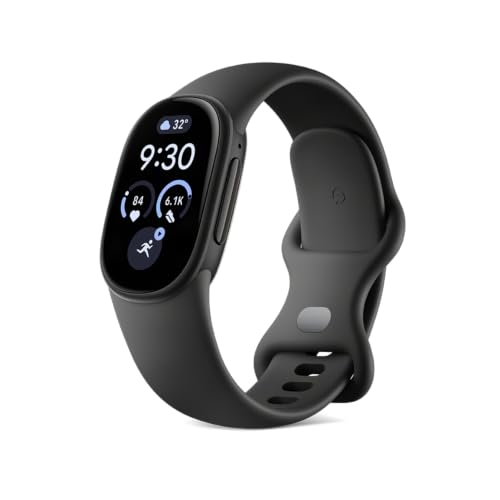
Google Fitbit Edge – Matte Black Case/Obsidian Sports Band | Activity bracelet, health coach, sleep tracking, intuitive screen, fast charging battery, Android and iOS
Prices may vary. We earn commission from these links
Our Experience with Fitbit Edge
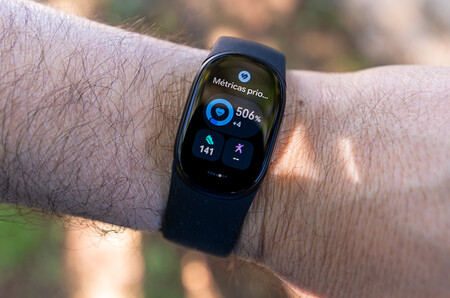
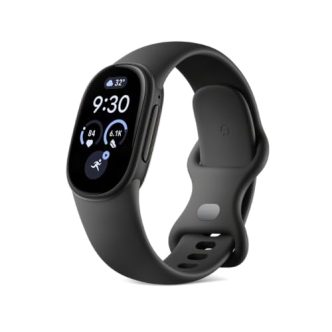
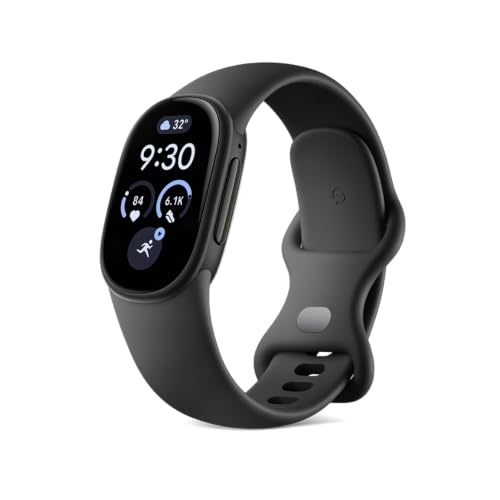
An oval tablet with a screen. The Fitbit Edge is a tablet with a screen and sensors on the bottom From the outside it doesn’t differ much from other similar models, although Google puts more effort into the screen: it looks sharp, it’s quite large for the format and the brightness seems adequate to me. I had some difficulty seeing what the screen was showing with lots of sun, I had to manually adjust the brightness. Google includes several collections of watchfaces and they can be customized in color and complexity. The design of these watch faces is of good quality: besides being informative, they suit the sporty and casual style of the bracelet.
Steroids are an activity bracelet. Google has incorporated its entire sports and health system into a compact, lightweight and comfortable wearable accessory. In addition to measuring steps and exercise, Fitbit Edge includes GPS positioning for running or cycling without carrying your phone. The measurement is not 100% accurate, I have seen a margin of error that can reach 50 meters per kilometer, but it seems to be enough for most athletes.
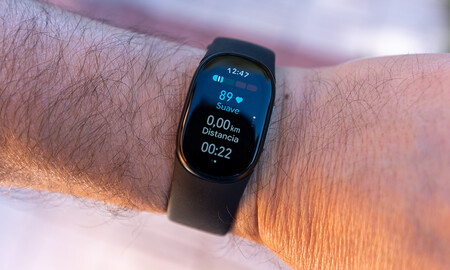
Measuring your fitness is your best asset: The Fitbit Edge is an activity bracelet that tracks your fitness and your health. It measures heart rate (its accuracy can be improved at higher pulse rates), SpO2, maximum VO2, respiratory variation, temperature variation, calculates recovery after training sessions and even two data published by Google Pixel Watch 5: insulin resistance and blood pressure, both as monthly trends (they are not collected based on trends). It even includes an ECG app with alerts for atrial fibrillation and irregular heartbeats. As an activity bracelet it is really complete.
Despite being a bracelet, the Fitbit Edge includes the functions of higher-end smartwatches: ECG, GPS and advanced sleep tracking.
A trainer on the wrist. The cache of sensors is significant, but you need to know how to read them. Gemini knows the way: interpretation of the data is not only included in the graph within the mobile app, but can also be requested from the coach. The system continuously summarizes physical conditions and is proactive (very proactive) in requesting information to improve data. With the convenience of having sports plans on demand. Do you want to train for a popular race? Ask the coach and he will make you a complete plan. Of course, under Google Health Premium, subscription. It’s not essential to get the most out of the Fitbit Edge, although it’s recommended.
Adequate battery, though without waste. Fitbit Air has a 65 mAh battery that holds up well for daily use. With step measurement, intermittent exercise and health tracking, you get through the week without too much effort. If the screen is always on and the GPS is abused, it can be three or four days or less. And it doesn’t recharge very quickly: its included magnetic charger revives the bracelet in just an hour and a half. I didn’t have to worry too much about charging it, although I didn’t forget to do it like the Xiaomi smart band. It offers an important feature: the battery can be easily changed.
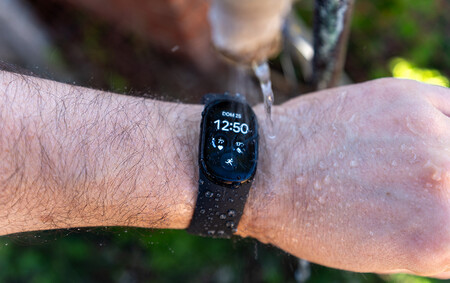
Fitbit Edge has IP68 certification: it can get wet without problems
Good interface and some bugs. This bracelet isn’t a watch, nor does it include anything close to Wear OS as Google software. Horizontal scrolling for different cards (configurable from mobile), and vertical scrolling for settings and notifications are comfortable and intuitive. In addition, Google includes a physical button that I find very convenient for this type of device: in addition to opening the application menu, it returns to the main screen.
The Fitbit Edge is much more complete and versatile than a regular activity bracelet. You can’t add apps, most of what’s there can stay. That’s more than enough for regular use, though I would have liked Google to include mobile payments, at least on Android: if I had access to Google Wallet, that would be the finishing touch. It makes sense that this is reserved for the Pixel Watch, but it would have been nice. And there’s one detail that stands out: it offers route directions from Google Maps. Go anywhere without looking at your phone.
Fitbit Edge technical sheet
|
Fitbit Edge |
|
|---|---|
|
screen |
1.34-inch (34mm) color AMOLED Always on and adjustable brightness |
|
Dimensions and weight |
39.22 × 25.56 × 11.58 mm 17.7 grams without strap |
|
processor |
Ambiq AP5 MCU |
|
memories |
64 MB or flash memory Detailed activity log for 7 days and daily totals for 30 days |
|
sensor |
Accelerometer and gyroscope Altimeter Optical heart rate sensor Electrical sensors for ECG SpO2 is the blood oxygen sensor Skin temperature Ambient light |
|
health |
Constant heartbeat EKG Irregular rhythm alert Advanced sleep tracking Menstrual cycle tracking Menstrual blood pressure trends Tendency to monthly insulin resistance |
|
sport |
More than 40 exercise modes with automatic recognition GPS for outdoor training VO2Max Cardiovascular load recovery level steps and distances Speed and minutes in the active zone |
|
battery |
65mAh Up to 7 days of autonomy Full charge in about 90 minutes 5 minutes charge for up to one day of usage |
|
connection |
Bluetooth 5.4 GPS, Galileo, GLONASS, BeiDou and QZSS |
|
compatibility |
Android 11 or later iOS 16.4 or later Requires Google Account and Google Health app |
|
Materials and belts |
100% recycled aluminum housing Silicone sports strap for wrists from 130 to 210 mm |
|
Endurance |
5ATM IP68 certification |
|
others |
Mechanical side button Notifications, quick response and multimedia control User replaceable battery USB-C charging cable included Some features require Google Health Premium |
|
PRICE |
From 179.99 euros |
Fitbit Edge, review by Xataka
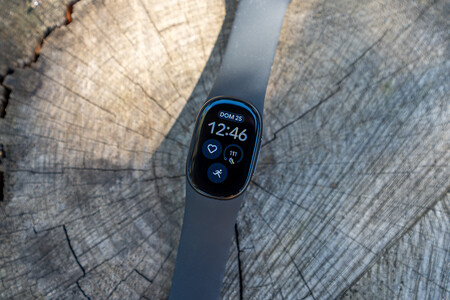
It looks like an activity bracelet and has the spirit of a sports watch. It can satisfy those athletes who are looking for a Comprehensive fitness trackingThe Fitbit Edge measures a good number of body variables. With Google Health Premium Trainer benefits: In addition to accurately interpreting data, you can create any training plan in seconds. At the cost of the relevant subscription (included if you have Google AI Pro).
Google designed this device for those interested in the Fitbit Air or the Hoop who aren’t satisfied with viewing information on a mobile screen (my least favorite thing about these types of wearables). The Fitbit Edge panel lets you see the clock, exercise, and even notifications. It’s a little bigger than an Air, but not by much.
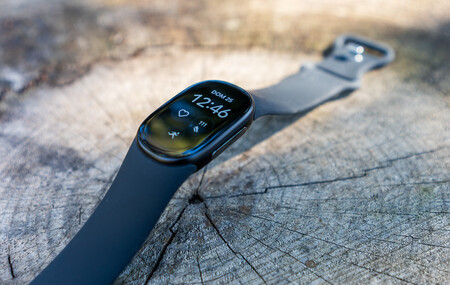
It may seem like just another activity bracelet and the price is exaggerated compared to the Xiaomi Smart Band or similar. The truth is that Fitbit Edge goes much further: the set of measurements it includes is at the level of the best smartwatches Measurements may be less accurate in certain situations, such as during high-intensity training.
Do I recommend it to you?
Its cost can be a hindrance in a segment accustomed to low prices. It includes one of the best sports and health tracking I’ve ever tried on a device of its type, better than many top watches. If you’re looking for a complete wearable without carrying the weight and bulk of a smartwatch, I’d recommend it. It’s a shame it doesn’t include mobile payments, because if it had NFC, the Fitbit Edge would be the definitive activity bracelet.
Picture | Xataka
In Xataka | Best Sports Watches with GPS 2026: Which to Buy and Six Recommended Models
This device has been provided by Google for testing. You can check how we review Xataka and our relationship with companies policy.