The announcement of the Vistalegre Tenants Union’s next big event ends with a seemingly innocuous line that we’ve seen crown many other types of events: “Tickets on Ticketmaster.” A phrase that has become perfectly acceptable even among codex protesters who run unions, and it doesn’t scream us at this collaboration between an anti-capitalist group and a brand that a New York jury has declared an illegal monopoly.
event The Madrid Tenants’ Union announced an event on November 15, four days after the 11th general strike, with slogans against those who “want to make money” from other people’s work. ‘Union Power: The Future is with Housing’ will include performances by Amaral, Bijnaga, Metrica and Parqueshvar. After that, the possibility to buy tickets on Ticketmaster for €16.50 (including €1.50 administration fee). Even the possibility of paying for a place in the symbolic Fila Ciro, a donation without access to the prevention fund with which the fines to stop the evictions are paid, is, among other things, done through the controversial ticket exchange.
Ticketmaster as an intermediary in the sale of tickets, prices and attendance at events has sparked a lot of criticism on the union’s profiles on social networks. Regardless of the price argument (inevitable with so many performances by so many well-known artists), the event makes one thing clear above all else: the reach of ticket holders approaches absolute universality.

Jump to Spain. Much of this reach in Spain came through the April 2011 purchase of Live Nation’s ticketing division by Serviticket, the company behind ServiCaixa, La Caixa’s ticketing company. In 2010, it processed more than 43 million tickets, making it the country’s leading ticket operator. The operation included an agreement to continue selling at the bank’s 8,100 ATMs.
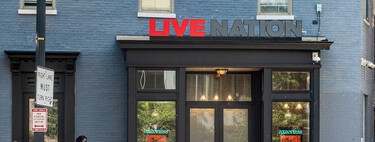
Today, however, the parent company’s scale is very different. Live Nation distributed 646 million tickets through its system in 2025, and Ticketmaster serves 10,500 customers worldwide. In July of this year, Live Nation Spain also ended a decade-long and extended alliance for musical programming at the Riyadh Air Metropolitano and other venues in the City of Sports. Ticketmaster is everywhere. Like Thanos, it’s inevitable.

The problem in the US. On April 15, a federal jury in New York found that Live Nation and Ticketmaster illegally monopolized ticket sales and the nation’s major amphitheaters. The case was opened in 2024 by the Department of Justice, which asked the company to split in two, and the jury calculated an additional cost of $1.72 per entry in 22 states. Eventually, Live Nation was forced to allow larger venues to opt for non-exclusive contracts and service fees were capped at 15%. The lawsuit continues and there is currently a petition to separate Ticketmaster and Live Nation, as it is estimated to have an 86% share of the US concert market.
All this makes Ticketmaster a colossus that is impossible to avoid. It’s the box office that’s taken for granted and enters the bottom line of a tweet against rentierism.
In Xataka | The battle for free entertainment: Why taking your sandwich to the festival is more important than you think