For many people, the wax that accumulates in our ears is disgusting and unnecessary, as it can cause blockages that reduce our ability to hear. But while for a large group of the population earwax is synonymous with a lack of hygiene, for biology it is a sophisticated biomechanical safety mechanism that prevents insects from colonizing our ears.
Two features. After studying the wax in our ears, researchers understood the complex mechanics behind it, since it was found that it has two properties that are apparently contradictory: it is slippery and sticky at the same time.
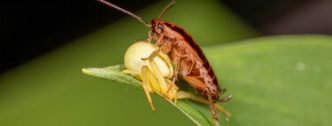
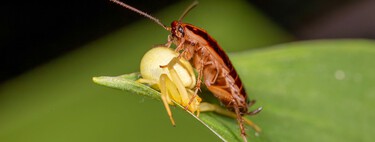
death trap To understand how earwax deters intruders, researchers have turned to biomimetics and behavioral experiments with ants. And we must remember that insects are exceptional climbers because they secrete sticky droplets on their feet, which allow them to defy gravity and walk on ceilings or vertical walls.
But the ear canal is a hostile terrain, since earwax is a hydrophilic, porous and viscoelastic substance. Thus, when an insect tries to walk on a layer of smooth wax, it immediately falls off, as the micropores of the wax absorb the sticky fluids secreted by the insect, nullifying its ability to grip.
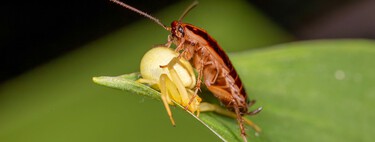
A nuance. On surfaces where the wax was rougher, the insects could dig their claws in to make a little progress, but they were slowed down and trapped by the viscosity of the medium. That is, hearing insects neutralize their adhesive “superpowers” by turning their own biology against them.
We look back. Fascination with earwax is not something that has just emerged for this research group, since it was already shown in 2017 that the secretion behaves like a non-Newtonian fluid. This means that it is thick and dense at rest, but when force is applied to it, such as when chewing, its viscosity decreases.
We now know that the life cycle of earwax lasts about 10 weeks, as it loses water and becomes increasingly brittle throughout its stay in the ear. And this is essential, as it allows it to detach itself, taking with it dirt, dead cells and trapped insects.
Resistor. Understanding the dynamics that earwax follows isn’t a common exercise of academic curiosity, but the team suggests that these discoveries open the door to a new generation of insecticides that aren’t so chemical.
It is important to highlight here that if we can artificially replicate this hydrophilic and porous structure that repels the sticky liquid of insects without resorting to toxins, we can create safer and more durable protective coatings for agriculture or homes.
Through this Phys
Picture | Taufiq Barbuiya
In Xataka | A mosquito just two millimeters in size is behind an outbreak of the Chamonda virus in France