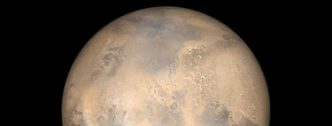
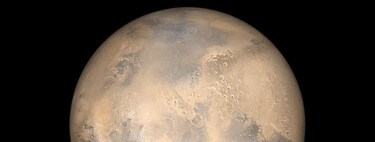
In 1975, NASA sent the Viking 1 and Viking 2 probes to Mars to search for possible signs of life. In order to know whether it was or was at one time a habitable planet, it was important to study both its geological structure and possible seismic events. For the latter, both probes had a seismometer. However, the first placed it poorly and the second interfered too much with determining whether an earthquake was actually being detected. Their signals were too difficult to reliably analyze, so they fell into oblivion. Now, 50 years later, a team of Chinese scientists decided to rescue them and found what may be the oldest existing recording of a Martian earthquake.
Viking 2 problem. Viking 2’s seismometer was mounted directly on the lander. It moved due to wind effects, transmitting vibrations to the seismometer as if it were a sail. Therefore, it was impossible to determine whether the signals it picked up came from the ground or the air. Additionally, the Viking’s only contact with the ground was his paws. These are what transmit the vibrations to the seismometer, so there can be a lot of interference along the way.
NASA has learned from its mistakes. In 2018, NASA sent the InSight probe to Mars. Again, they fitted a lander with a seismometer, but this time there was a big difference. And the vehicle had a robotic arm that once took out seismometers on the Red Planet and placed them directly on the ground. So, the vibrations it captures will be mostly underground, without so much wind interference.
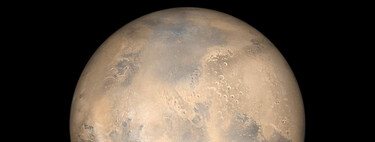
More than a thousand earthquakes. Between 2018 and 2022, InSight detected 1,319 earthquakes, showing that the Red Planet has more seismic activity than previously thought. If the Viking probe’s seismometer had worked better, it might have detected something. Now, should the Viking 2 recordings really be considered lost?
Sun 80. Martian days are known as Sols. Viking 2 made two suspicious recordings, one on Sol 53 and the other on Sol 80. The first was classified as a gust, but the second was seen as a good candidate for hosting an earthquake. Unfortunately, there was much doubt due to the intervention. Half a century later, the authors of the just-published study thought they could be studied again, taking into account everything learned with Insight. They carefully analyzed them and found that the Sol 80 recording had some similarities to both the California earthquake and MarsComp detected by InSight.
The vibration looked similar; But, in addition, it was detected in the early morning, when the wind is usually less intense, and only 20 minutes after a period of weak wind. It was unlikely to be interference from the Martian wind.
other options. In reality, it cannot be ruled out that the recording coincides with another type of event, such as a meteorite impact. Actually, we’ll never know for sure. But it is true that these scientists did well to recover the recording, as it may contain the earliest recorded Martian earthquake signal. Even if we don’t know for sure, uncertainty is an important part of space exploration, so it’s still interesting.
Picture | POT
In Xataka | The space dream was to spend billions of Euros and end up eating crickets on Mars