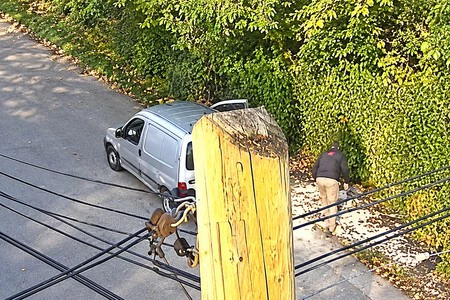
In Villanova de Arusa (Pontevedra)Local police use drones to control illegal dumping. Agents follow citizens who leave furniture or debris on public streets. They have been warned of sanctions that could reach 45,000 euros. But that figure is not the penalty accrued for a holding error.
This is a search for potential sources. When they find any waste, they search with drones to see if there is any construction in the vicinity. An agent explains, “The criminal is usually closer than he thinks.”. Some of the behaviors they identified were, for example, leaving bed bases on the sidewalk or throwing paint on green areas. They also put up signboards to warn about surveillance.
Such aerial surveillance has already been registered since August 2025 At the time a police protocol for dealing with spills was called for that included surveillance recordings of this type and citizen alerts to identify those responsible.
Penalties depend on the violation
About the agents A ban of 200 or 500 euros, up to 45,000 depending on the danger. It is important to highlight that in this case we are dealing with situations other than container failure (for example, in the case of reclamation waste or the release of hazardous materials).
Furthermore, it is not true that this is the maximum limit of the law. Article 84 of Galician law specifies that there are fines of 901 to 45,000 euros for serious violations. It’s another scale for hazardous waste.
On the other hand, state waste laws establish that Serious violations range from 2,001 to 100,000 euros. If they are hazardous waste or contaminated soil, this limit increases. The act of depositing domestic and commercial waste (non-hazardous) beyond what is established in local ordinances is also classified as minor.
Regardless, the citizen needs to know what violation he is charged with and what regulations apply. Furthermore, it must be resolved in a logical manner after opening the corresponding file.
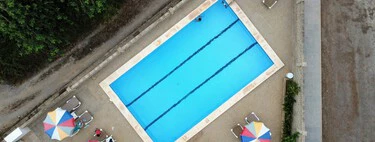
We have already mentioned how drones were used to control swimming pools. At Villanova they explain that they are looking for clues and potential criminals near the waste.
What happens with personal information?
The AEPD’s guidance on drones distinguishes cases where personal data is not processed from those where it is accidentally obtained or intended to be processed (as occurs in video surveillance). The fact that Identifiable people appear Camera images have a different effect than just having a pile of rubble.
from Spanish Data Protection Agency It is advisable to capture only what is strictly necessary. You should avoid storing information that is not relevant to the purpose of your flight. For example, you can set resolution limitations or enable/disable in-flight capture.
The Fuenlabrada Resolution of 2021 has a strong precedent. It analyzes the use of drones by local police for traffic control. It should be noted that the duty of information is fulfilled (there are posters, social networks and municipal websites). It is also concluded that prior impact assessment is necessary.
After analyzing all the documentation provided (including the impact assessment), A decision has been made to save the file. It is in the context of that traffic system. We cannot generalize to other systems (such as the Villanova waste system) or draw automatic conclusions.
Picture | Including the LaSexta version