

The 29N elections were supposed to be elections on the housing crisis, which has topped the ranking of Spaniards’ main concerns for months and which, after an intense parliamentary soap opera, prompted electoral progress. After the Urda tragedy, that is no longer clear. The management of high-speed rail infrastructure (AV) has been exclusively engaged in public debate for a week. That explains why the latest is exclusive ABC Anticipation builds: The newspaper published a directive from Adif encouraging commercial trains to be used as ‘test beds’.
In other words (and in short), when a small anomaly is detected in the AV network, technicians are not necessarily mobilized. Sometimes, the next convoy passing through the area has to check it first.
What happened? That Borja Mendez signed a chronicle today ABC Where it exposes an Adif protocol that has been unnoticed until now: the LAV2 specification sheet provides that when a slight change is detected in the AV network, it must be the next driver who acknowledges it.
That is, ADIF does not automatically cut the section and immediately alert the maintenance technician. In advance, another commercial convoy (with its staff and passengers) can be used as an on-site inspector, a kind of ‘test bed’ that works to rule out false alarms.

What exactly does the command say? Adif guidelines are clear. When a train driver detects a “weak impact” anomaly on a track, the railway administrator does not have to take an immediate response involving suspension of traffic on the ‘suspicious’ section.
The protocol is different: the next driver to pass the area is in charge of paying attention to check whether there really is a problem or a warning from his previous colleague for other reasons, such as failure of the train’s suspension.
What is a “weak effect”? There is the key. Advice by regulation ABCOf an internal nature, four different scenarios are distinguished, depending on the anomaly that the driver warned about. There are weak, medium, strong and very strong failures.
The protocol in question focuses on the first, weak ones: holes, unusual vibrations or shocks. When the driver senses such an anomaly, the traffic control center tells the next driver to go around the area and ask him to pay attention to the behavior of the train. Purpose: To ensure that something is actually happening on the road.
Adif uses trains with passengers to detect “weak impact” failures on tracks @Borjamendez https://t.co/Jr3ygkA1vF
— ABC.es (@abc_es) November 5, 2026
And then what? When that ‘double check’ reaches the ground, the scenario changes. Trains adjust their speed (there are various possible scenarios) and after suspicions are confirmed, technicians are mobilized. The Adif guidelines clarify that this step is not strictly necessary “unless (the event is confirmed by subsequent circulation).” As Mendez says in his chronicle, not all professionals share this way of proceeding, which essentially uses commercial trains (with passengers) to ensure infrastructure inconsistencies.
Why is it important? Although 2026 is a tragic year for the railways, with two accidents (Adamuz and Urda) in less than 10 months with 115 fatalities and dozens injured, there are not many accidents of this severity in the history of the Spanish AV. And it speaks to their protocol.
The problem is to analyze the method of the protocol ABC: The underlying idea is to prioritize the agility of rail traffic to avoid incidents. And this is important if you consider that the manager must combine two key values: operational fluidity and service security.
What should a train driver do if he suspects he has detected a minor defect in the track? Should traffic be stopped, a temporary speed limit ordered and service delays assumed, even if it turns out to be a false alarm? The Adif guideline leaves another question on the table: Should drivers operating commercial trains be expected to be responsible for detecting anomalies or confirming failures reported by their colleagues? Should technicians always be mobilized immediately?
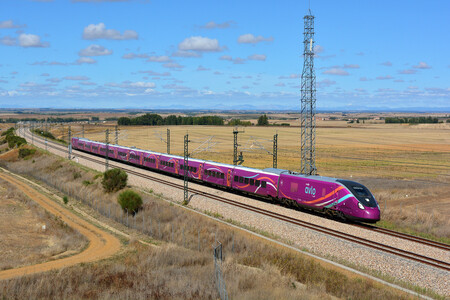
Nelso Silva (Flickr).
Is it something new? Railway maintenance has been a hotly debated topic for the last week. Former minister Oscar Puente himself pointed out the difference between the German and Spanish models: here, railway maintenance and renovation works are usually carried out at night in order to change vehicles as little as possible during the day; In Germany, lines are closed for extensive renovations, regardless of whether it affects service for a long time.
It is not a question of deciding whether rail service will provide more or less safety, but how much traffic interference is willing to accept.
Are there more reasons? yes The debate over the maintenance and operation of the Spanish high-speed network gained importance after the Adamuz and Urda accidents, but there is another reason to prioritize it: Spain is one of the countries with one of the highest high-speed kilometers in the world. Only China surpasses us in road length. This is explained by the deployment of infrastructure since the 90s, which has made it possible to weave a wider net that also requires a greater conservation effort.
This same week the world Another strategic document from Adif revealed with a warning to sailors: by the end of this same decade the number of incidents affecting rail traffic and infrastructure will likely be around 8,800, which is 20% more than last year.
Picture | Nelson Silva (Flickr) 1 and 2
Through this ABC
In Xataka | Drivers and controllers agree: “LZB safe but obsolete, transmission failures common”