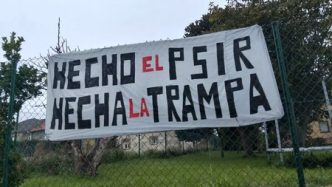
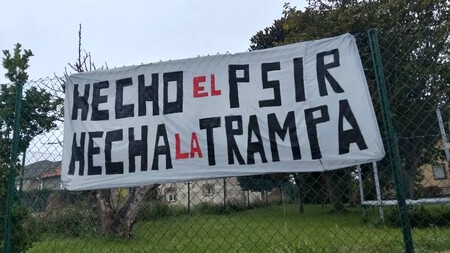
Every lock has a key, and the Cantabrian urban planner currently has a four-letter lock on his keychain: PSIR. With it, regional governments can convert rural land into developable land without going through city council planning (as long as the project serves “regional interests”). This condition has almost always been served: if there were houses, they had to be with a public facility. According to elDiario.es, Podemos denounced that the PP wants to erase this counterweight with the stroke of a pen.
What is a PSIR. They are an acronym for the Single Project of Regional Interest, an image created in 2001. The government declares regional interests, a technical commission (CROTU) gives provisional approval and the government council gives final approval. It was used to house industrial estates, occasionally hospitals or the Pontifical University of Comilla. Ironically, four of the five PSIRs implemented are polygons.
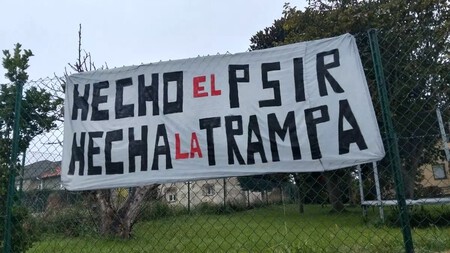
Three rules in 25 years. In the first law of 2001, at least 40% of the housing was required to be protected housing. Parliament added to that process in 2022 and raised that requirement to 100% if the project was for secure housing. In 2025, the Administrative Simplification Act, with the help of Vox, allows private housing to be included in the PSIR “in a complementary manner” with major benefits. According to Podemos, the new amendment, registered PP on September 17, deletes this expression: a PSIR can only be for housing (the other will regulate compensation boards and allow construction to begin).
correct name Bosques de Santander, a large urban project of about 70,000 m, foresees 7,850 houses (4,710 free and 3,140 protected) in Santander, Bejana and Camargo, promoted by Real de Piasca. North of S-20, near Corbán, another mega urban project (about 20,000 square meters) will be The City of Justice. According to Cantabria Economica, it came at the request of the government and provides the “public interest” part. And to prevent it, the residents of Rukandial have organized. There are more than thirty families who may lose their homes. Podemos admitted that the amendments, registered just two weeks before their presentation, did not mention the project.
What does each part say? Pablo Gómez, spokesman for Podemos Environment, acknowledged that the supposed “city of justice” (I have yet to use the name) might be necessary, but maintained that this does not mean that any residential operations associated with it serve the common interest. He considers it “particularly serious” to touch regional planning through the Housing Act and asked the government to explain what is needed to change it.
What is clear is that there is no other explanation. The executive defended the model (Maria José Sánchez de Buruga, the president, promised “unprecedented” secure housing) and councilor Roberto Media appealed for more to be built with private initiative. Without further ado. The outcome will depend on parliament: the PP has 15 of the 35 seats, a majority under 18, and in 2025 it will depend on Vox. Actually the amendment is still pending.
Valencian contrast. This same week, the Valencian PP registered an amendment to the Generalitats Land Law to allocate vacant private plots reserved for protected housing facilities, according to La Vanguardia. It’s another process and another area, but with the same security that’s being discussed here: those homes will be permanently secured, never able to break free.
bought This amendment does not change anything today, and its future effect allows for two readings. At the moment, used housing in Cantabria costs an average of 2,423 euros per square meter, 14.2% more than a year ago, and in Santander, according to my account, about 3,300 for an 80-meter apartment, about 264,000 euros. Bosques de Santander, the project that has ignited controversy, will not start until 2029 and will save 1,140 protected homes in its first phase, compared to 13,000 people registered in the capital to choose the 282 protected apartments under construction.
The government maintains that with more housing, the same becomes cheaper. However, critics fear what common hives of second homes or luxury homes will raise. Meanwhile, the line at the door of the flat/house grows (and the key is always on the same side).
Picture | Flickr (single family home in Villaverde) / elDiario
In Xataka | Basque Government buys 510 houses in Donostia from Blackstone for indefinite rent protection