AI usually has a female voice. From the first Siri to the current Alexa, including GPS: virtual assistants have traditionally adopted female voices by default. This is not a coincidence, there are psychological reasons for this. To understand these dynamics, a team of Swiss researchers analyzed how the virtual agent’s gender affects it.
favoritism. The tech industry prioritized female voices until they became practically the norm. This conclusion is supported by cognitive biases inherited from a sexist society: behavioral studies support the connection between the female voice and assistance, reception or customer service tasks.
We attribute kindness, empathy and the ability to calm us down to an AI we perceive as feminine. So, the default voice of these tools is usually a woman: we think it’s easier to communicate with them this way. And the opposite happens for men and women: cognitive biases point toward greater authority and assertiveness.
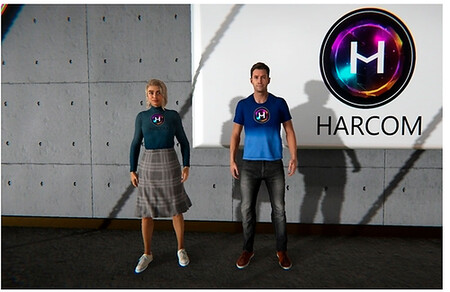
Left, Johanna; All right, Johan. Image from ACM Digital Library
test. A team of researchers from a number of European universities, including the University of Limerick and the University of Zurich, has published the ‘Human Appearance and Masculinity? How AI assistant design affects trust and financial reward in virtual reality tasks.’ To do this, they equipped 189 participants with virtual reality glasses.
The study tested four different assistants: a text chatbot, a desktop robot, and two human-like agents named Johan and Johanna. Each participant interacted with three of them: the chatbot, the robot, and one of two human avatars. They all used the same model, GPT-4 from OpenAI.
Same job, different reward. At the end of the experiment, participants had to evaluate each AI’s contribution to the task and assign them a monetary reward. They can pay him up to four Swiss francs and keep the rest. The results, summarized, were:
- Study subjects rated the contribution of female and male AI to tasks similarly without statistically significant differences.
- At the time of payment, Johanna, an AI with the appearance and voice of a woman, received 10% less money than Johann, the assistant identified as a man.
- Reward differences were observed in both study groups, although it was more pronounced in male participants.
The researchers found another contradiction: during interviews, many participants claimed that the gender of an assistant was not important to them, even if they preferred genderless AI. However, their economic decisions reflect differences.


Human-like assistants generated more trust and received more rewards than robots, although many participants said they preferred an AI that didn’t look like a person. All AI tools use the same OpenAI model.
Partisans are also trained. The lack of diversity in the tech industry exacerbates the gender gap. According to UNESCO data, women occupy only 20% of technical positions and represent 12% of those researching artificial intelligence. Language models reproduce these dynamics during their training.
A UNESCO report shows that large language models reproduce gender stereotypes in both text and image generation. Other studies of video production have also identified stereotypes between specific professions and the gender of their workers.
AI has inherited our prejudices. The experiment teaches us an uncomfortable lesson: the more human we make AI appear, the more we trust it, but we also transfer to it the prejudices we apply to humans. Johan and Johanna share technology and the same work. However, participants did not treat them the same. While the study doesn’t allow the difference to be attributed solely to gender, it does show that an AI’s appearance can affect how we evaluate its work.
Through this jeuxvideo.com
Cover image Created and adapted by AI
In Xataka | The Best Artificial Intelligence for Students: Free Tools and What Everyone Does