Spain has many archaeological sites that provide a wealth of information about our past. For example, the Garma site is one of the best preserved Stone Age domestic sites in all of Europe. And now, thanks to new methods of digital modeling and photogrammetry, archaeologists have been able to reconstruct a prehistoric house to the millimeter without moving a single stone.
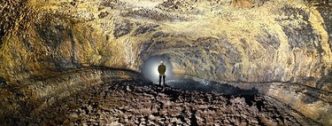
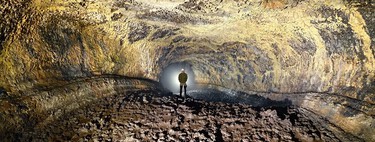
his story To understand this, we have to go back millennia, when a violent landslide during the last great ice age buried the main entrance to the lower gallery of the Ribamontan al Monte Garma cave.
But it was news to us because it sealed off the space, transforming it into a veritable time machine, leaving its entire interior intact, paralyzed at the exact moment where its last inhabitants abandoned it, some 16,500 years ago in the mid-Middle Magdalenian.
its structure. Technically known as the “IA Structure”, the house is a place of humble proportions. It occupies an elliptical or oval floor plan of only five square meters, and evidently those who designed it were experts in reading and taking advantage of the cave’s topography, since the cabin was built under a small visor of natural rock that gave it a height of between 1.6 and 1.7 meters.
And to fix this architecture on the ground, the Magdalenian builders used limestone blocks from the caves and even natural stalagmites that came out of the ground.
in the center Inside the shelter is a small bonfire whose fire not only provided warmth in the icy depths of the cave, but also illuminated all the group’s daily activities. However, we are not facing a large long-term base camp, however, said the researcher and co-director of the project, Pablo Arias, it is very unlikely that the cabin served as a permanent residence, but everything indicates that it was a shelter for sporadic or temporary use inside the cave system.
Study This is a major challenge that researchers face, since their goal is not to alter soils that have remained intact for millennia. And a study published here in 2025 notes that, by creating very high-precision 3D photogrammetric models, IA structures, floors, adjacent walls, bone art and flint tools can be visualized and metrically recorded.
According to a note published by the University of Cantabria in September 2026, the success of this technical installation echoed, the use of this system made it possible to register more than 4,600 remains (exactly 4,614 pieces) in just 18 months of work in the two structures of the Lower Gallery.
Your activity. Virtual spatial analysis of these thousands of objects allows us to reconstruct exactly what those people did around the fire, and among the identified remains there is abundant evidence of game hunting processing, working with hides, and making pots with bone and stone.
But the most interesting thing that has been observed is the presence of heavy skins, probably processed in the same areas that are now mapped in 3D and that were essential to survive the extreme temperatures of the time.
Picture | University of Cantabria
In Xataka | They sought to seal off the moisture in Salamanca’s Old Cathedral and found tombs, a Roman cauldron and a possible earlier temple.