

It was created in 1964 to bolster Spain’s tourist appeal during Franco’s developmentalism, but the ‘menu of the day’ has become one of the pillars of the national hospitality industry. And it makes sense. Its commitment to low prices and a varied offer have made it not only travelers, but (above all) workers’ great ally to eat away from home. In 2026, however, the menu is going through shorter hours: hoteliers face the dilemma of letting inflation limit their profits or make them more expensive at worst. the merchant They eat the soil.
The latest data from the Spanish employers’ association show that they are opting for an intermediate solution: an underlying price increase (3.5%) that remains below the general CPI, which casts new shadows on the future of the menu.
The border is 15 euros. Data taken from Hospitality of Spain and Edenred. According to their calculations, the average price of the daily menu today is about 14.7 euros, 3.5% higher than in 2025. Just a year ago the average was 14.2 and in 2024 it will be 14. If we go back to 2016 (the oldest data managed by employers), the price of the same service rose by only 11 euros. 25.6%.
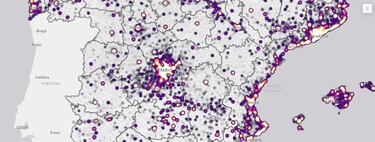
These percentages show state averages, as the ‘photo’ varies from community to community. An average of 13.5 euros paid for a menu in the Canary Islands or Murcia in the Basque Country, bears little relation to the 16.3 euros in the country’s most expensive regions. The menu is paid on average 15 euros in Madrid, 15.7 in Catalonia and 15.2 in the Valencian Community.
|
community |
Average Menu Price (2026) |
|---|---|
|
andalusia |
14 |
|
Aragon |
14.6 |
|
Asturias |
14 |
|
Balearics |
16 |
|
Canary Islands |
13.5 |
|
Cantabria |
14.3 |
|
Castilla and Leon |
14.7 |
|
Castile-La Mancha |
14.5 |
|
Catalonia |
15.7 |
|
Community of Madrid |
15 |
|
Valencian community |
15.2 |
|
Estremadura |
14 |
|
Galicia |
14.5 |
|
Murcia |
13.5 |
|
Navarre |
15.1 |
|
basque country |
16.3 |
|
Rioja |
14.8 |
Is it a significant increase? It depends on how you look at it. In the latest update the cost of the menu is kept close to the psychological barrier of 15 euros, at least if we talk about the national average. The big question is whether this increase will help restaurants improve their profit margins and (what’s really important) guarantee that menu sales will continue to be a profitable business. The employers’ association itself reckons this 3.5% is down from September’s general CPI, which stood at 4.9% year-on-year, and the restaurant price index, which stood at 4.3%.
In other words, menus are becoming more expensive, but at a slower pace than the cost of living.
And while it’s true that food and non-alcoholic beverages rose 2.7% in September, there are many basic resources used by hoteliers whose costs have skyrocketed in recent months. Egg prices increased by 12.3%, legumes and vegetables by 9.8%, beef by 7.9% and fish by 4.5%. Adding to this increase were electricity (11.4%) and restaurant labor costs, which rose another 1.5% through June.
What does this mean? That daily menu is probably less business today than it was a year ago. “This scenario continues to compress the organization’s margins,” admits the employers’ association, which recalls that “although restaurant billings increased by an average of 2.7% until July, once the effect of prices is removed, the evolution of activity decreased by 1.6%.”
In short, the hospitality industry’s big dilemma: if you raise your menu prices, you risk losing appeal to customers; If you don’t, you’ll be resigned to watching them slowly lose their profit margins.

‘mercurants’. The issue is not just one of costs and margins. It’s also (and above all) about context. Hoteliers find themselves with a new competitor that threatens to take away the customer profile that has hitherto resorted to the daily menu: the merchantSupermarkets that sell not only food, but also fresh, cooked and ready-to-eat foods.
The most obvious example is Mercadona’s ‘ready to eat’ line, which the Valencian chain offers customers stews, casseroles, pasta, meat, fish, desserts… all hot options that can be eaten inside the establishment, in the dining room with tables and chairs.
Are they so important? yes And for various reasons. The first is quantitative. There are several indicators that indicate this the merchant They attract more clients and carry a larger volume of business. It is estimated that in 2025 Mercadona had a turnover of 700 million euros through its ‘ready to eat’ division in Spain. If we include its pre-cooked offer (trays, refrigerated…) the joint business in Spain and Portugal would amount to 3,000 million euros.
In general, the Association of Employers of Spanish Companies that are dedicated to the marketing of pre-cooked products, estimates that in 2025, 715,052 tons of prepared food will be consumed in Spain, “a new record” that translates into sales of more than 4.3 billion euros. Demand for frozen and refrigerated foods and room-temperature prepared foods is skyrocketing. In general, the association estimates that household consumption has grown by about 4% annually.
Easy, fast. The most curious thing is that people don’t resort to it the merchant Only for its price. It does so because they better adapt to their needs in a world where speed rules.
According to a survey by The Fork, 70% of consumers use services like ‘Ready to Eat’ because of their simplicity and speed. Fewer and fewer people want to go to a restaurant, wait to be served and order a starter, second and dessert. Agility prevails. Save time. Price also influences, of course, but Fork research shows that only 19% of those surveyed choose merchants because of the economic aspect.
Lifetime menu revisions. The above explains why hoteliers are reinventing their menus, making them more flexible and adapting to the formula that pulls in a segment of their clientele. the merchant.
For example, 54.6% of businesses already allow menu changes on a regular basis and 89.1% offer “some degree of customization.” About half (47.1%) of restaurants offer a “half menu” (say three courses), a “full menu option that expands options for those who want to adjust quantity, time or budget.” 69% of stores also sell take-away menus.
In practice, this means that hoteliers increasingly want flexibility, personalization, speed and take awayThe equation of the merchant. All, without sacrificing some of the strengths that have made Daily Menu one of the most successful services in the hospitality industry: predictable and fixed prices and a commitment to traditional cuisine. 85% of businesses admit they include regional food at least one day a week.
Picture | George Franganiello (Flickr)
In Xataka | Silently, Spain maintains a 10% VAT on hospitality. And now Brussels wants to end the anomaly