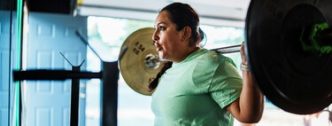
When we start going to the gym, we want to get results as quickly as possible, reach many Memes Around this event. And to solve this mystery, there are several studies that have emerged about how much time we need to spend training to see a little more muscle in our arms or legs.
Initial gain. It is very common to see on social networks how promises of great muscle gains in the first week. This is something that anyone can develop, as it is common to see ‘bloated’ muscles at the end of a workout and several hours later.
It is a mirage. Here’s a classic study published in 2016 that analyzed 10 untrained youth to understand what happened during the first weeks of training. What they saw was a 2.7% increase in their quadriceps area at 3 weeks and a 10.4% increase at 10 weeks. The problem is that this very premature increase was accompanied by edema induced by muscle damage, so this change in volume should not be labeled as pure hypertrophy without discounting inflammation.
This was also seen in a study done in 2011, where after measuring 25 sedentary men weekly, it was concluded that structural and real hypertrophy did not begin to converge until 3 or 4 weeks, reaching +9.6% at 8 weeks. But that “growth” is mainly due to repairing the damage done to the muscle.
A great job. This same year, a meta-analysis was published that was in the process of being reviewed and signed off by leading figures in sports research. It analyzed 2,237 observations from 480 different studies, filtering out only those that measured muscle growth using MRI or ultrasound, excluding more subjective measurements with bioimpedance scales.
This model confirms that muscle grows over time, but shows a curve of diminishing returns. This is said because the average muscle growth is 8.9% at 20 weeks, 9.4% at 24, 10.5% at 36 and 12.6% at a year and a half. As we see, it does not follow a linear growth, but as we progress in the training session, we find a muscle that is more difficult to grow, which can discourage us from continuing training.
Genetics intervene. It’s easy to set clear goals with these percentages and say that if I train for 20 weeks, I’ll have about 10% more muscle in my body, but the reality is that every person is completely different. Here, a study published in 2005 trained 585 people for 12 weeks and determined that there was between a 2% loss and a 59% gain in muscle size.
This means that we must be aware that each person goes at a different pace when it comes to making a physical change that involves muscle gain, and we are not talking about exact science. Thus, if two people go to train together and do the same amount of exercise, one of them will see the expected results faster.
Picture | Jonathan Borba
In Xataka | Going for a walk instead of going to the gym is great, but it only works if you walk at 5 km/h and with some consistency.