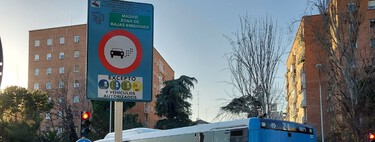
ZBE. Low emission zone. Mandatory from 2023 for all cities with more than 50,000 inhabitants Apply some measure. In others there is no news of them. One of those who remain is nonsense. Malaga was one of the cities that had been implementing the regulations but the judiciary overruled them. Now he will return the money and the door will open, once again, on what ZBE is and how it should be implemented.
The Malaga incident. From December 2024, Málaga is implementing a Low Emission Zone (ZBE) in its historic center and surrounding streets. Until December 2025, all types of cars registered in Malaga can enter it, but unlabelled cars registered outside Malaga cannot. From December 2026, restrictions were extended to B labeled cars from outside Malaga.
Vox condemned the decision in June 2025, and the Superior Court of Justice of Andalusia agreed with the parliamentary group, arguing that fining cars from outside was discriminatory. Finally, Málaga City Council announced a few days ago that it will stop fines for access to the ZBE and that it will return all fines ex officio. This space has been activated for.

Are there more similar cases? yes The most representative case of a ZBE where fines are imposed on persons coming from outside and not on vehicles registered in the city is Madrid. The city allows unregistered vehicles that enter the municipality without an environmental label However, after several changes of mind, it allowed registrants complete freedom.
The city of Madrid also saw how Madrid’s Superior Court of Justice confirmed that part of the fine imposed following Vox’s complaint was invalid. In this case, the money is not automatically refunded and has to be claimed.
The difference is that the case alleged that the economic report protecting the new ZBE was insufficient. As a result, Madrid published a new ordinance to eliminate this error and, therefore, the Madrid ZBE continues to operate.

a mess. The problem with ZBEs is that town councils have been able to enforce them in whatever way they like and are most interested in, aware that this is an issue that steals votes. You have to go to 2023 to find the original. As of January 1, all cities with more than 50,000 residents must have a ZBE.
However, there are cities that have yet to implement them. Others, like Seville, moved them to less-affected areas on a daily basis. And others, like Ciudad Real, have developed low-emission zones that don’t fine anyone, which is useless in practice.
In total, there are 149 municipalities in Spain that must apply these restrictions but many of them ignore them. The reason is simple: the government required it but left it up to city councils to enforce the rule as they wished. And, furthermore, there was no penalty if it wasn’t enforced.

The government is talking. Malaga’s decision coincides with the government’s latest move. Last Tuesday, November 3 the Cabinet approved a change to Royal Decree 1052/2022 that was overlooked due to the train accident in Urda (Toledo).
With this change, cities with more than 50,000 residents are forced to implement a ZBE that penalizes those who cannot enter vehicles. In the press release, the government indicated the following:
“The change requires that municipal ordinances contemplate and apply the authorization system provided for in state traffic regulations, without resorting to transitional systems that delay their effectiveness. Thus, it is intended to guarantee that the established restrictions have a real compliance process and their effectiveness can be evaluated”
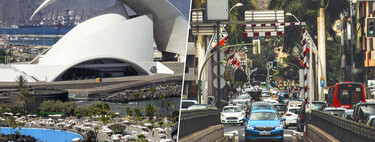
penalty. When the regulations obliging city councils to establish a ZBE were enacted, the specific penalty that should be imposed was not specified. This was used by some councils to avoid fines for improper passing vehicles or to leave them in a conversion process that allowed virtually everyone to pass.
With the change in traffic laws, breaking ZBE rules is punishable for years with a 200 euro fine. An authorization that applies to everyone passing signs designed by DGT where it must clearly reflect who can pass and who cannot.
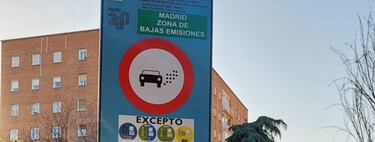
And (almost) nothing changes. Although the government now forces town councils to fine cars that are banned from entering low-emission zones and removes transitional systems, the truth is that little is likely to change.
And it is left to councils where they can implement ZBEs at will and with restrictions. That is, a ZBE can be placed where the impact is minimal because it is done in areas with little traffic or it is restricted to commercial vehicles only.
Likewise, there is no reflection on a potential penalty for cities that turn a deaf ear to this obligation, so it remains to be seen whether city councils take a step forward or, conversely, continue to delay this implementation.
Picture | MACIEZ MARCO
In Xataka | ZBE has a new weapon on the horizon: the first device that detects car emissions in real time