Are we investing enough in Spanish high speed? Two accidents on the same line and in just nine months calls it into question. However, the numbers suggest that much more money is being devoted to high speed than a few years ago. The question, therefore, should be: Are we investing money where we should?
4,696 million euros. It’s money, they point out EconomistWhich Adif executed on investment in 2025. Is it a lot or a little? Compared to 2019, it is much higher, since the amount invested in high-speed investments in that year stood at 1,707 million euros.
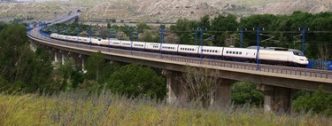
This image takes on particular relevance in less than a year, another accident in Adamuz (Córdoba) and Urda (Toledo) on the Madrid-Seville high-speed line, in which more than a hundred people died in the worst year for Spanish high speed.
But where is he going? This is one of the most important information. In 2018, between Adif and Adif Alta Velocity, maintenance costs amounted to 727 million euros. In 2025 this figure was 1,120 million euros. Fixed costs at high speed in 2018 were 255 million euros compared to 437 million euros in 2025.
Since then the figures have always increased but if we update with inflation, 255 million euros is actually 326.91 million. And the total of 727 million euros is 932 million euros. That is, maintenance has increased but far below what the figures at first glance indicate.
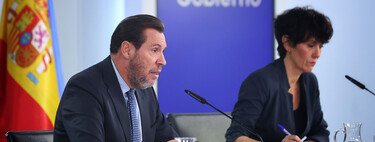
This year, the Ministry of Transport published a series of graphs in which it is clear that maintenance costs in recent years have been 1,120 million euros, but it does not mention the specific costs of high speed, only talking about the “railway network”. This was the echo neutral Where they point out that the government has played with these figures to improve its image.
More money, less maintenance than ever before. These figures, they add EconomistAdded a new problem: Spanish high speed resources are now much higher than in 2018. It is estimated that high speed represented assets of 44,743 million euros that year and today it is 51,449 million euros. This means more money invested but more kilometers of track to invest
This leaves us with a paradox: more money has been invested than before but maintenance costs have fallen. Exceeding inflation, cost and asset value data increases, less money is invested in network maintenance per asset value. In particular, 13% less at high speeds.
The picture is still there if we go further back. According to data from GeotrainThe investment in 2005 was 116,329 euros/km, equivalent to 183,920 euros/kilometer when adjusted for inflation. Last year, the cost per kilometer was 110,000 euros/km. That is, Spain spent 167% of road maintenance last year.
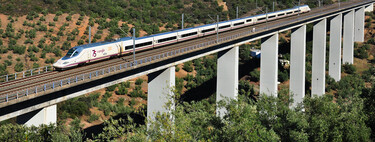
Europe. Compared to Europe, it is difficult to establish where Spain ranks, although, yes, it is by no means among the top positions. According to data from ABCOur country is below Europe’s investment in maintenance. Only Denmark and Slovakia invested less money on a percentage basis. Spain’s 15% investment in maintenance is a far cry from the 34% invested in France.
We say that comparison is difficult because, for example, Germany has a very poor network where high speed coexists with regional trains, which increases maintenance bills and thins the money specifically dedicated to high speed. Other reports, depending on whether they focus only on the European Union or include the rest of the continent, present conflicting information.
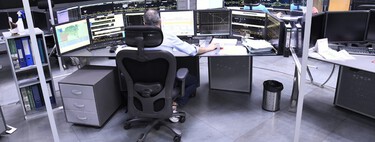
And there is another problem. One is very obvious: there is more traffic than ever. The number of trains plying on the line has skyrocketed since the railway liberalization took effect. Oscar Puente, the former transport minister, pointed out last summer that “in the 90s, there were six trains a day between Madrid and Seville (…) today there are 289 trains.”
That is, the pressure on the road is very high. First reason is more number of trains. Secondly, because these roads are already almost 30 years old. All of these events repeat more easily but affect a much larger number of trains for each event.
On October 30, when the LZB safety line fell, six trains on a stretch of less than 70 km stopped instantly. For this reason, although train drivers point out that LZB and ERTMS are comparable in terms of safety, regulators maintain that the latter presents fewer incidents and, therefore, less pressure on traffic because the risk is reduced.
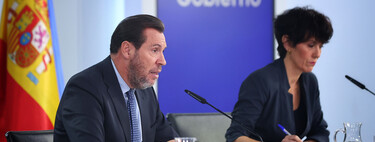
in doubt. After two accidents, the Spanish railway system was logically questioned. Regulators criticize that the number of line-aware workers remains the same as before liberalisation, which has put a lot of pressure on their work. They also criticize that the lines are not closed for renewal and that the works are carried out at night to minimally affect traffic.
The second question is whether the expansion of high-speed networks has been taken too far. At the time of his resignation announcement, Oscar Puente wondered if “there is anyone in Spain who is willing to give up high speed in any region.” And the former minister himself criticized pressure from city councils and autonomous communities to demand high-speed trains not be considered “second-class territory”.
Picture | Andre Marques
In Xataka | Burgos faces Spanish railway paradox: Renfe is a public service but refuses to have more trains due to low profits