Brad Smith, Microsoft’s president and vice-chairman of its board of directors, believes that global rules are needed to keep artificial intelligence in check. In an interview with the BBC, the manager said that a washing machine and a milk jug are subject to more safety regulations than many AI systems.
The comparison is not accidental. Smith believes that AI can be both “a tool and a weapon”, so responsible organizations should implement emergency brakes that can be activated in case the user or the organization itself loses control. He also advocates that companies have a legal obligation to report incidents and that some of their innovations undergo independent evaluation before reaching the public.
Microsoft CEO Satya Nadella also emphasized the importance of being able to monitor and limit what these systems do. He argued that we must “separate the provision of intelligence from the authority over it.” Let’s face it, a model can answer and participate in tasks, but it shouldn’t decide for itself what it’s allowed to do or what tasks it can perform without supervision.
And what do AI companies say? Dario Amodei, co-founder of Anthropic, warns of the risks associated with the rapid advancement of this technology. In his essay on AI Exponential Policy, published in June 2026, he argues that AI capabilities are advancing faster than institutions can respond and calls for independent evaluation and higher standards.
OpenAI CEO Sam Altman explained for his part that his company is monitoring progress and that this could include stopping training a model if it doesn’t have enough security guarantees.
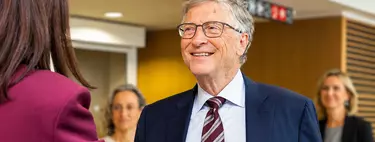
The United States is committed to self-determination. Donald Trump has chosen industry self-regulation. After a meeting with six heads of large technology companies, the US president announced a voluntary agreement that includes external controls and audits, as well as board reviews. Days later he announced the creation of the Superintelligence Force, a group tasked with coordinating the federal government’s response and led by Chief of National Intelligence Jay Clayton.
Brad Smith doesn’t think that’s enough. For Smith, this voluntary commitment is a necessary but insufficient step. Microsoft’s president has called for measures that allow action against AI agents that escape human control and models capable of putting global cyber security at risk. So the question remains how to set effective limits without AI companies deciding how far their models can go.
Genbetay John Hernandez, AI expert: “Within two years, smooth operation of artificial intelligence will determine who keeps the job”