
I’ve spent well over the past six months using a variety of different wireless headphones from brands like Sony, Apple, Bose, Sonos, and Nothing, and even have the brand-new Ultra QuietComfort Gen 2 from Bose. I use noise-canceling headphones for pretty much hours every day, and I’m going to take you through which one of these I think are the best wireless headphones.
Sound Quality
First up is, of course, sound quality. When it comes to sound quality, the AirPods Max are the only ones that don’t give you any EQ adjustment. While the Bose QuietComfort Ultra, as well as the Sonos Ace headphones, don’t give you a full EQ, just a three-band EQ, where Sony and Nothing provide a full eight-band EQ, which I definitely prefer. Having an EQ can really help you tune the sound of the headphones to your liking, which is important because not all of these headphones sound perfect out of the box to me at least. But how do they sound in general? Well, first, let’s start with the Bose.
They have a really punchy sound, and by default, are heavier in the mid-range and bass. They’ve got great clarity, a pretty wide soundstage, and that really deep bass can get deep without getting too muddy. Vocal sound very centered with these headphones, like right in the middle of my head. The only adjustment I made was tweaking the treble, just pushing that up a bit, but overall, if you like a really dynamic punchy sound, you’re going to like the sound signature on these.
Moving on to the Sonos Ace compared to the Bose, vocals don’t sound quite as centered in the middle of your head, and you don’t get as much clarity as with the Bose. I find that these sound pretty balanced in their default EQ. You don’t get that really deep bass that’s more pronounced on the Bose, and these definitely don’t sound as punchy, which, depending on what you’re listening to, might be a preference.
Moving on to the Sony, their audio is a bit more clear than what I hear on the Sonos, also a bit more dynamic, but not in the way that the Bose is by making the bass and mid-range a bit more punchy. The Sonys are a bit more restrained in doing that, which I appreciate. Honestly, these just sound freaking great out of the box. It feels like the instruments are right outside your ears, and the sound by default is well-balanced, vocals sound great, nothing feels like too much bass or too much treble.
Moving on to the AirPods Max, I think they sound very well-balanced with a nice amount of detail. They’re not overly heavy in their mids or bass, and they have a pretty wide soundstage. And if you like the sound profile of the AirPods Pro 3, which I have a review post out on and why you might want to upgrade to these if you have the AirPods Pro 2, I’ll leave that review post here if you’re interested. But these have a very similar sound signature to these, and though you can’t adjust the EQ on the AirPods Max, I’ve never really felt the need to because they just sound great out of the box, and these are about the only headphones that actually make Dolby Atmos music via Apple Music sound fantastic.
All right, and last, but not least, is the Nothing Headphone 1. Definitely one of the most interesting headphones out there. Now, by default, out of the box, I thought these just sounded way too flat. The bass was a bit muddy. However, thanks to Nothing’s advanced EQ tuner, which is by far the best I’ve seen out of any of these headphones, you can not only fine-tune these to sound not just decent, but actually pretty great. I’m able to get their sound signature to almost be within the same universe as the AirPods Max and Sonys. And one of the coolest features is the ability to import other EQ settings right from within the Nothing X app, which isn’t just available for Android, but it’s available on iOS as well. You can import curated ones from Nothing, like one from soundguys.com, browse others on Nothing’s playground, or scan a QR code to import into your app. And the profile you set is saved on the headphones themselves, so they’ll stay tuned as you switch from device to device. And I’ll leave a link to the one I’ve been using, which is a slightly modified version of the LTT tune, down in the description and pinned comment.
Now, what about lossless audio quality over a Bluetooth connection? The Sony and Nothing headphones support LDAC on Android devices, while the Sonos Ace and Bose QuietComfort Ultra Gen 2 support APTX Lossless. Now, the AirPods Max does not support lossless streaming like the AirPods Pro 2 and the AirPods Pro 3 earbuds do, specifically with the Vision Pro. So we know this is a technology that Apple can technically do now. And in terms of lossless audio over a wired USB-C connection, that’s supported by all the headphones except Sony’s, which is an odd miss for them. Now, sound quality is pretty subjective. But if you were like, “Okay, if I had to pick one, which one do I prefer?”, I like the sound signature of the Sonys slightly better than the Nothing Headphone 1 and the AirPods Max. So those would be my top three, closely followed by the Bose, and then I’d put the Sonos Ace last.
Noise Cancellation

Next up, noise cancellation. For this category, the Bose ranks number one, followed closely by the AirPods Max and Sony WH1000XM6. Those two are pretty close. They’re just a hair behind where the Bose is. And then following that is the Nothing Headphone 1 and the Sonos Ace. So you’ve got great headphones with ANC for your day-to-day, but what about when you need the same noise cancellation at night? Well, that’s where the SomniPods 3 from Fitnexa come in, who sponsored this review post. These are some of the thinnest hybrid ANC sleep earbuds on the market, specifically designed for side sleepers, and those who struggle with noise at night. What makes these unique is their ultra-thin design. And less than 9.9 millimeters and weighing just 3.3 grams each, they’re engineered to stay comfortable even when you sleep on your side. Fitnexa includes 10 different ear tips, plus four wing options made out of medical-grade silicon in the box, allowing you to find the perfect fit for your ear shape. Now, for noise cancellation, these use what Fitnexa calls Triple Noise Control technology. The physical design passively seals out ambient sounds like background noise, and the hybrid ANC actively blocks low-frequency noise like traffic or HVAC systems. And adaptive leak compensation, dynamically adjusts to your movement and environment throughout the night. Together, Fitnexa claims this system can reduce external sound by up to 42 decibels. It also has sleep tracking and a clever alarm system that won’t wake up your partner. Whether you’re a light sleeper dealing with noisy neighbors, a side sleeper who can’t find comfortable earbuds, or somebody looking to better understand their sleep patterns, you should check out the Fitnexa SomniPods 3 by using the link in the description.
Hardware Design
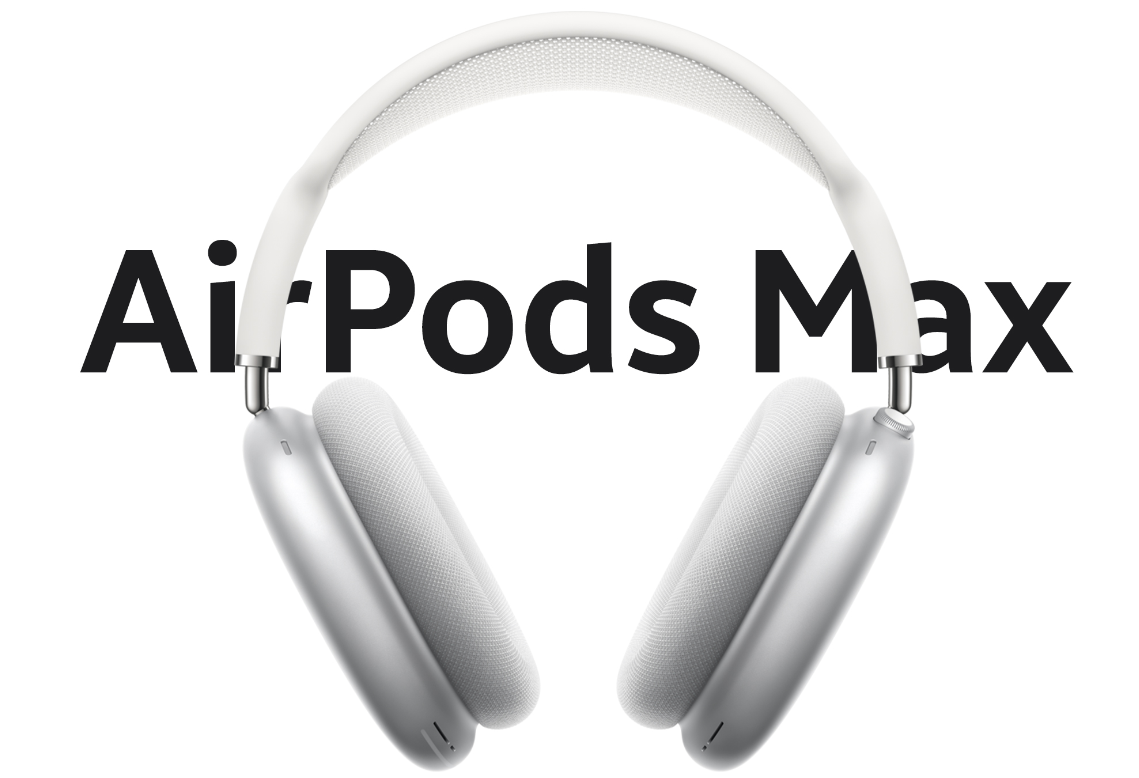
Next up, let’s talk hardware design. Let’s start with the AirPods Max, since this is really the design all of the other companies have been taking design cues from since they were released, minus the bra case. Even though they received new colors and a USB-C connection last year, the internals have remained largely the same as they were in the originals which were released in 2020. They have the same H1 chip, so it won’t get adaptive transparency mode, a more enhanced acoustic experience, or improved ANC like we got with the AirPods Pro 2 and 3, which have the H2 chip. Now, one of the best parts of the AirPods Max is their hardware design. The mesh canopy makes it so the top of your head doesn’t feel as hot when you wear them for hours on end. I also love their easy-to-remove ear cushions that have a knit acoustic mesh. This makes them feel more comfortable than that fake leather that you see a lot of other headphones use, which isn’t bad, but you definitely can notice a difference between the two materials. Another great part of their design is the controls. The digital crown is used to precisely control playback and volume, and the noise cancellation button is just there to turn noise cancellation on and off. Now, not everything is perfect with the AirPods Max’s hardware design. There are two main downsides. First is weight. They weigh 384 grams, which is by far the heaviest headphones of this group. And some people, depending on your head size and shape, you’re not going to like how they feel on your head. Though, for me, they have actually been fine. Like I don’t feel their clamping pressure to be too much, and I can wear them for hours at my desk without issue, but I also have a large head. The second issue with them is the condensation that can form inside each ear cup. Because their ear cushions are so easy to remove, a lot of wearers, myself included, will notice, depending on your environment and what you’re doing with them, like working out, which you shouldn’t do with these at all because they have no water resistance rating. Condensation can form relatively easily on the inside, and over time, that condensation can cause the connectors that connect into each ear cup, they can get this black kind of corroded residue on them, which can cause connection issues between the ear cups, or the Bluetooth board on them can just eventually die on you like it did with my original pair after four years, which was not great.
Next, let’s look at Bose. The Bose are lightweight with a nice metal used to attach the cups to the headband, and on the Gen 2, they’re a polished metal which looks really nice in person, though some might prefer the more matte look of the previous generation. The frame of my originals made a bit of a creaking sound. Though, that hasn’t been something I’ve noticed with the Gen 2 here. They sound fine. They’re also really lightweight, weighing just 260 grams, which should be comfortable for most people. And the ear cups, like the AirPods Max, are deep enough for most people’s ears to wear comfortably. They also fold, which is awesome because that means their case can be smaller to carry around. The volume controls are this touch-sensitive ridge on the back of the right ear cup, and they work fine, but I would have preferred a physical dial.
Moving on to the Sony WH1000XM6, these are probably my least favorite in terms of hardware design. These do protrude out away from your face a bit more, in a way that I find less aesthetically pleasing than most of the other headphones, though I do think Sony’s excellent blue color somewhat makes up for that. They are easy to adjust, and they do fold, but my goodness, is their touch control interface annoying compared to all of the other headphones. There are physical buttons, but only for turning on the headphones, putting them in Bluetooth pairing mode, and switching between aware mode and noise cancellation. Both playback controls and volume are controlled via a touchpad on the right ear cup, and it does work, but it just feels way less precise than with the AirPods Max, Sonos, and Nothing Headphone 1.
.jpg)
Speaking of which, the Nothing Headphone 1 might just have my favorite controls out of any of these headphones. There’s a dedicated button just for Bluetooth pairing, then there’s the roller, which gives you precise control over your volume. Although it doesn’t have as many volume steps as the AirPods Max, it’s a similar concept to the digital crown where you can press it in to play and pause media, to skip forward or back between tracks, or scrub through a song or podcast. You can just use the paddle found below the roller. And then there’s the button on the front right part of the ear cup, which is customizable to do things like hop between services using the channel hop feature if you’re using a device that supports the Nothing X app, or if they’re connected to something like a Mac, it’ll just trigger the assistant by default. Oh, and I almost forgot, unlike most of the other headphones on my list here, these actually have a dedicated toggle switch for turning them on and off, which honestly, you’ll want to use because I found the auto-off doesn’t actually work all that well, especially when they’re like connected to my Mac, they just always stay on and just drain their battery. The thing that Nothing did that’s so brilliant here is they didn’t put too many functions into a single button, which then becomes a bit unintuitive. You’re like, “Wait, what the heck does this thing do again?” Like with the Bluetooth pairing functionality added into the main button on the Sonos Ace, Bose, and Sony headphones. I don’t have to turn the Headphone 1 off and then back on again, just to get into Bluetooth pairing mode, which is really nice. And all of the buttons feel distinctly different, which also helps make them more intuitive when you’re using your thumb to feel around for a button. Also, they don’t have this cheaper plastic feel to them thanks to the aluminum used in the ear cups in conjunction with translucent plastic to give it that real Nothing aesthetic.
All right, so that’s the hardware design and overall, I think that the Nothing Headphone 1 wins this category, followed by the AirPods Max, Sonos Ace, Bose, and then the Sonys, I’d rank last.
Mic Quality and Transparency Mode
-4770.png)
Next up, mic quality. For mic quality, to my ears, the Sonys sound the best, even though I don’t like the way they feel when you actually have them on using their mics, compared to some of the other headphones. And I’d rank the AirPods Max second, followed by the Bose and Sonos cans, and then the Nothing Headphone 1 last. While the Nothing Headphone 1, they sound clear, I did hear more artifacts with my voice compared to the other headphones when using them, which just wasn’t as pleasing to listen to. But sound and mic quality is somewhat subjective, so if you would have ranked these differently and you thought one sounded better than what I did, definitely let me know in the comments.
When it comes to transparency mode, when listening to myself talk, the AirPods Max sound like I’m not even wearing headphones. They’re incredibly impressive with their transparency mode. The Sonys are a quick second place, followed by the Nothing Headphone 1, then the Bose, and then Sonos at the end, which pumps in a bit of my voice too much to the point where it makes its transparency mode sound a bit too unnatural.
Extra Features and Ecosystem Perks
Now, for a few other anecdotes about these headphones. The Nothing Headphone 1 are also the only headphones on this list that have any form of water resistance rating, making them more suitable for workouts or use in light rain with their IP52 rating, which is crazy given they’re the least expensive headphones on this list. Though, not everything is perfect with the Nothing Headphone 1. When they connect to a device and you’re wearing them, they make this electronic rift sound that I just find to be absolutely jarring, and they should absolutely at first just lower its volume or let users change what sound plays and how loud that sound is.
Now, another thing to note about going with one of these headphones over the others are the ecosystem benefits you’ll get. The AirPods Max are probably the best example of this. They’ll auto-switch to whatever Apple device you’re using. You can pair up to two AirPods to an Apple TV for late-night listening and use audio sharing to share audio between two pairs of AirPods. If you have a Nothing phone and the Nothing Headphone 1, you can set the channel hop button to do things like record audio in your essential space, and make sure you’re subscribed to the channel to see my full review of the Nothing Phone 3. Sonos has a TV audio swap feature with the Ace and Sonos soundbars where you can move audio from their soundbars to the Ace, and it’ll reproduce sound in a way that mimics a surround sound setup. And the AirPods Max and Apple TV can do something similar, by the way. But most of these spatial audio features, I’ve just found gimmicky outside of using the head-tracking feature when watching TV.
Case Design
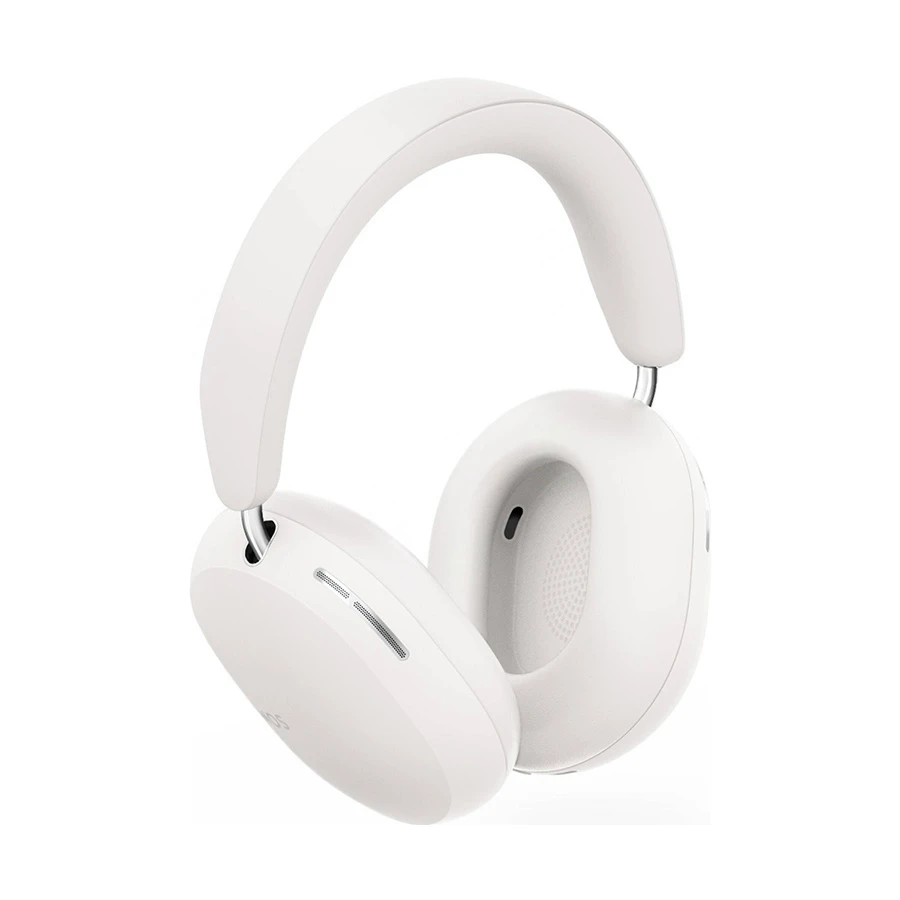
All right, now let’s talk about cases. Bose and Sony’s headphones can fold, making their case smaller than the Nothing and Sonos ones, which are very similar in terms of feel, by the way, but both of them are kind of bulky. And then there’s the AirPods Max, which is kind of in its own lane with its smart case, which honestly, I feel like I’m probably the only reviewer on YouTube who actually likes this thing. But I like the design of this case. It’s great for when you use these things around home because it preserves the adjustments you made to the headphones, so you’re not constantly having to readjust them every time you put them on from their case, and it’s easy to slip them in and out by just grabbing the headband and then putting them back in. You don’t have to deal with some stupid zipper. Speaking of which, I really like the new magnetic clasp on Sony’s case, that’s a really smart design decision. Now, yes, the smart case doesn’t fully encapsulate the AirPods Max, but I’ve had them for years now, and I just put them in a pouch in my bag and they’ve been fine.
Overall, though, I’d give the case winner to the Sonys for their smaller design and magnetic clasp, followed by the Bose, AirPods Max, and then the Sonos Ace and Nothing Headphone 1.
Price
Lastly, let’s talk about price. The Nothing Headphone 1 wins this category with their $299 retail price, followed by the Sonos, Bose, Sonys, and then the AirPods Max at a whopping $549 US dollars. Though, they often do go on sale for around $450 US dollars at various times throughout the year. And you can see the current prices for all of the headphones in our blog post, which includes links to multiple retailers, and you can see where else I’ve covered each of these headphones by clicking the I icon at the top right corner of their product card. Link to that in the description and pinned comment.
Final Verdict: Which Should You Buy?
| Name | Price (MSRP) | Mic Quality Rank |
|---|---|---|
| Sony WH-1000XM6 | $459.99 | 1st (best) |
| Apple AirPods Max | $549 | 2nd |
| Bose QuietComfort Ultra Gen 2 | $449 | 3rd (tie) |
| Sonos Ace | $449 | 3rd (tie) |
| Nothing Headphone 1 | $299 | 5th (last) |
So, which pairs of headphones should you buy? Well, if I had to pick the best all-around headphones if money was not a factor, it would probably be the AirPods Max, although that’s really going to be if you have an iPhone. But the reason for that is I still find them more comfortable than the Sonys with their use of knit material on the ear cups, as well as this mesh canopy on the headband. And even though yes, they are heavier and they’re more expensive, I think they look better aesthetically than the Sonys, and they have excellent noise cancellation and sound quality as well.
Now, if the Bose QuietComfort Ultra, if they didn’t have such an overly punchy sound and a bit overreliance on bass, I actually think they’d probably be my top pick over the AirPods Max. But I like the Max’s sound signature better and I hate the fit, look and controls of the Sony. Otherwise, they would have been at the top because their sound is just fantastic. And if you’re an Android user and you can tolerate the fit of the Sonys, I think they’d be my top pick.
Now, in general, when you add price into the equation, and it should always be added into the equation technically because it’s a big consideration, there’s no contest that the Nothing Headphone 1 are by far the best headphones for the money for both Android and iOS users. Now, sure, they don’t have the best noise cancellation or even the best sound quality, but their EQ features and sharing are so good, it’s pretty easy to get them to sound great, and the controls are by far my favorite across any of the headphones. Plus they have a pretty unique aesthetic that isn’t trying to play things safe. They’ll definitely stand out, but I think in a good way, and overall I found them to be quite comfortable to wear during the day, and they have an actual water resistance rating which none of the other headphones do.
So those have been my thoughts, but let me know what you think.