
When we talk about the semiconductor industry, we usually think about the most advanced chips and the machines capable of making them. This makes sense: they are extraordinarily complex machines, built with a precision that leaves little room for error. But if we look beyond the well-known names, we find a network of specialized suppliers without which this technology cannot exist. And here comes a less obvious weakness: the problem doesn’t have to start in one big factory to reach an industry that depends on supplies spread across the globe.
The threat already has a name. At the center of this story is Sindlhauser Materials GmbH, a small German company that is part of the supply chain of ASML, a Dutch manufacturer of lithography equipment for chip manufacturing. China’s trade restrictions compromise its supply of materials and threaten its existence, Bloomberg reported. The media, which cited people familiar with the conversation, indicated that Brussels was discussing a possible solution with Beijing.
It all started with Russia. To understand how we got here, we need to go back to July 23, 2026. That day, the European Union approved its 21st sanctions package against Russia, which included sanctions on 14 companies established in China, including four in Hong Kong, for their alleged support of Russia’s military complex or for evading European sanctions. Beijing’s response came the next day: it added 14 more European companies to its export control list, including Sindelhauser. Thus, a dispute related to the war in Ukraine reached a supplier of the semiconductor industry.

A small company, special materials. Sindlhauser is based in Kempten, Germany and has been supplying materials for industrial coating processes since 1995. Its catalog includes metals, alloys, ceramics and rare earths, using vacuum coating techniques to deposit very thin layers on various surfaces. These methods allow modification of surface properties and have applications in sectors such as optics, sensors and semiconductors. The company also offers technical consulting and recycling services, although it has not disclosed which specific materials or components it supplies to ASML.
The problem is supply. Inclusion on the Chinese list has a specific consequence: the country’s exporters cannot sell Sindelhauser products subject to dual-use controls, that is, materials and technology with both civilian and military applications. The ban also applies to foreign intermediaries who want to supply the same goods of Chinese origin, although Beijing contemplates exceptional approvals. According to Bloomberg, the company sources virtually all of its rare earths and other important minerals from China. German authorities have explored alternative suppliers and recycling options, but the company could be forced to close in the coming months if the ban continues.
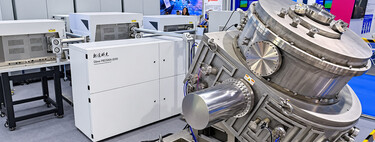
Brussels wants an exchange. The possible departure involves a political counterpoint: According to Bloomberg, the European Union is negotiating to lift some trade sanctions on a Chinese company accused of aiding Russia in its war on Ukraine, in exchange for Beijing easing measures against Sindelhauser. The identity of that company has not been disclosed and there is no confirmed contract. However, there is a diplomatic precedent: after meeting in Beijing on 8 and 9 October, Maroš Šefčovič and Wang Wentao agreed to improve the transparency of procedures for including and removing companies from the restricted list, in addition to measures to facilitate their exclusion in accordance with applicable law.
The risk does not end here. Sindlhauser’s difficulties show how much a commercial decision can affect companies located far from the conflict. Brussels is already looking for other sources of the vital mineral: according to Reuters, it is studying closer cooperation with Vietnam to diversify its supply and reduce dependence on China. But developing new suppliers is not the same as immediately restocking the materials the German company needs. These are two related issues, albeit with different time frames: preventing restrictions from compromising their continuity and reducing European industry’s exposure to future supply disruptions.
Picture | ASML
In Xataka | ASML can’t cope and that’s not good news for anyone involved in the technology business.