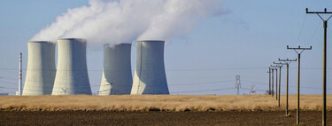
There was once a town with cinemas, schools, social clubs, swimming pools and even a regular doctor’s office. Just abandon it. It’s not a story, it exists, it’s in Tinio (Asturias) and it’s called Soto de la Barca. Some call this place the “Asturian Chernobyl”, even though there was never a nuclear reactor here. Pripyat had its deadline and 49,000 people were evacuated. Soto didn’t even get a siren warning: it was evacuated slowly, paycheck to paycheck.
It was born in 1965 for one reason only: the Narcia thermal power station, on the banks of the river. The company built chalets for technicians and blocks for workers. It had 500 neighbors. When the plant shut down in 2020, the city had no reason to exist. Already in 2023, the Institute for Just Transition has granted 3.5 million for the rehabilitation of part of the city. In 2025, the city council returned them. Why was the thermal power plant closed and why no one spent the money? Because a lot has happened in between.
This story is long, but I’ll try to be brief and focus on what’s important.
A city for 500. The idea is that of businessman Higinio Gonzalez, who died in 1960, five years before the start. His plan: a thermal power plant to burn coal from southwestern Asturias and northern Leon. Naturgy made its commercial debut in 1965. As usual, the company set up a whole town next to the plant: school, social club with bars, parish church, commissary, swimming pool, sports area, cinema and old offices. The workforce has grown to 250 jobs.
Architect Ramon Vázquez Molezán would sign the city’s design at a time of promise and illusion. The tree grew until there were three groups in 1969 and 1984. Since the 80s he has gone through various companies, including staff cuts. In 2000 it set its record: 3,855 GWh, electricity for several thousand people for a year. Its two parks have 120,000 tonnes of coal reserves. In 2014 it produced only 916 GWh.
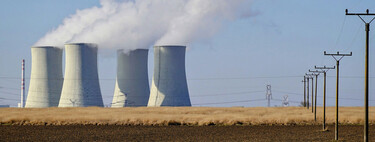
The end comes. In 2016, Group 1, the smallest, was approved for closure. In December 2018, Naturgy asked to close the rest, such as La Robla and Meirama. In June 2020, the plant left the grid, like six other Spanish thermal plants in the same month. When Naturgy requested the closure, the plant had 81 of its own employees and 48 from subsidiary companies. ‘Somos Tinio’ adds 180 works destroyed. That is, it subtracts them.
And in 2022 there was still no alternative plan. Additionally, almost the entire plot is a flood zone. The Industry Minister referred to the 2019 Just Transition Agreement, which includes options, although not in this area. According to the city council, the entire council observed the closure and families went to the center of the region.
Transfer. Naturgy received a permit to break ground in March 2022 and signed the agreement in August that transferred the city to the City Council. In April 2023, the Institute for Just Transition awarded a 3.5 million grant from the Recovery Plan. The project received the highest score in Spain. The plan: to rehabilitate 14 single-family homes and create the first co-housing in Spain promoted by a city council.
and blasting. On December 20, 2023, the cooling tower blew up, destroying 60% of it. In February 2024, the Principality promised a business park on the land. In September, another explosion removed the remains of the factory. Naturgy also presented a project to reorganize the Narcea riverbed and protect plots from flooding. Decommissioning was completed in October 2025.
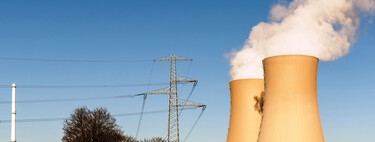
Money goes around. Tinio returned 3.5 million that year. The mayor, Montse Fernández, explained that the municipal government that landed in June 2023 was already facing missed deadlines: the projects were not contracted until September. Two were needed, one to renovate 14 houses and another to urbanize the town. The second never arrives: the successful bidder does not present it and the contest is void.
The councilor for urban planning, Pablo Fernández, summed up the transfer as a “poisonous gift”: the city is a heritage site of cultural interest and requires a large budget to preserve it. The City Council surveyed the Institute for Just Transitions about public or collaborative housing, cultural spaces and educational uses. We are in the middle of October 2026 and we still don’t have a concrete project.
What is left? Soto’s place has 24 registered residents. Chalets and blocks still stand with damp, cracked and weeded walls. The house and grounds store medical supplies, clothing, desks, books and personal memorabilia. Everything mixed, like a quick exit, like a zombie movie.
The theft and vandalism has not stopped since the erosion began. In 2024 the bronze bust of Higinio González presiding over the entrance disappeared. Fearing theft, neighbors removed the copper bell from the church. However, in June 2026, one of the door panels collapsed overnight. After two thefts of electrical cables, the priest left the church without electricity.
Ruben Domínguez, of the University of Oviedo, called for a comprehensive rehabilitation respectful of the original design. Residents, he argues, will be worth the complex alone. The local press has already dubbed it the “parlor of the South West”.
precedent Precisely Perlora, in Carino, was born in 1954 as a resort town on 20 hectares of land with 274 buildings. It closed in November 2006. Paisega is another case: it houses Salim Dam workers: school, canteen, hair salon and even its own police force. A 40-kilometer cable car brings you the materials. Today it is completely deserted.
The extreme case is in Japan, as usual: Hashima had 5,259 inhabitants in 1959, and between 1891 and 1974 it mined 15.7 million tons of coal. Well, Mitsubishi closed the mine in January 1974 and the last resident left on April 20. The island was empty in just three months. In 2015, Hashima entered the UNESCO list.
Another fate. La Robla, also from Naturgy, once employed 300 people and stopped in July 2020 after almost 50 years. 12.9 million is budgeted for its demolition. Yes, it has a destiny on paper: with Enagás it plans a 485 million and 280 MW hydrogen plant, with start-up initially scheduled for 2026. We are in October and there is no news that it will start. In February, Naturgy’s CEO admitted at a sector forum that no final investment decisions in renewable hydrogen have materialized: “They’re all delayed.”
1 in 30. On July 29, the Ministry for Environmental Change awarded the Narcea 400 kV network node to La Barca Energia. The plan: a 320 MW pumped hydro plant, an investment of over 400 million and 289 jobs for at least 12 years. More than a plan for the city, it is a use for the connection capacity left free by the thermal power plant. Money comes first. But come on, Naturgy counts 30 people working to destroy Narcea. Eight came from the list of the Institute for Just Transition but only one lived in Tinio. And there is no hope of resurrection of this corpse either.
Picture | Flickr (Rare)
In Xataka | After the UK, another country is on the path to permanently abandoning coal: Spain