For years, China has been exploring the depths of the Pacific Ocean in search of nickel, cobalt and manganese, the metals needed to build the batteries and electronic devices with which it can dominate the world. In one of the largest underwater reserves on the planet, located at a depth of up to 6,000 meters, its researchers found something that no one expected in this volume: 11,742 groups of viruses, of which 11,662 were unknown in the scientific database.
A huge mine under the Pacific Ocean. Between Mexico and Hawaii lies the Clarion-Clipperton Fracture Zone, a vast abyssal plain covered with billions of polymetallic nodules, small spherical formations that resemble potatoes scattered on the seafloor. Manganese, nickel, cobalt and other elements used in batteries, electric vehicles and industrial technology are concentrated inside.
Some estimates place its reserves above those known on land, a possibility that has sparked an international race to explore the region. The International Coastal Authority has awarded 17 exploration contracts in the area, including five to Chinese companies, although commercial mining has yet to begin there.
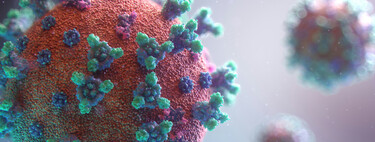
11,742 viruses that no one has listed. A team led by Boen Hou from Chongqing University and China’s Second Institute of Oceanography analyzed sediments collected during expeditions carried out in 2023 and 2024. The researchers studied 60 sets of samples and reconstructed the genetic sequences that allowed them to identify the virulence units of the virus 11,74, 7,74. Population is based on their DNA.
Of those, 11,662, about 99.3%, could not find a correspondence in existing reference records. The result represents one of the largest inventories of viral diversity in the region and highlights that microscopic life on the seafloor remains largely unknown.
A world that operates by other rules. Most of the detected viruses belong to groups related to bacteriophages, specialized to infect bacteria and other microorganisms, so the discovery does not imply the presence of thousands of new human pathogens. These organisms live in an environment subject to extraordinary stress, with virtually no light, little available nutrients and a high presence of metals.
Genetic analyzes indicate that many of their populations are very different from other marine ecosystems, including deep trenches and hydrothermal environments. Indeed, about 4% of the protein groups identified features shared with external data sets used for comparison.
Viruses also rule the ocean floor. Researchers have found indications that these viral communities may affect processes essential to ecosystem functioning. By infecting bacteria and archaea that participate in carbon, nitrogen, phosphorus, sulfur and metal cycles, viruses can alter their metabolism, cause nutrient release and interfere with the exchange of genetic material.
Some contain genes that can help their hosts tolerate high concentrations of metals present in sediments. These are functions inferred by genomic analysis and associations predicted between viruses and microorganisms, so their actual scope will still need to be experimentally verified.
Find out what took millions of years to create. The nodules that attract mining companies grow remarkably slowly, in some cases only a few millimeters per million years. In addition to concentrating valuable minerals, they provide hard surfaces on which to live organisms that find little other support in the soft sediments of the seafloor.
Its extraction will require physical intervention in that terrain, removing materials and raising particles that can be redeposited in the surrounding area. In fact, its tests trouble Performed in a similar environment indicates that sediment changes can last for decades, a significant time for an ecosystem characterized by extremely slow biological and geological processes.
A scientific mystery. Nature studies provide a baseline of viral communities present before commercial exploitation begins, information needed to assess potential future losses. However, the researchers caution that it is still unknown how these viruses and their host microorganisms will respond to nodule removal, sediment resuspension and habitat modification. They also suggest that some populations preserved in deeper layers may partially contribute to the recovery of surface communities, a possibility that still needs testing.
In any case, the discovery is remarkable: while China and other powers are studying how to make technological changes to take advantage of the metals on the Pacific Ocean floor, science has just discovered that there is a universe of thousands of unknown viruses whose ecological roles have yet to be determined.
Picture | RawPixel, RawPixel
In Xataka | We believed that hantavirus did not jump into humans. Until someone went to a birthday party in Argentina
In Xataka | Tristan da Cunha is the most remote inhabited place on the planet. And there came a man infected with hantavirus