On July 7, 1922, Marie Curie wrote to Albert Einstein to let him know. With good form, yes; But she was angry after all: Currie even told her she had caused him a ‘great disappointment’.
For 21 years, two of history’s most important scientists wrote letters to each other in which they barely talked about physics. All they did was cover their backs. And now, a century later, we can read the whole story.
“A big disappointment”? Three days before that July 7 letter, Einstein told Currie that he was going to resign from the League of Nations’ Commission on Intellectual Cooperation. He admitted the reason, but asked not to tell anyone.
On June 24, the foreign minister of the Weimar Republic, Einstein’s old friend Walther Rathenau, was assassinated in Berlin. Which made him depressed. And, precisely for that reason, Currie admired him. There were certainly very harmful currents of opinion, but in his opinion they had to be fought, and indeed, he was sure that Rathenau himself would agree with him. Was there any chance to change his mind?
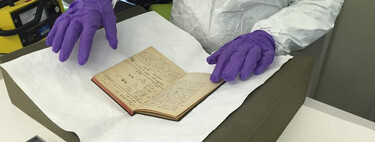
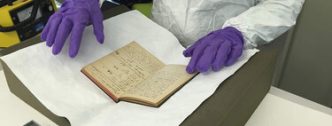
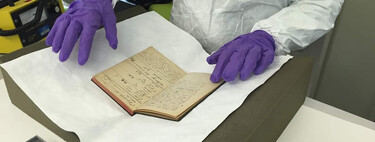
A book for the history of science. Correspondence between the two was not easy to compile. Over the years, archives in Jerusalem, Paris, Zurich, Princeton, Dusseldorf or Warsaw have been searched and only 32 letters have been found. Some were well known (like Einstein telling Curie to ignore the haters), others were published. But some contained radioactive dust and had to be cleaned up.
However, together they tell one of the most fascinating stories of 20th century science.
It all started with a lynching. Although they had met before, their friendship emerged after the first Solvay Council in 1911. She was the only female and the youngest guest. In the middle of the conference, the press revealed that Currie had been having an affair with Paul Langevin, married and de facto separated. It was a big scandal for the society at that time.
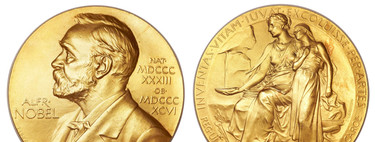
When they arrived in Paris, according to them, a crowd surrounded the house. The controversy was so great that Arrhenius, a member of the Nobel Committee, advised him not to collect his second prize.
A week earlier, Einstein had written to him from Prague that he was angry at how the public was interfering in his life, that he admired his work, his strength and his integrity, and that he should not read what “The Rebel” had written. Eventually, Marie Curie went on to collect the prize against all odds.
And did they collaborate together? Not that true. It is true that Einstein added some scientific comments to that ‘first’ letter; But their spheres could not touch each other. They were “social friends”: in 1913 they went on a hiking trip through the Engadin with the children. A few days later, Einstein would admit to his future wife that Curie was very intelligent, but “cold as a fish” (although experts disagree whether this was true or a ploy to avoid making Lowenthal jealous).
But in the end did he resign? Not at that time. The support of Curie and other friends forced him to withdraw it. He gracefully resigned in 1923 and returned to the committee in ’24. Those years were complicated. Needless to say. That’s why it’s so amazing to read it told in the first person.
Picture | Wikimedia (modified)
In Xataka | Marie Curie and her reflection on facing any problem: “There is nothing to fear in life, only to understand.”