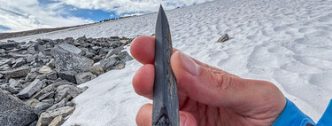
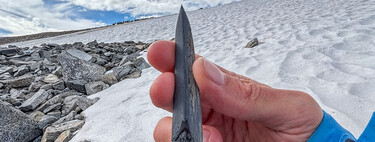
Our landscapes have been changing radically over the years, and the high American peaks were no exception, as the western United States has always been a benchmark for glacier numbers. And we talk about the past tense because an article published in the journal PNAS suggests that about a quarter of the glaciers have already been lost.
An inventory. To understand exactly what’s going on here, scientists have relied on aerial photographs taken between 1955 and 1990 to compare historical topographic maps of the United States Geological Survey, with the most recent inventory completed in 2015. Obviously not everything is glaciers though, as we need experts to do this massaging. Snow and ice in constant motion.
And at first glance, the net figures can be misleading, since the old map recorded 1,453 glaciers, while the latest inventory counted 1,331 glaciers. The confusion here is that, although a priori it seems that 122 glaciers have been lost, the reality is that 300 glaciers have disappeared.
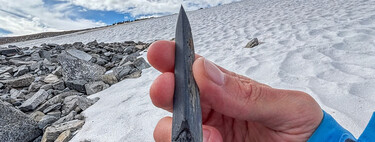
The reason? The answer to this disparity lies in fragmentation, as large glaciers break into many smaller pieces as they shrink from heat, artificially inflating the number of individual glaciers to even the total amount of ice.
The end result is that the total ice area is reduced by 35% and volume by 33%. And some areas were damaged, such as the Beartooth-Absaroka region, which suffered up to 77% damage. .
is alive With this panorama, the question that arises is: How is it possible for the remaining glaciers to exist in an increasingly hostile regional climate? The answer, according to experts, paradoxically lies in the fall itself. And, as glaciers in the western United States shrink, they retreat to the most protected corners of the mountains.
Thus, the survivors survive for the local topography, since being so small they manage to shelter in the shade of basins, deep ravines or large peaks that cut them off from direct sunlight.
A death prediction. Despite this heroic ground-based resistance, the medium-term future is bleak. Here we have a previous study by the same team that analyzed the Olympic Peninsula in Washington State in detail. There, half of the massive frozen surface recorded in 1900 has already disappeared, and 35 glaciers and 16 perennial snowfields have disappeared since 1980, a loss directly attributed to air warming.
With these facts on the table, what can be expected is that a good part of the glacier will finally disappear around 2070. But this is not just a problem for the US, this retreat is a reflection of the global situation. Data released here at the beginning of 2025 show that the entire planet lost 273 gigatons of ice per year between 2000 and 2023, so the future is not looking good right now.
Picture | Alberto Vivas
In Xataka | In 2023, twenty trucks crossed the Netherlands carrying 400 tons of Wadden Marsh. Its destination was a channel capable of creating storms