
The professional photography market has been dominated for decades by Japanese companies such as Sony, Canon, Nikon and Fujifilm. We also have qualified representatives in Europe, such as Leica, Hasselblad (Swedish although it belongs to DJI) or Pixii. When it comes to fully established brands, there’s a French one that’s trying to get its act together: Esquisse.
An ultra-compact aluminum design. Esquisse announced its camera in 2025, marking a horizon where we are now: the fourth quarter of 2026. The camera combines a unibody chassis made from aluminum with a very compact size. It incorporates an OLED electronic viewfinder with a minimalist control scheme and few physical dials. For those coming from mobile, the Esquisse camera focuses its controls on the touch screen.
While the camera was supposed to launch for those dates, a statement on Instagram suggests it may be delayed without a date. According to the French brand:
“For the past year we have been working on new electronics, a new image processing architecture and internally developed software. Some decisions are already clear, others are still to be defined.”
“We’re not ready to reveal everything yet. But we want to share where we are and thank you for your patience.”
According to official (and provisional) specifications, the Esquisse camera relies on a high-resolution micro four-thirds sensor (megapixels not reported), support for micro SD as storage, and a battery that promises more than 300 shots on a charge. The camera is dust and splash resistant.
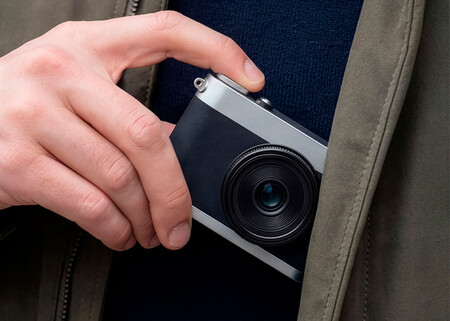
Micro four thirds. Committing to this standard guarantees access to a wide range of lenses produced over the years by brands such as OEM systems, Panasonic, Sigma or Tamron. Because the Esquisse camera will be compatible with all interchangeable lenses including a micro four thirds mount with autofocus. Always according to the brand.
Barrier: $2,000. That’s not exactly a cheap price, especially since the Japanese competition is much more aggressive in this segment. For example, the current OM System Pen offers cautiously retro aesthetics, modern autofocus and an integrated viewfinder for around 1,000 euros, half the cost of the French alternative. Or the Fujifilm X-E5, for around 1,650 euros. The first can now be reserved and the second is on sale. Meanwhile, Esquisse has yet to prove that its camera can survive that competition.

Europe and its difficulties. The Esquisse case reflects the larger problem of consumer electronics of European origin: having a good idea is not enough to compete with the Asian giants. Europe retains prestigious manufacturers such as Leica, Hasselblad or the French Pixie, but a good part of its offer is aimed at specialized markets. Japan has decades of experience, huge production chains and consolidated catalogs, while China has gained ground in action and video cameras with companies like DJI or Insta360. Not to mention their smartphones, increasingly specialized in photography.
For a small European manufacturer, developing electronics, sourcing components, ensuring production and providing support is a huge challenge. Esquisse wants to compete with Japan, but first it must pass a more immediate test: being able to build and sell its first camera. At this point he still hasn’t achieved it.
Through this Gamestar
Cover image Edited Esquisse
In Xataka | Mobile phones seem to have killed cameras forever. Until mirrorless revival came along