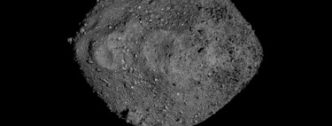
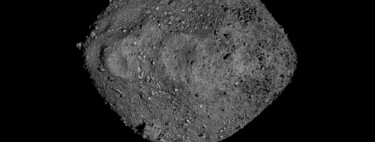
When NASA’s OSIRIS-REx probe reached its destination on asteroid Bennu in 2018, it encountered something unexpected. According to measurements taken by the Spitzer telescope in 2007, the asteroid gets very hot when exposed to solar radiation and cools just as quickly at night. It is something that occurs on Earth in areas that are covered by finer rocks, such as beach sand. Therefore, they thought that touching the surface and taking samples would be a breeze. On the other hand, the terrain where the ship operated was complex with large rocks.
As laborious as sampling was, they had trouble explaining what caused these temperature changes. This has been a mystery until now, as scientists from the University of Arizona have suggested a very plausible answer.
Thermal inertia. On Earth, beach sand has a low thermal inertia. Other harder or more compact rock materials, such as concrete, have higher values because they heat up and lose heat less. This would be reasonable with the large stones found in Bennu. However, its thermal inertia was similar to that of beach sand. OSIRIS-REx’s initial mission was to take samples from asteroids, but now scientists had another reason to do so: They needed to know why these rocks cooled so quickly.
Holes and cracks. The first thing noticed when analyzing rock samples taken from Earth for study is that they are composed of a very porous material. This, of course, helps it cool down faster. But thermal inertia is not the same as decreasing. It was found that they exhibited an extensive network of fractures running through their interior. Now, how do these cracks affect heat dissipation? They needed to measure it, but first they had to verify that the anomaly they detected was not due to errors in Spitzer’s measurements.
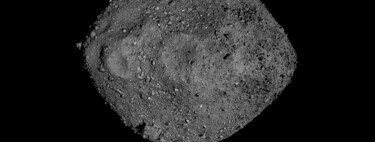
Lock-in thermography. This is the name of the test that was used to analyze the relationship of fracture with temperature. Broadly speaking, it exposes a portion of the sample to a laser and studies how heat spreads around it. With it, the thermal inertia of small particles can be calculated, which cannot be done with a conventional thermometer. Thanks to this tool, it was found that the thermal inertia is more or less the same as that measured with Spitzer.
Computer simulation. They already had thermal inertia data on a very small scale, since they had small samples. The next step was to analyze what would happen at the block scale, so they used computer simulators that didn’t just demonstrate thermal inertia. They also pointed to cracks as the “culprit” for the accelerated cooling that had so surprised them.
Why does it matter? Until now, thermal inertia data taken by telescopes and probes were extrapolated directly to the rock forms that make up an object: low thermal inertia, thin rock, high thermal inertia, dense rock. With what happened in Bennu we can see that, in reality, there are more factors involved in the values of these parameters, so this extrapolation would be misleading and would require more data.
At this point, taking samples from asteroids is a milestone that has only been achieved by OSIRIS-REx and the Japanese probes Hayabusa-1 and Hayabusa-2 along with asteroids Itokawa and Ryugu. The Chinese probe Tianwen-2 intends to do the same with asteroid Kamoaalewa, although it has not yet returned from its trip. Regardless, it is expected to become more frequent in the future. In this way, the parameters that really make up the thermal inertia can be better analyzed.
Picture | NASA’s Scientific Visualization Studio – Cal Elkins, Bashar Rizk, Carina Bennett, Daniela Delagiustina, Dante Loretta, Dathon Golish, Jason Dworkin, Jeff Seabrook, Michael Daly, Olivier Bernwin, Dan Gallagher, Ian Jones, Lawrence Schuler
In Xataka | Earth has moons we don’t know about: exploring them is key to unlocking the secrets of our solar system