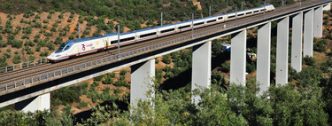
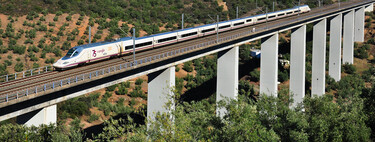
On April 21, 1992, Spain witnessed the first commercial trip on a high-speed line. It was built by Madrid-Seville, among other things, to serve the Expo 1992 that would be held in the Andalusian city. The opening of the next Spanish high-speed line, the Madrid-Zaragoza-Lleida section of the Madrid-Barcelona corridor, is 11 years away.
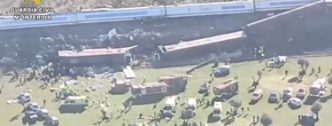
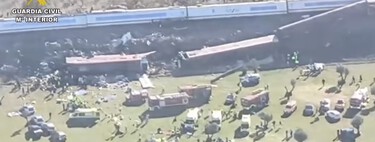
That decade saw a key shift in the expansion of high-speed lines in Europe. This second line now comes with the ERTMS safety system that will replace the LZB system installed on the Madrid-Seville line. A corridor that is being modernized with this extensive system in Europe and whose final implementation is expected in April 2026. The Urda (Toledo) accident occurred during this renovation process and before it was fully completed.
he ERTMS is a safety system which uses a different protocol than LZB. Both are considered maximum security but for some time the European Union has ordered to modernize their first lines and leave LZB to harmonize all security language.
On the occasion of the train accident at Adamuz (Córdoba), in Vanguard They report that there are up to 25 different safety systems in Europe, with 227,000 kilometers of roads that are impassable because they do not use the same safety system. Although it should provide a very equal level of safety, this LZB system was already put in the spotlight in January although it was later revealed that the main cause of the accident was a failure in the track infrastructure when an Erio train derailed and was hit by a Renfe Alvia.
We experienced a good example of this lack of interoperability within the systems in Spain. The Andalusian Corridor is the only one where the LZB system continues to be used instead of ERTMS. This delayed Owego’s arrival in Andalucia because it was having trouble consolidating its trains, which until then only worked with this second, more modern safety system.
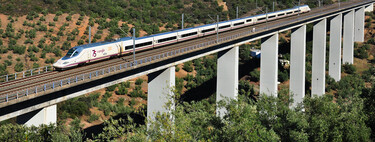
A road under renovation
To avoid such situations, the European Union has ordered the switch to the new ERTMS-2 system, the evolution of ERTMS. In April 2025, the Ministry of Transport announced that the line was being modernized to adapt to this system (in fact, the Adif map shows the line “under renovation”) and that they expected the line to be fully renovated by the end of 2026. That is, among other tasks, the ERTMS-2 system is active.
This is the ERTMS-2 system Works differently from LZB. The latter is based on a zigzagging wire that transmits information about the train’s position, its speed and remaining meters until the next change in speed limit.
In the system, the train interrupts this closed circuit, signaling to the CRC (Adif’s Control Centre) that every train does not pass through the same canton (kilometer-long railway section used as a safety mechanism for emergency braking). The system itself can handle emergency braking to prevent a train from “invading” a block where a train is already located.
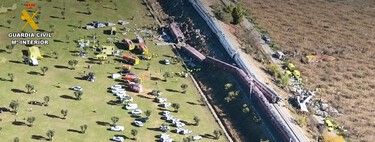
If the system suffers a breakdown, as indicated with the first information of the Urda (Toledo) accident, the driver must pay attention to the ASFA system, which indicates through physical signs located on the side of the track whether he is allowed to pass and the maximum speed he can travel.
The ERTMS-2 system works differently. What it does, broadly speaking, is Simplification of process and equipment. The train connection is managed by GSM-R and beacons are a redundant system to locate the train.
With this system, radio equipment is used which communicates with the train Movement authorities Or MA (Movement Authority), explain How do trains work?. This MA is responsible for telling the driver the maximum speed he can travel and for how many kilometers, but it also contains more information, such as temporary speed restrictions, which make it easier to comply with the limit.
These experts explain that the system has the advantage that if a train is in trouble but can no longer stop, it can move through an enclave at a reasonable speed without risk of derailment and only applies emergency braking when the situation is safe. On the contrary, it immediately stops the passage of all trains to avoid a collision. The system is considered more secure because it contains more information, redundant systems and decisions are made more quickly.
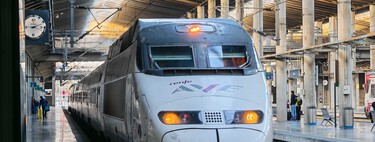
Furthermore, this simplification and modernization of components is important. In 2020, the Cabinet and ADIF approved the renewal of the line with an award of 108 million euros, as expected a few months ago. Technical specifications specified that the useful life of the system was over and technical support became complicated as Siemens and Thales/Hitachi, the component suppliers, continued to reduce their production, so there was a risk of not being able to find spare parts in the event of a system failure.
D Time limit for execution They planned to prepare this reform in 2025, he gathered Economist At the beginning of the decade when the Renewal Agreement was made public. Also five days It included a similar period, requiring 52 months to complete the renovation. However, this change in security measures has been somewhat delayed.
last year, ABC It said the full reform is expected to be in place “throughout 2026”. They explained that part of the delay was due to the fact that although the modernization was announced in early 2020, the final agreement was not approved until November of that year. And work started in September 2021. These works were being done at night so that there was no impact on the traffic flow or as little as possible.
Nevertheless, in April 2025, the transport set a more specific date for the renewal of the line: “The aim is to completely renovate its 34th anniversary and celebrate it with the most modern technology on the market, such as the ERTMS 2 system.” That is, the transition must take place completely before April 2026.

It must be remembered that the Adamuz (Córdoba) train accident blocked the railway corridor for months. Of course, the jump to this more modern security system should have been made before January 2026, when it happened. On that occasion it was due to problems with the road infrastructure but by then the system had to be renewed.
In summary, system renewal occurs for several reasons. The European Union wants greater interoperability of companies across the continent to make road liberalization less costly and efficient. But it also commits to a system that is less dependent on physical components and, therefore, that wears out faster and is more prone to breakdown.
Also for a significantly safer system though, it must be remembered, the LZB system is considered the strongest and is used over thousands of kilometers in other European countries.
Picture | Civil Guard
In Xataka | After the Adamuz accident and high-speed chaos, the results came: 30% fewer train passengers