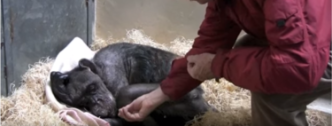
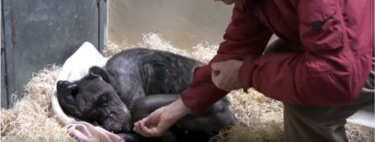
Chimpanzees are incredibly related to humans. We only have 1.2% different DNA. But then, why are we apparently so different? It is true that chimpanzees are very intelligent animals, but not as intelligent as humans. Our brains are more developed, so it could be that, a long time ago, something happened that disrupted our brain development. What could have taken us so far has long been a mystery, but now scientists at Lund University have offered a possible answer: perhaps it was a virus.
The virus changed everything. There are some viruses that not only attack foreign cells and use their machinery to reproduce. They are also able to insert their own DNA in the middle of the host’s DNA. If it occurs in germ cells, the insertion can be passed from generation to generation. So, scientists at Lund University tested the chimpanzee’s DNA for potentially suspicious viral fragments. They are especially struck by the presence of DNA from a virus Pan troglodytes endogenous retrovirus-1 (PTERV1), as it is found in this and other African apes, but not in humans. He was a great candidate.
brain attack. The second reason this virus caught their attention was that its DNA was inserted near a non-coding gene called LINC00662, which plays a crucial role in brain development. It is non-coding meaning it does not have instructions to synthesize proteins, but rather regulates other genes in some way. In this case, when it is activated in the brain, it positively regulates genes that help neurons mature and develop the extensions needed for connections.
These scientists had a suspicion, but needed confirmation, so they created a kind of experimental mini-brain in the laboratory, called a human brain organoid, and tested what would happen if LINC00662 was inhibited. Predictably, neurons and their connections are much less mature. Instead, when the viral insert of DNA was removed from the chimpanzee’s stem cells, LINC00662 began to function normally in the brain and the neurons developed much more. Of course, it is important to note that these are laboratory tests. We do not know how the insertion of viral DNA will affect humans, since the resulting behavior also depends on the rest of the DNA.
More factors are involved. The authors of the study emphasize that the slow brain development of chimpanzees compared to ours is probably multifaceted. However, it seems that the role of PTERV1 virus may be quite relevant.
Why not us? Something that caught the attention of these scientists is that, just like chimpanzees in our past, the PTERV1 virus can infect them, but not us. There are several hypotheses to try to explain this. One suggests that perhaps some of our immune molecules, such as the antiviral protein TRIM5α, may act as a shield. Another points out that, perhaps, we are not geographically associated with chimpanzees at the time of this supposed viral outbreak.
Neither hypothesis is clear, nor is it certain that LINC00662 is so relevant to the gap that separates us from chimpanzees. However, this is a good clue worth continuing to investigate.
Photo|Giles Laurent
In Xataka | Experts are clear: “The brain is focused on language learning from six months to five years.”