
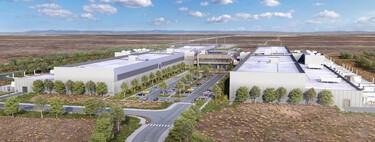
When we talk about large data centers, we usually think of buildings packed with servers, cooling systems, and huge amounts of electricity. However, everything starts much earlier, in the land that must be prepared to receive an infrastructure of these dimensions. This may involve the first stage Removal of trees, earthworks and changes in drainage systems. These are actions that can be part of these projects, but this does not mean that they are excluded from environmental requirements And the results of what happens during that preparation can be long before they come online.
In Muhose, a town in northern Finland, this earlier step put a Google project under the police microscope. On October 29, Finnish authorities confirmed a criminal investigation into possible violations of environmental laws on the land of the future data center. The tested actions correspond to Tuike Finland, a subsidiary of the American company. According to Reuters, investigators are trying to determine whether the work violated water laws and caused environmental damage. For now, we are talking about doubts that still need to be clarified.
What happened in Muhos went beyond marking on a map where to build. On the project land, about 330 hectares of forest have been cut, according to data published by Yle, while other maintenance works have progressed. Site conditioningEither includes soil disturbance and drainage, which alters site conditions prior to installation of specific structures. The point is that these works do not have only a technical dimension: they may also have environmental effects that must be assessed according to Finnish law.
From land preparation to investigation for potential environmental damage
The environmental assessment was still pending when the Finnish supervisory body known as LVV intervened. On October 6, authorities asked TUI Finland to suspend preparatory work that could significantly alter the environment, at Muhose and another project located in Kazani-Otanmaki. The reason is that these methods must make it possible to identify potential impacts and study alternatives before taking certain actions. According to Yle, Google confirmed on October 14 that it has suspended work on both sites, although it may continue to plan, measure and study minor impacts.
Authorities’ attention is now focused on an element less obvious than plants: water Excavated drainage ditches may alter its circulation, and the regulator considers that the plan presented is inadequate to control the potential acidification effects of water associated with heavy rainfall, snowmelt and soil composition. For this reason, he demanded a more detailed plan from Tuike Finland before November 5. Police are investigating whether the measures violated water laws and caused damage to the environment. According to Reuters, a possible conviction could lead to corporate fines, while the investigation runs until 2027.
Google, for its part, maintains that it acted according to its interpretation of Finnish law. On October 13, Antti Järvinen, head of the company in the country, publicly apologized and said they worked in cooperation with authorities and experts, although he avoided specifying which organizations were notified when asked about them. Also The company denied that it was accelerating Intentional logging to get ahead of the environmental assessment. After learning about the criminal investigation, a spokesperson assured Reuters that the tech company would cooperate with police and continue to meet authorities’ demands.
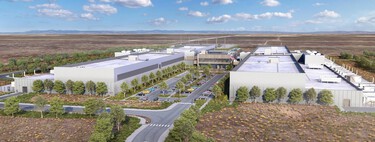
The Muhos case occurs in the middle of a much more economic segment than that location. Google announced in September an investment of at least 13 billion euros in digital infrastructure, including data centers and support facilities, between 2027 and 2028 in Finland. The company also introduced initiatives related to clean energy. The country is attractive for its cool climate and low-emissions electricity, though that expansion puts demands on the grid. Fingrid estimates that national electricity consumption could increase by up to 40% compared to 2025 if all projects in the interconnection agreement are implemented, not just Google’s.
There are now two different unknowns on the data center calendar of the future. One is administrative: the supervisory body must decide on the necessary approvals to resume operations, Still without a specific deadline. The other is criminal: Investigators have announced they will report on their progress in December, although they have yet to determine whether violations and environmental damage have occurred. Just because one problem is solved doesn’t mean the other is solved. In the meantime, the project continues to be conditioned by actions that began long before the construction of its facilities.
Featured Image | Adarsh Chauhan
In Xataka | Faced with the enormous challenge of building more data centers, the US is building the “Tesla of miners”.