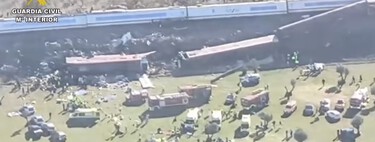
According to AITAT’s preliminary investigation, the train was not supposed to be traveling at 40 km/h but crashed at an estimated speed between 160 to 200 km/h. Technicians tasked with investigating what happened in Urda (Toledo) leading to a rear-end collision with 69 fatalities have released their first conclusions.
What is AITAT? The Independent Administrative Authority for the Technical Investigation of Railway, Maritime and Civil Aviation Accidents and Incidents (AITAT) is a body that coordinates the investigation of train, maritime or aviation accidents.
Accident investigations have always been dependent on the responsible ministry, but in 2024 and after several years of parliamentary debate, legislation was approved to create independent authorities for technical investigations of railway, maritime and civil aviation accidents.
This agency is under the Ministry of Transport but has the division of Independent Administrative Authority (AAI). This implies that the election of the Council and the President must go through the Congress of Deputies, which will approve the proposed profiles or veto them.
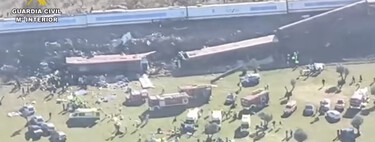
“Between 160 km/h and 200 km/h”. AITAT technicians have reached the first conclusions about the collision of AVE 2080 with Irio 6076. Of course, they noted that “the exact speed will not be known until the data is extracted from the onboard legal recorder.”
This “onboard legal recorder” is the black box that trains carry and where information is stored for a limited time before being overwritten. It stores data like speed, braking and steps taken by the driver.
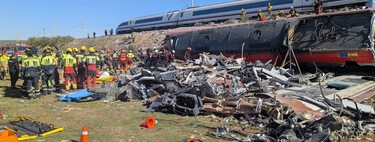
What is known. As you can imagine, this first reading published by AITAT leaves little to conclude beyond the speed at which the train crashed. It has been confirmed that, indeed, the LZB system that manages traffic on the line goes down at 8:31.
Since then, AITAT has directed the following:
In this situation, trains start running under the protection of Lateral Signaling Block (BSL). To manage the situation, the CRC and the train drivers had to exchange a series of information and instructions through telephone calls. Breakdowns, instructions and chain of actions would eventually lead to collisions, without the necessary mitigating barriers in place.
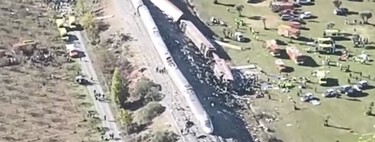
“falling situation”. What AITAT confirmed was that Minister Oscar Puente had already advanced his statement on the day of the accident. When the LZB system falls, all circulation stops. During that time, the driver has to operate what is called BSL, the lateral signal system. Atocha CRC is in charge of traffic management on the road.
BSL is, as we say, side signal that provides information to the driver about the line condition. In a normal situation, it has the distance to the next train in the cabin and the system automatically slows down if too close. Without LZB, this functionality is lost and the driver loses track of what’s in front.
In that case, it is the CRC that guides the driver as it is in control of everything that happens on the line.
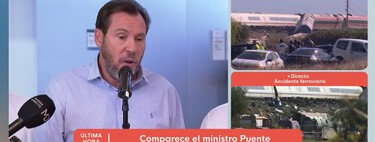
red signal. During Oscar Puente’s press conference, the transport minister pointed out that the AVE driver had a red signal that prevented him from passing, “a goal zero” he clarified, but the CRC ordered him to pass it. This, machinists confirmed Xataka This is not uncommon, always exercise the utmost caution.
These warnings are known as “sight walking”. In this case, the driver cannot travel more than 40 km/h to be able to stop the train safely if an obstacle is detected ahead. Instead of that instruction, a “run normally” order was issued from the CRC stating that the Erio train was stuck on the line without being able to resume movement.
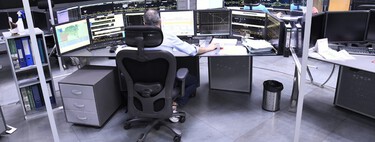
A limit situation. Once LZB falls, as we said, Atocha’s CRC takes command. There, a traffic controller will be in charge of directing the march. Above, a supervisor analyzes traffic on multiple lines. These workers are the same before and after liberalisation, so the workload is much higher now.
Raquel Aylon, head of circulation, directed us Xataka The workload is overwhelming and the lack of available staff is putting new employees into a CRC where you have to have 10 years of experience before taking the leap. Even staff shortages have led to fewer staff than required by regulations.
Picture | Ministry of Defence
In Xataka | An Erio stopped in the middle of the road and an AVE over 40 km/h: two questions to be resolved in the Toledo accident