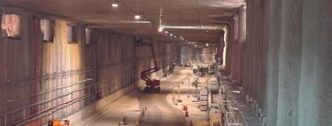
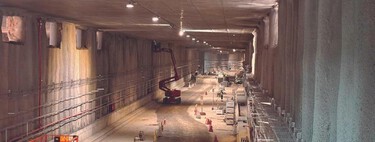
Target: December 23.
The date on which the Madrid City Council intends to establish the connection between the A-5 and the M-30. This is the last phase of the first phase of great works that will change the anatomy of the southwest of Madrid. That is, it is the last step before the cars begin to circulate underground and gives way to the second major phase of the works that will end with the construction of the second tunnel.
These dates and information.
43 day. This is when the entrance to the M-30 and its exit to the A-5 will be closed from November 10. The work of burying the A-5 at the city entrance enters a critical phase as once completed, traffic will move underground. First, operators have to face one of the biggest challenges of mega-projects.
The outage will last till December 23. A few days ago, the city council already announced that this intervention will be done but no date or expected duration has been set for it. Just two weeks later, the cut was almost immediate. Next Monday, November 10, no vehicles will be able to connect the A-5 and M-30 through the current entrance and exit tunnels.
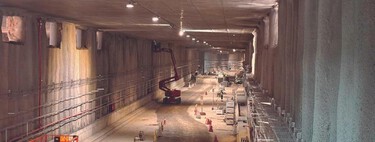
“no return”. When it was announced that this step had to be taken, the mobility area of the Madrid City Council defined it as the point of “no return”. That is, once this intervention is over, the cars will move underground.
And the work of A-5 is divided into two major phases. First the tunnel is dug which, when all the work is done, will be the exit. Once this tunnel is finished and connected to the M-30, traffic will always go underground. At that time, tunneling towards the entrance will begin. Once this intervention is completed, traffic will be controlled on one side of the road or the other and they will no longer face each other.

What is going to be done? Once the exit tunnel was dug in the area near the current M-30 tunnel on Paseo de Extremadura, it remained to level both sites. That is, the exit ramp must be demolished to level both sections and so that the asphalt remains below ground.
According to the Madrid City Council, this intervention requires interventions of some technical complexity that cannot be carried out with one-way traffic. At the same time that this intervention is carried out, the tunnel will be completed.
They explain from the mobility area that “the gables will need to be gunite – a construction technique that projects high-pressure concrete (gunite) on the side or front wall of a structure (gable) and joins them together, waterproofing and strengthening them -, finishing the drainage of the tunnel, the pavements, curbs, new circulation through the manhoe section and in the manhoe section. Also, the tunnel within the nearest 40 meters of Madrid The dividing wall between will be closed”. Similarly, cameras, monitoring and communication equipment as well as emergency poles or fire fighting systems will be installed.

Information. In pure and simple statistics, the ramp demolition work will extend along 172 meters. It is estimated that 7,000 cubic meters of earth will be drained. The cover of this section will be supported by 142 prefabricated beams 30 m long, supported only on the tunnel side gables. 14 of them had already been installed during the summer shutdown. 128 new beams remain to be assembled.
In addition, 470 luminaires are to be installed in the rest of the tunnel, with all their connections and ducts for cables. On the walls, 1,400 square meters of cladding panels are to be mounted, as well as fire seals between the structure and the enclosure. Before opening for traffic, relevant tests shall be carried out to verify that all communication and safety systems are functioning properly.
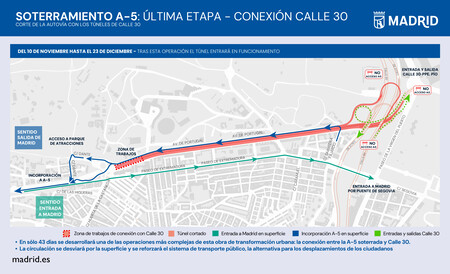
Impact of traffic cuts on the A-5 and M-30 links. Source: Madrid City Council
Alternative plans. As entry and exit traffic is closed, vehicles that need to pass through the area will do so only on the surface That is, existing traffic will be diverted to surrounding areas. The Madrid City Council announced “a new road plan based on traffic light crossings in the areas of Yebanes, Bataan, Villagarcia and Huerta de Castaneda, also incorporating new pedestrian routes to ensure accessibility to the urban environment and public transport.”
In public transport, the following reinforcements are expected:
- EMT: Lines 31, 36, 39, 138 and 158 will be strengthened by 15.4% on weekdays from November 10 to 26. Reinforcement will be 25% daily from November 27 to December 23. Line 33 will have a special reinforcement to reduce transit time.
- Metro: A fleet of trains is kept in reserve to reinforce Line 10 if needed.
- Cercanías: Confirmation is pending as to whether any trains will be added to Line C-5.
If you must use the car, it is recommended to turn off the M-40 if you are traveling north and go around the entrance to Madrid to take the M-503 and M-500 roads west. If you wish to access the southern part of the city, detours from the M-40 are advised to enter via the A-42. The same exit direction is recommended.
photo Xataka and Madrid City Council
In Xataka | Guide to avoid getting lost in Madrid with the mega-works and undergrounding of the A-5: deadlines, traffic jams and public transport