Toyota is one of the biggest names in the automobile industry, but its history is not only explained by the vehicles it produces. The Japanese company has spent decades perfecting the way they produce with work systems that have influenced factories around the world. Where we are talking about process automation, Coordination between man and machine And continuous improvement plays a fundamental role. Interestingly, much of this knowledge is not exclusively used for making cars: it can also be applied to other industrial processes and technologies that go beyond transportation.
That background helps understand the company’s next steps. Toyota announced on November 5, 2026 the creation of Toyota Robotics, a new internal company that will begin operating on January 1, 2027 under the direct supervision of Toyota Motor Corporation. Taking over will be Takefumi Shiga, the manufacturer’s production manager, who will combine the job with his current duties. It will aim to bring together the knowledge, professionals and resources related to robotics, which until now have been distributed among different departments, with the aim of accelerating its practical application, commercialization and deployment.
The new department is part of a larger reorganization that includes a vision and Training led by Akio ToyodaChairman of the Board of Directors, to pass on the company’s industry knowledge to the next generation.
From building cars with robots to turning robotics into a business
To understand how it intends to handle it, we need to look at our own facilities. As Toyota explained in its results presentation on November 5, it has 60 plants and about 18,000 employees specialized in various businesses whose knowledge can contribute to the development of new robotic solutions. The proposal consists of taking advantage of the data and experience accumulated in these environments to perfect the machines and even teach their workers their own skills. The company wants to transfer technology know-how already developed for its vehicles to robotics, such as the Erin software platform.
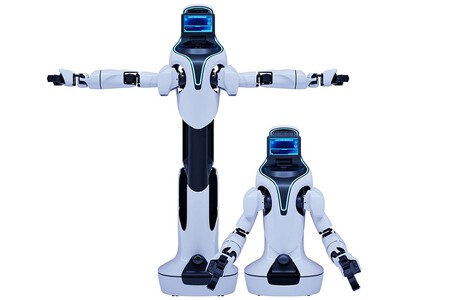
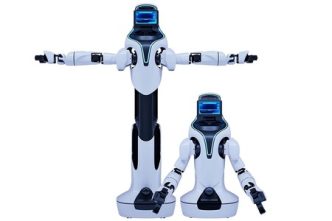
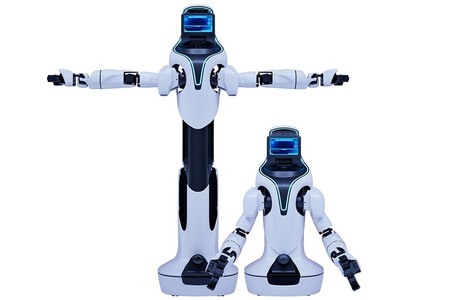
The experimental robot, ELEY, was developed by Toyota to investigate new manipulation capabilities in two different configurations. | Photo: Toyota
Put the numbers in the table. Toyota estimates that its industrial ecosystem could need about 400,000 robots between 2028 and 2040, both to replace existing equipment and to incorporate new automation solutions, as detailed by Reuters in September. Among them, 150,000 will meet with manufacturers and other companies in the group, while The remaining 250,000 will be for their suppliers.. The estimate includes internal production and purchases from third parties, so it is not equivalent to Toyota Robotics’ expected sales. In addition, the company estimates that renovations to aging facilities and equipment in its industrial chain may require about one trillion yen a year, an estimated requirement that does not represent a particularly committed investment for a new company.
And here appears a key to the project: the Japanese firm does not want to limit itself to using robots, it also wants to sell the solutions it develops. To achieve this, its strategy involves first perfecting these technologies within its own activities and then offering them to other manufacturing companies and industrial sectors, with the possibility of later expanding them into everyday life applications. Toyota aims to achieve sustainable sales growth in this business from 2030 onwards. For now, however, we’re talking about a business roadmap, not a catalog of already confirmed launch products.
Betting has a history that helps to understand what is behind the announcement. Toyota has been researching assistive robots for years and has developed prototypes like the ELEY, Designed to perform handling tasksWhile his research institute collaborated with Boston Dynamics to develop an artificial intelligence system for the Humanoid Atlas. But everything doesn’t stop at the show: Walden Robotics, an independent company that emerged from the Toyota Research Institute and is financially supported by Toyota, confirms that its machines will continue production at a North American manufacturer’s plant from February 2026. It’s important to distinguish these initiatives from the new company, because Toyota won’t rely on one yet.

The question now is whether the manufacturer will be able to transfer that experience to a market where building good cars does not guarantee commercially successful robot development. Your start-up advantage is knowing first-hand the problems you want to solve, but you also need to demonstrate that the solutions work for clients with different needs. The new organization represents, therefore, more than just an administrative change: it is an attempt to transform already existing technical and industrial capabilities into a commercial activity with its own path. We don’t yet know what weight this business will have within the company.
Picture | the toyota
In Xataka | Amid the cybersecurity crisis, OpenAI launched GPT-6 Cyber, its new “critical” model