Imagine the scene. In 1402, two noble French explorers landed to conquer, promote and colonize the Canary Islands. They are Jean de Bethencourt and Gadifer de la Salle and they have just entered the mouth of the Los Pozos Valley. It was not said then. The fact is that they stay and things get better. Two years later, a papal bull transformed the place into a city and diocese. It was then abandoned, some 80 years later, when its neighbors fled pirate harassment and moved to Teguise. Archaeologist Miguel Ángel Hervas summarizes it thus: There was only one occupation, the 15th century.
Saint Marshall of the Rubicon. What was the first city in the Canary Islands? Someone had to come across the tribal settlements, trade currency, build buildings etc. Obviously, these people were not Phoenicians or Romans. In October, the seventh campaign of the Rubicon project ended in Yaiza and concluded with the discovery of two unknown wells, a third structure associated with water, a lime warehouse and a possible access plaza to the church. It seems small but they have been city logistics for decades.
The research is led by the Universities of Las Palmas de Gran Canaria and La Laguna, together with the Government and City Council of the Canary Islands. The General Director of Culture and Cultural Heritage, Miguel Ángel Clavizo, and the Yaiza City Council’s Heritage Councilor, Silvia Santana, showed up to see how a small community was faced with surviving without a river and hardly any resources. More than six centuries later, we already know how they lived in San Marcial de Rubicon.
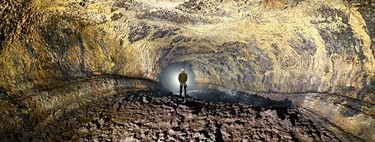
There should be no shortage of water. Lanzarote does not have many rivers or springs. According to the Chronicle Le Canarien, that site offered a natural harbor, fresh water and terrain that was easy to fortify. Co-director María del Cristo González believes the Franco-Normans landed here because they knew there was water there. The well of San Marcial, the best known, was studied in depth in a 2022 article. The arches were built on a wooden formwork and the voussoirs were joined with lime and sand mortar and included a ramp for the animals.
Norman, Roman or Phoenician? Over the years, wells have fueled other discussions. Whether they predate the Conquest, whether it is a Roman object (because of its semicircular vault) or whether it is Phoenician-Punic, because of the similar carvings of the goddess Tanit. They were all wrong, at least according to the current team. Because any archaeologist knows that context is more or less important than discovery, and medieval Levantine ceramics and Castilian coins appeared here, nothing Roman.
In the absence of good oral testimony or written documentation, laboratory analysis will provide the missing answer. Because the Rubicon wells had a long life. Centuries later, local residents remember going with donkeys to fetch water. They served as watering holes for centuries.
Lime, 15th century cement. Lime, so common in my town and so afraid of burning, serves as mortar, plaster for facades and pavements in general. Rubicon’s European houses were built of rammed earth, not previously documented in the Canary Islands. A thick-walled building with lime-paved floors that, according to González, may have been Bethencourt’s home.
In 2024, the team found a lime kiln, the first to be excavated in Lanzarote. It is partially carved into the rock, measuring about three meters in diameter and preserving the last load of burnt stone and lime. The warehouse now completes the space and allows for the reconstruction of how a basic material for building the city was created and stored.
Other pieces of the puzzle. Outside the well, a batch of Castilian coins of Henry III was found on the site, bearing a countermark with a Gothic B. Researchers connect him almost without doubt with the Norman Conquerors. This is the first example of financial circulation in the islands. And metal: there is a lot of slag next to the house, the remains of a fake. A chapter in 2024 analyzes the towers and their metallurgy. Furthermore, indigenous and colonial ceramics appear in the same strata, indicating signs of coexistence with part of the indigenous population.
The team estimates that they have only excavated a dozen houses and there are still many more to be discovered as estimates point to a much larger city. More buildings remain to be found, but in the meantime wells and limes are providing invaluable information.
Cover image Government of the Canary Islands
In Xataka | Archaeologists have discovered a jar filled with thousands of Roman coins dating back 1,800 years in France.