
In 1986, the Netherlands inaugurated the largest hydraulic engineering works on the planet. Their goal was to prevent the North Sea from causing a national disaster again. What’s remarkable is that its engineers had to solve a seemingly counterintuitive problem: build a massive wall that would allow water to pass through.
A barrier that is almost always open. The Oosterscheldekering, located in the Dutch province of Zeeland, is nine kilometers long and has 62 massive steel gates. It was inaugurated on October 4, 1986 and, according to data published by NOS in 2021, in its first 35 years, it only needed to be closed 28 times due to the threat of flooding.
The rest of the time, the floodgates stay up and allow North Sea water to flow in and out of the estuary with the tide. This apparent contradiction is what makes infrastructure such a unique work.

The night the sea ravaged the country. The origin of this construction can be found in the early morning of February 1, 1953, when a violent storm coincided with an exceptionally high tide and broke numerous dykes in the southwest of the Netherlands.
Water flooded towns and fields, forcing thousands to seek shelter on rooftops and causing 1,836 deaths, according to a balance sheet compiled by NOS. This tragedy gave rise to the Delta Plan, a program of 13 major hydraulic defense projects aimed at preventing something similar from happening again.
The problem was that closing the sea would also destroy it. The initial solution was to build a permanent dam that would completely isolate the East Scheldt estuary. But it would cut off the natural exchange of saltwater and severely alter an ecosystem on which fishermen, clam and oyster farmers, and numerous migratory birds depended.
Opposition from the fishing industry and environmental organizations managed to change the project in 1976. Instead of a closed dam, the Netherlands would build a movable barrier that would hold back the tide and block the sea only when it was absolutely necessary.
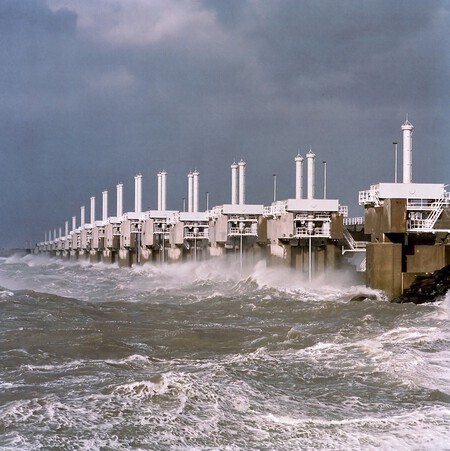
One of the three moving sections of the Oosterscheldekering barrier during storms
A task that forced the invention of giant machines. Construction began in 1976 and lasted for a decade. Engineers installed 65 concrete pillars, some weighing around 18,000 tons, and had to build special boats to transport them and place them on the seabed with an accuracy of just a few centimeters.
They previously leveled and compacted the bed of the estuary and spread huge mattresses of resistant materials to stabilize the base. The floodgates, about 42 meters wide and weighing 260 to 480 tons each, completed an operation that cost about 7 billion guilders.
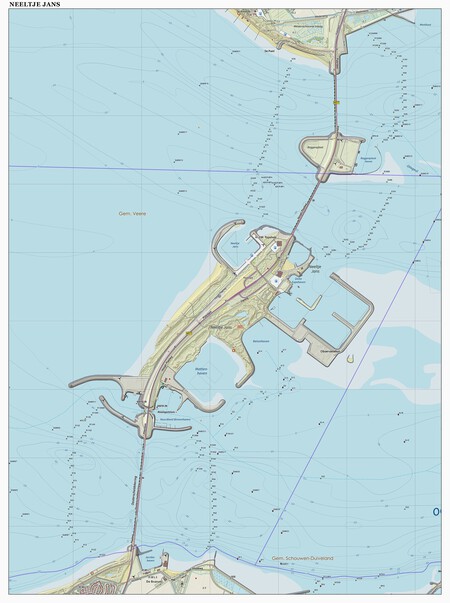
Topographic map of Oosterscheldedam. It consists of five tiers: three mobile flood barriers and two artificial islands
75 minutes to close the door to the North Sea. Normally 62 gates are open. When the forecast indicated that the water level could reach three meters above the Dutch reference level, the Rijkswaterstaat team activated the shutdown from the control center on the artificial island Neeltje Jans.
The hydraulic mechanism lowers the steel structure and can complete the operation in about 75 minutes. The barrier is designed to prevent flooding of the statistical magnitude estimated to occur once every 4,000 years, although this does not mean that such an episode cannot occur sooner.
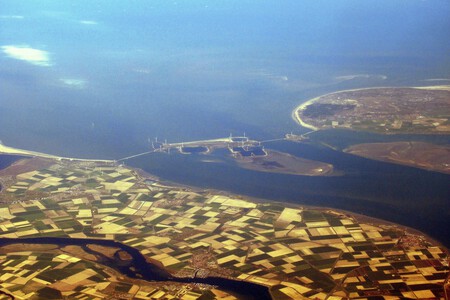
A paradox that threatens its future. Just because the floodgates are open doesn’t mean the work isn’t harmful to the environment: changes in currents have already reduced the contribution of sand to certain areas of the estuary, and sea-level rise has created an even bigger problem.
According to the official Dutch climate scenario published in 2023, depending on emissions, the barrier could require three to twenty annual closures by the end of the century. The longer it remains closed, the greater the change to the tides and biodiversity it was intended to protect.
Forty years later, it’s time to prepare for the next war. The infrastructure was designed to function for about 200 years, but many of its key components are already in need of extensive renovation. Rijkswaterstaat and the Deltares Institute have tested a 1:40 scale replica to study how it responds to extreme waves, while work on the hydraulic system and gate mechanism continues, with an investment of several million euros.
As of March 2026, tests have confirmed the utility of the original design to meet current demands, although its long-term behavior still needs to be studied. It is no longer known whether this wall will be able to continue to stop the sea, but how many times it will have to do so without sacrificing the ecosystem that has been allowing it to breathe for four decades.
Picture | Bryan Tong Minh, Beeldbank V&W., Dkvtig
In Xataka | The Netherlands is building a nuclear reactor between dunes and groundwater. The job is an engineering nightmare
In Xataka | The Netherlands had no intention of implementing a four-day week. Until their companies started doing it themselves