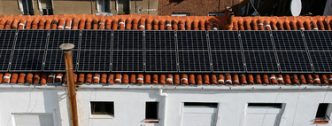
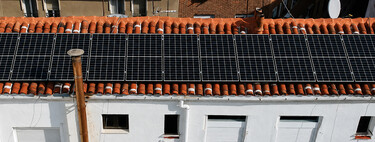
With general elections just over a month away, Castilla y León wants large solar parks to pay for the land they occupy. The board has included an extension of the environmental impact tax in its 2027 draft tax regime that will affect photovoltaic installations of more than five hectares. After the regional executive announced its draft law on tax, financial and administrative measures within the 2027 budget, reported by El País, which will also affect communication networks with a second unprecedented tax.
Criticism has not been long in coming, and already there are those who see the change as a return to the “dark times of the past,” as declared by Third Vice President and Minister of Ecological Transition, Sarah Agsen. This mainly refers to the tax implemented by Rajoy’s national government in 2015, which, as a neutral note, could affect the development of renewable energy in our country as a way to decarbonize the economy.
Sun tax returns? El País explained that PP and Vox want to extend the environmental impact tax, the only one of its kind in the community, since the elimination of the tax on landfills, to photovoltaic parks with an area of more than five hectares. If approved, this new measure will impose a tax on photovoltaic panel installations between 600 and 2,000 euros per hectare occupied by them.
According to the same medium, the text of the regulation protects that such parks “change the natural environment, landscape, flora and fauna, in many cases take over productive agricultural land and change traditional uses” and it emphasizes Castilla y Leon’s position as a leader in the production of exportable energy, much more than renewable energy. According to information shared by Red Electrica, this community is the only region in Spain, along with Aragon, where the first three energy production technologies are renewable. In 2025, wind led generation with 13.2 million MWh, followed by hydro with 9.8 million MWh and solar with 4.8 million MWh.
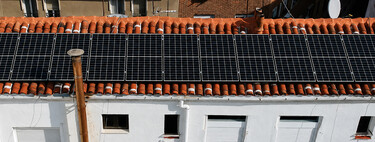
Controversy over tax calculations. From the UNEF, as reported by El Economista, it is criticized that the tax is calculated based on the surface area and not on the energy produced, since it penalizes those projects in less sunny areas and those plants that carry out environmental integration measures, which generally require more growth.
Among these initiatives you can find agrivoltaics, livestock farms or facilities that seek to promote local biodiversity, reducing the impact of renewables on the ecosystem.
Industrial self-consumption also enters the equation. The rule will also affect self-use of industry, currently exempt. It will do so above all for large industrial or agricultural self-consumption, since since its implementation, these facilities must have an installed generation power that is at least 50%. If not, it would be understood that the installation is intended to sell the energy produced to the grid and pay the same tax as the large power companies’ solar parks.
And the wind In addition, the project also updates the amount of taxes that wind energy is already subject to, creating two new rates of 14,000 and 16,000 euros per unit for the most powerful wind turbines, as explained by El Pais. It will also suspend the 100% tax exemption that these facilities had during their first five years of operation because they are no longer “justified” and reduce it to two. However, the affected power companies will be able to compensate for this increase through projects of re-electricity mills to reduce their numbers or restore rural municipalities affected by their facilities.
9 million euros raised. According to El País, after Aragon or La Rioja (ruled by the Popular Party), Castilla y León will be the third region to include a tax on solar energy, albeit a much higher tax than them. The regional executive, composed of the PP and Vox and led by Alfonso Fernández Manueco, defends its proposal by claiming that it fits the current reality of the region and that it places a cost on activities that “create social and environmental costs” for citizens.
According to the draft, this tax will raise about 9 million euros that the law must allocate to environmental and energy efficiency spending programs.
A tax on the future. However, the measure was not well received by other figures in the sector. UNEF General Director José Donoso declared that this is a “totally tax-gathering and unreasonable” tax, as pointed out by El País. El Economista also reflects the position of the employers’ association, which considers that such measures could discourage new investment and reduce the competitiveness of companies.
Finally, the vice president of the government, Sarah Eggesen, pointed out in Bluesky that “there are those who repeat the mistakes of the past, darkening the future for everyone. Faced with those who approve the tax on the sun, our bet is clear: renewable, indigenous and affordable energy,” as El Periodico de la Energia points out.
Picture | Anonymous Zero
In Xataka | Solar panels can do something unexpected when installed on crops: protect farmers from heat