
At a time when deepfakes and AI agents can work together to act on behalf of users and impersonate someone in a video call, companies are looking for ways to verify that a person is on the other side of the camera. In that scenario, World, the biometrics company co-founded by Sam Altman, reached out and said its product could be a security addition and it had the perfect customer in mind.
Bank.
In short. Alex Blania, co-founder of World, presented World ID at the Money 20/20 conference last October 18, focusing on banking and finance. This will be the first time that the company will package its identity protocol for a specific industry, and this is the word “packaging”, since it puts three already existing products in the same bag:
- World ID app– An identity wallet that stores and presents each user’s credentials.
- World ID for Zoom: Ensures that, in a video call, the conversation is a person and not a deepfake
- Global ID for agents: Allows you to delegate these tests to an AI agent and present them to a third party A director of the world compares it to a power of attorney.

Banks as a perfect target. Some of these technologies, such as agents, are in beta, but World has identified some major financial companies as key partners with whom it will explore how to apply the technology to this highly sensitive sector. In fact, some of these partners will have Orbs in their offices to scan employees, according to a Fortune Global spokesperson statement.
The Iris Project. And here we return to the ‘orb’ that caused so much discussion a few months ago. It was in 2019 when Sam Altman and Blania founded Tools for Humanity, and some time later, they launched Orb, an iris scanner that was deployed in some cities and offered cryptocurrency in exchange for iris data. This may sound good to some, but you’re really selling your most unique biometric data for crumbs.
Considerable controversy ensued, and in October 2024, the company rebranded as World and shifted focus to security in the age of AI, creating tools to prove that a human is… well, a human on the Internet. According to the company, more than 18 million people already have their certificate that they are human. The truth is that it’s a bit ridiculous.
something must be done. Beyond that, Blania defended on Money 20/20 that this test will be the gateway to almost any transaction on the Internet in the future and, whether we think it’s crazy or not, the era we find ourselves in clearly has to do something. We’re no longer talking about something like the boy-trouble scandal at the user level, but about conversations in the field of big financial companies.
According to a Deloitte forecast, fraud losses in the US could reach $40 billion in 2027, compared to $12.3 billion in 2023, due to the rise of AI and the tools it offers to facilitate this fraud. And CoinCentral gives as an example a case that the world itself mentioned, an employee of Arup (a British multinational engineering, design and consulting firm) who transferred $25.6 million in 2024 after a video call in which all other participants were deepfakes.
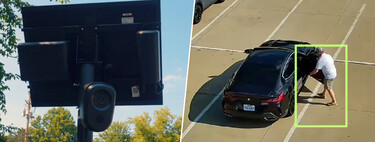
but. The big problem is that, while the logic of the world is to protect large companies from financial fraud through AI, the solution requires highly sensitive biometric data, and the world itself has a considerable regulatory history. In Spain, the AEPD ordered a precautionary measure that paralyzed WorldCoin’s data processing after more than 400,000 users had already registered in Spain. In December of the same year, Germany asked for the data to be deleted, and in 2025, other countries asked for an immediate cessation of operations.
But hey, the defense tech of the world, they say they delete the iris image and they only keep an encrypted code per user which guarantees the security and privacy of the individual. After setbacks in some cases, it remains to be seen whether the World can find a way to sell its products to the big banks that operate on the scale of our salvation.
Now, if they want to implement it globally, they have to contend with the laws of several countries. And I keep thinking that, once again, this is the story of the atomic bomb maker selling bunkers to protect against that bomb.
Picture | WorldCoin, Flickr (edited)
Through this Block
In Xataka | Selfie video has one big problem: If your password is stolen, you change it. If they steal your face, you have no choice