For the past few decades, foreigners who bought a house in Spain had a more or less defined profile: British, the heavenly delights of a long holiday and a townhouse a few kilometers from the sea. Mallorca gives a good description of Little Sweden Modus Bivendi. That profile lost its first place. In the first six months of 2026, according to data from notaries, the nationality that buys the most Spanish houses is Moroccan: 4,960 transactions compared to 4,541 for the British.
A surprise through 419 homes. In 2025 the British were still winning (10,829 against 10,925 homes). In the second half of that year, for 24 operations. The British throne didn’t suddenly fall, it became vacant. And another fact: although they cannot win over “Europeans” as a bloc, they win over each nationality individually. Morocco is followed by the UK, Italy (4,109), Romania (3,974) and Germany (3,907). Five foreigners account for 34.6% of purchases, and Moroccans contribute 8%.
One spends the summer, the other lives. Here’s where the interesting stuff starts: Of the 4,960 Moroccan purchases, 4,897 (98.7%) were made by residents. Of the 4,541 British women, 2,388 (52.6%) were people living abroad. Morocco has the largest foreign community with valid permits: 910,001 people. And there are areas, such as some towns in Cáceres, where they outnumber the Spanish population. Not only do they pay VAT and IBI, they make Spain their home. So the buyer who comes in does not acquire a privileged second home, but buys where he already lives.
801 euros per square meter. This is the average price for Moroccans, the lowest on the list. Romanians pay 1,439 euros/m²; Colombian, 1,604. Germans, 3,763. Americans, 3,948: almost 5 times as many. The average for all foreigners is 2,644 euros per square meter, 9.4% higher than a year ago. To have a reference, in the second half of 2025, national buyers paid an average of 1,839 euros/m² and Moroccan buyers, only 768.
Resident foreigners buy at 2,102 euros/m². Non-residents, 3,493. That is, those who pull the mean up are the second group. The first one, who lives here, pays less (and the Moroccan is the cheapest version of it). It explains the logical gap between residents and non-residents and this data 801 .
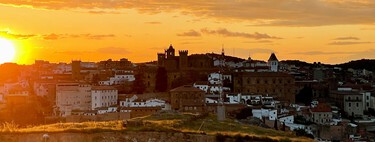
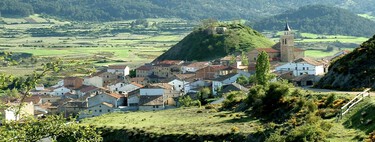
From the coast to the interior. The map is also changing. Italians and Brits focus their demand on the warm (and now rainy, after six ES-alert messages in a week) Mediterranean, in addition to the islands. Moroccans lead among foreign residents in six communities: Murcia (36.1%), Navarra (34.3%), La Rioja (25.1%), Aragon (23.7%), Castilla-La Mancha (21.7%) and Extremadura (20.2%). In Andalusia they reached 19.4% and in Catalonia 11.2%. They are, in fact, more populous of the interior.
Contrasts are apparent when comparing regions. In the second half of 2025, purchases from foreigners increased by 21.5% in Castilla-La Mancha, 13.8% in Extremadura and 11% in Aragon. They decreased by 20.3% in Madrid, 10.8% in the Canary Islands and 10.2% in the Balearic Islands. Precisely: where foreign purchases are most discussed and where it has become most expensive.
Are they displacing anyone? The age-old question, steeped in xenophobia, lurks in every conversation about housing. Well no, the numbers say otherwise: foreigners bought 18.3% of freehold housing in 2026, up from 19.2% in 2025 and 20.3% in 2024. Their purchases fell 13%, the biggest annual decline since 2020. Non-residents 8% eventually sink to 1% of gold. Russian purchases down 26.2%; Chinese, 26.1%. Only Venezuela (+10.2%) and Colombia (+7.4%) increased. Because Latin billionaires are even displacing Spanish wealth, not the lower classes.
On that basis, an own calculation: 4,960 operations are 8% of the foreign total, and foreigners 18.3% of the market. This leaves Moroccans with about 1.5% of all vacant homes sold.
what happens on the ground These figures measure free housing, not land. Classify by nationality, not by origin: Anyone who already has a Spanish passport is considered Spanish and these tables do not include mortgage, income or use of the home (whether it is a habitual residence is inferred only from the fact that the buyer is a resident). What is there is a coincidence: buyers who live in Spain, in communities where square meters are cheaper, increase.
Right now, at the end of the second semester, the advantage over the British is 419 houses. In 2025 it was, by contrast, 96. Whether the surprise is a trend or an accident will be revealed in the following report. Meanwhile, the image of the foreigner who buys a house in Spain needs to be updated, because he no longer appears on small beach postcards with a hat or an umbrella and that characteristic crab color on his shoulder.
And why so much interest in land? Because where they live and where the accounts come from: a study by the University of Zaragoza attributes 79% of the demographic improvement in rural municipalities in 22 provinces between 1990 and 2008 to immigration, and a report by the government’s Technical Migration Group cites affordable housing as a key condition for these families. And at the end of the day, there are now 3.5 million uninhabited homes in Spain.
Picture | Pexels
In Xataka | Amid the housing crisis, Spain faces a problem: the cost of materials is slowing down construction
In Xataka | Half of Europe solves its housing crisis with “indefinite” rents: this is how the idea that flies over Spain works