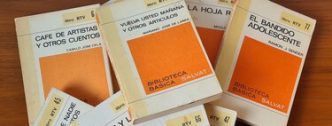
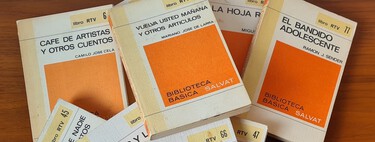
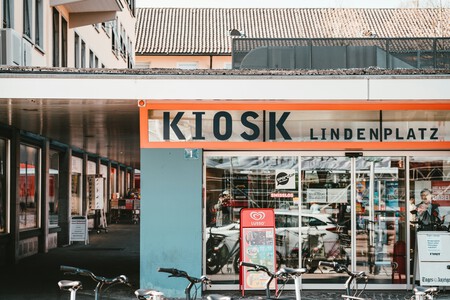
Over the years, there were two constants that recurred monthly September. It was back to school time and it was also when the kiosks were filled with collectibles. Magazines and newspapers were crowded next to giant cardboard containers advertising first deliveries at competitive prices.
In the 90s and early 2000s, television commercial breaks were filled with ads warning of what was to come, making everyone aware that collectibles season had begun and taking note of what they wanted to buy. It was cheap, only on sale for a while, and probably created FOMO before we even knew that word. But what happens after a few decades? Do we continue the pilgrimage to the newsstand for a fascicle of Once Upon a Human Body?
Of course, the context in which consumers and kiosks operate now is very different from 20 or 30 years ago. News reading habits have changed and newsstands are in crisis. If there were more than Spain in the late 20th century 20,000 kiosks Scattered across its geography, there are no more than 4,000 left, trying to reinvent themselves to survive. It is not at all unusual that the people responsible for the street kiosks retire and the business ceases: there is no generational change, perhaps reduced sales of daily newspapers.
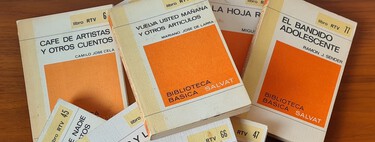
Nevertheless, collectibles resist: companies in the sector continue to launch their offers every September and from kiosks they confirm that their market is still there. Eva Cancela from Lugo’s campus bookstore (which is also a center for selling newspapers and stationery), responded on the other end of the phone, “Collections continue to sell. Although now you can subscribe online and have them sent to your home, this bookstore notices that people continue to go to their kiosks and look for them, because they appreciate that they are still there.
Discover what has changed. “It’s true that people don’t watch ads like they used to,” he noted. Now, yes, more kiosks are responsible for uploading the notice directly social network. Just like videos showing which magazine giveaways are coming out each month, Newsstand accounts also alert you to new collections that just dropped.
Collecting in the digital age
This is how collectibles were born. Newsstands have been a traditional point of sale for much more than newspapers. At the turn of the 20th century, they were a major gateway to low-cost reading, with novel collections at low rates and sizes that were very popular. Newsstand novels, including romance or cowboy collections, were very successful in the 40s and 50s. In all cases they were stable collections, remaining on sale for the duration of their circulation.
Things changed in the late 20th century, when collectibles sold in installments established themselves in the market to their spectacular success. One kiosk in Santiago, for example, remembers that they sold more than that 300 volumes Weekly collections in the 80s and 90s. As its manager El Correo told Gallego, “They were a novelty after the dictatorship. Everything sold out.”

Reading became one of the last pillars of the fascicle.
In the early 90s, these serial sales were indeed a manna for the book market. The 1993 sales data for the RBA’s current narrative collection exceed the average circulation figures for books in the current market. In five months, name of rose The Collectable by Umberto Eco sold 600,000 copies, with a selling price of 495 pesetas (about 2.98 euros; for context, a paperback book was about 700 pesetas).
It was the inaugural book, but volumes two and three sold 300,000 and 280,000 copies. Those responsible then told El Pais that they expected success, but “not at that level.” The RBA invested 400 million pesetas (about 2.4 million euros) in advertising the collection.

The golden age of collecting ended with the economic crisis at the beginning of this century. A study by the Federation of National Associations of Publishing Distributors (FUNDE) warned in 2008 that it was kiosk products that suffered the most in sales. Nevertheless, it was still a market of around 300 million euros annually. In that year, tableware, beads, books or models came to kiosks, such as the Chiva la newspaper library, which were sold week by week.
Kiosk collections were, thus, ubiquitous and very popular, so much so that they reached broad strata of the population. In fact, a 2021 survey confirms that 78% of the Spanish population has bought a collection at some point (although only 65% have finished it).
But who will buy them now? Asking the question on Instagram has only one answer: Maria is the only one who replies via direct message that she is one of the people who recently received a delivery of the kiosk collection. “I bought myself little woman Because that was the first copy they caught you with.” Classic collection With beautifully illustrated cover. It was visually appealing and read.
They are no longer what they were.
“I don’t want to do the whole collection,” he admits, but he knows he’ll repeat it with other titles. So much so that you’ve already marked the week in your calendar where everything you’re interested in comes out. “I’m going to order it from my trusty newsstand,” she says Repetition is actually quite common. “They tend to buy more than they wanted to buy at the beginning,” confirms Cancellas, who also points to the finish as a hook to get you to fall again.
Now there may not be as many rosary collections as in 2008 where the golden age has come to a close, but the market continues to see diverse bets. Books are a safe asset. Cancellos highlights how well the collection is selling now Love, Girls and Other StoriesBy Salvat. Books coexist with collections to make you model a motorcycle, a retro Barbie or an audio story. A collection of what no longer exists encyclopediaThose who had made their fortunes some time earlier and the newspapers of the time also joined in with their own proposals. “Follow the format, but you have to adapt to the new times,” says the bookseller. Chic editions of books and vintage items now occupy the space.

Of course, the collector segment is also an important audience. “We sold a collection of the Titanic, which they modeled on the dining room table. They finally showed us what it looked like. It’s something you can’t buy outright, but it’s a gem that the model has become,” Cancellas said.
Cancellos also answers the question of who buys them, and the bookstore clarifies that “it totally depends on the theme.” There are no ordinary buyers, although of course those who do collect are distinguished visitors. Even young people? “Yes,” he confirmed. It is, precisely, that the public has taken away a collection of great television series, he assures.
Maria, however, admitted that she had not thought about the collection for a long time. “I haven’t bought one in a thousand years,” he says. If I didn’t stumble across it by chance, or even process that it exists.
Picture | Claudio Schwarz, Andrew Neil, took zero
In Xataka | “We can’t keep losing money”: Malaga’s oldest toy store closes after 100 years of operation
In Xataka | The physical format is dying. That’s why people out there pay $2 million for three Pokemon cartridges
In Xataka | Since 2000, Japan’s population has decreased by 3%. And since the same year, libraries have grown by 30%