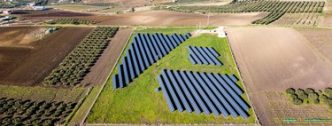
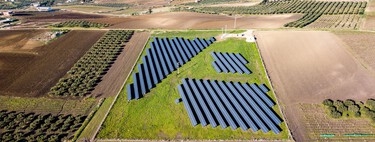
Although electricity prices have been rising recently for various reasons, in recent months we have encountered a situation that is increasingly recurring: the price of zero. Or not just zero, sometimes even negative.
At first glance, this may seem like good news: it means that renewable energies are providing so much electricity that supply exceeds demand at certain times. The problem arises when we look at the phenomenon from the perspective of who has to finance a new solar plant. And this problem in the electricity market could threaten future investment in photovoltaic parks. In fact, more and more renewable projects are failing to materialize in our country.
In fact, the economic magazine Extension says that one out of every two renewable projects in our country do not come to fruition.
What is behind the zero price? In the wholesale market, producers and buyers submit their offers and prices are determined based on hourly demand and supply. When renewable production is expected to be very high and exceed existing demand, prices may drop to zero or even go negative. A negative price means that, in certain circumstances, there may be a cost to the producer to sell electricity to the market, although this does not mean that all utilities are losing money at those times: it depends on their contracts, costs and remuneration models.
Due to meteorological problems and lack of storage capacity, more of this surplus is generated by renewables and, therefore, zero or negative prices occur more frequently. In fact, our country was among the European countries, along with France and Greece, with the highest episode of negative electricity prices due to solar production in the second quarter of 2026, as PV Magazine explains.
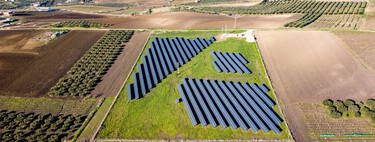
the risk. While this may seem like very good news as solar power is supporting a large portion of electricity generation, the truth is that it is having an unwanted side effect. Electricity prices on the wholesale market have often fallen below €30/MWh during peak solar production, sinking the profitability of installations. Some companies are withdrawing their licensed projects, facing uncertain benefits during operations.
50% mortality. Levante EMV explains that in the Valencian Community alone, investments of around 4,500 million euros are estimated, of which 800 to 1,000 are expected to be implemented in the next two years. Some owners have ceased operations due to loss of profits. For its part, the economic newspaper Extension reveals that one out of every two renewable projects in our country is not implemented. He added that only 34,200 MW out of the 280,400 MW that were projected has been operationalized, leaving the operational capacity at around 72,100 MW.
Big energy companies are able to withstand the blow, but the price is paid, as usual, by smaller producers who can’t cope with this financial downturn.
Batteries are starting to become a key component. A good way to solve this is to provide facilities under construction with a way to store this surplus of renewable energy and be able to use it during times of low production and high demand.
Therefore, the future of electrical systems, among other solutions, involves storage, although for now, Levante EMV points out, its deployment is still in the minority. However, this medium indicates that batteries are increasingly a condition not right For banks, which do not extend credit to developers if their projects do not include storage batteries.
More sun, less incentive? The paradox is that the problem does not arise because solar is doing poorly, but precisely because it is doing so well. The challenge now will be to store all that cheap energy from solar hours and transfer it to hours when demand is high. If this is not achieved, Spain may find itself facing a situation that is difficult to explain: more sun available and, at the same time, less economic incentive to build new photovoltaic installations.
Picture | Mariana Proenza
In Xataka | Spain is full of solar panels. Now comes the problem: what do we do with them when they get old?