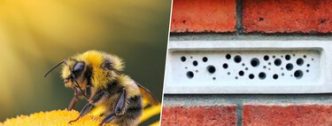
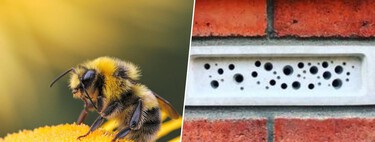
From a young age we are taught that bees are essential to the survival of humanity for their pollination abilities. The problem comes when the data we have tells us that European bees have lost about a third of their territory in the last hundred years. And this is not a random guess, but the conclusion reached by the Doñana Biological Station, which has managed to map our pollinator decline.
comes from far away To know where we are going, we must first know where we came from. That was the aim of the international team that has been able to create a huge database that compiles more than 4.3 million records of bees and more than one million records of hoverflies, which are flies that apparently mimic bees and wasps and are key pollinators.
In total, they managed to cover 88% of European species among these groups, reconstructing their movements and populations over the last century.

result Noting that bee species have decreased their distribution area by 33%. However, the behavior of all insects was not the same, since when the bees retreated, the distribution of hoverflies experienced a significant expansion, especially in the first decades of the century. And if we bring it to the national level, the region that Galicia enters is the most affected (although not only Galicia).
It shows that environmental changes create winners and losers, even if long-term trends begin to threaten both groups.
The weather is tight. When looking for blame, it’s easy to point the finger directly at climate change. The data here suggest that cold-acclimated bees declined faster than warm-acclimated bees, but the effect of climate is only modest. The real problem is the loss of their habitat, driven by intensive agriculture, something that has put around 10% of European wild bees at risk of extinction.
Another problem is that we are used to the fact that many bees move north in search of cold, but bumblebees are not. What’s happening here is that territorial ranges are shrinking and flattening, as temperatures exceed their historical tolerances and their populations disappear as they are unable to move to new viable habitats.
It will have consequences. Protecting these insects is not only a matter of environmental sensitivity, but also of pure economics and food survival. Here we give as a reference the IPBES platform report which indicates that 75% of the world’s food crops and about 90% of wildflowers depend on animal pollination to some extent.
This means that, without bees and hoverflies, our agricultural production efficiency would collapse, making the shopping basket much more expensive and putting global food security in jeopardy.
The recipe has already been invented. In the face of disaster, data offers a technical and scalable solution that experts point to as effective. This solution involves taking care of the agricultural landscape, and science has already calculated the exact “dose” of nature that we need. A study published here science He noted that 6% of natural habitat is needed to support hoverflies, 16% for solitary bees, 18% for bumblebees and 37% for butterflies.
It’s not about abandoning agriculture, it’s about redesigning it. Maintaining borders with wildflowers, natural hedges and patches of native vegetation between crops is sufficient to restore biodiversity.
Picture | Skyler Ewing
Through this the country
In Xataka | In 1984, NASA sent 3,301 bees into space to see what they could do. After seven days they created a 200 cm² hexagon