Google Gemini 4 Argon Helped to discover new mathematical solutions related to nuclear fusion. According to the researchers, the first candidate was found within hours. This is an improvement over previous work, which refutes a hypothesis made in 1967. Practical applications relate to experimental software that simulates magnetic fields for fusion research.
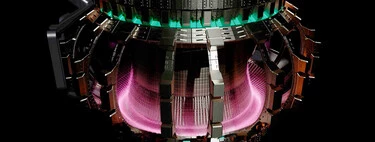
Takes guesswork Named after physicist Harold Grad. Addresses the equations that govern the equilibrium of the plasma and the magnetic field that surrounds it. The objective is to identify the three-dimensional static equilibrium corresponding to a given set of stresses and symmetry conditions.
How new solutions are found
The research published in RXIV is the result of a collaborative effort Opal Isan, Jonathan Citrin, Matt Landreman and Brendan Tracy. The authors generalize the two families of solutions above by using one parameter each, which breaks the symmetry of the stellarator. Stellarators are fusion devices that use three-dimensional magnetic fields to contain plasma.
To find generalizations of families of known solutions, the authors They handed over the investigation to Landreman And your question is an open one Small team of Gemini 4 agents in Google Antigravity. The progress reported by the researchers was achieved within hours.
Google’s Argon also contributed to this Writing some parts of the manuscriptas well as its coding Symbolic and numerical checks. Human author supervised the research process and rewrote the manuscript as well as performed several adverse reviews.
Researchers again receive and symbolically take responsibility for each development test and final result. The time mentioned refers to the period in which the AI agents first found promising candidates.
In view of the examples mentioned above, it can be said that the credit was shared. Gomez-Serrano, Lihr, and Taylor presented other counterexamples to Grad on September 21, 2026. Their solutions do not present the planar, axial, or helical reflection symmetry assumed by the hypothesis.. His research summary includes a passing stamp on Lean 4, a mathematical proof assistant.
Landreman then presented his analytical solution on September 22, 2026. According to him, The analytical solution he was able to find with the help of GPT-6 Astra Pro is manually checked by him. The revised version was published on 28 September. When the problem was presented to the Gemini agents, they already had both Landreman’s solution and specific questions that needed answering.

The seal of approval on Lean 4 appears in the study by Gomez-Serrano and colleagues. Another check is mentioned in the Gemini article. The researchers also made calculations that were verified symbolically. The above mentioned manuscript does not declare the seal of approval for the results. Mention of symbolic and numerical verification codes also does not allow the seal to be granted.
Argon and access to scientific publications
More examples of how artificial intelligence has facilitated nuclear fusion research are available in the September 2024 Newspaper Library. Scientists use new technology to investigate turbulence patterns and detect defects in welds.
Google mentioned this research when announcing 2026 on October 13 Turn on argon for commercial use. Argon is now available through the API and in the Gemini app and in Finder AI mode and in Antigravity for Google AI Pro and Ultra customers.
They also opened 10,000 scientists are requested to receive six months of free access At maximum antigravity usage levels, access requirements, capabilities and program selection are subject to availability.
Picture | GPT image with editing, Google