This is nothing more than a crude metaphor and repeated a thousand times. But if it is repeated a thousand (and one) times, it works. I’m talking about Frog and Dipper. That story about how you can’t put a frog in a pot of boiling water, but if you put a frog in a pot of hot water, you can boil a frog and you raise the temperature little by little until it starts to cook.
Yes, the frog thing happened to us Spaniards. If a decade ago they told us that the Spanish roads, which are considered among the best in the world, we were going to do it. Two accidents with dozens and dozens of deaths In nine months we won’t believe it.
We’ll jump like frogs into boiling water if they tell us they’ll no longer refund us for high-speed delays longer than 15 minutes. Maybe because we didn’t imagine that delay was going to be the norm in a service that works like clockwork.
But gradually we are getting used to at least one Spain in the railway sector. Delays now only start paying when we exceed 30 minutes (90 minutes if we want all the money). 2026 has been a dark year with two serious rail accidents but weather-related disasters have cut tracks that have taken months to return to operation, trains that crack and rails where vibrations are normal.
And investment in the background.
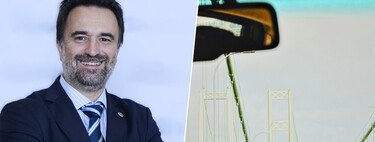
“It’s safe but it’s obsolete”
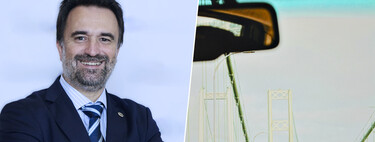
Cesar Franco, industrial engineer and former president of the General Council of Industrial Engineers, told us the following:
“Infrastructure develops over the long term and politics is often driven by the immediacy of a four-year election cycle. A large infrastructure project takes 15, 20 or 30 years from the time the first technical plan is outlined to implementation. Investment is what the country really needs.”
For quite some time now, there have been questions about whether the investment in rail is sufficient. “If we spend millions to perform three AVEs a day, We are making a mistake“, Cesar Franco told us then. Because the problem is not only to build an unused infrastructure. The problem is twofold because then it has to be maintained. It is “no one applauds that a bridge is still standing.”
pick up the country According to data from the European Commission, of the approximately 1.5 billion euros that Spain spends on railways between 2018 and 2022, 16% goes to track maintenance. Is it a lot or a little? In France and Germany this item represents 30% of the total money spent. In 2022, our country spent 95,860 euros per kilometer on AVE maintenance, which is far from the European average which was 191,090 euros.
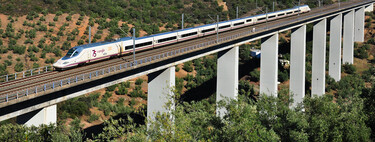
which resulted. Now, the Madrid-Seville line has to change the LZB safety system for the more modern ERTMS-2. Mechanics advice Xataka They reiterated that this new system is not in itself safer but more modern. And that has its advantages.
he LZB system It uses a wire on the track to mark the position of the train, the speed it is traveling and the space it has available until the next train. In his statement, Oscar Puente noted that problems with the system are not common but did not outright say it was something completely extraordinary.
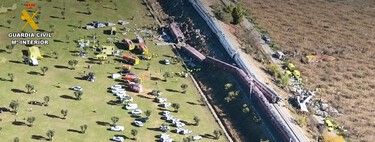
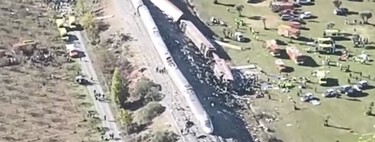
The Spanish Union of Railway Machinists (Cemaf) gives us more details. They are clear that what happened in the Urda accident is strange. Rare because “breakage of this magnitude is not normal.” However, they explain that “the most common is that there is a transmission failure. This is when the computer crashes and shuts down suddenly. It restarts and works again,” they point out from Semaph.
Drivers who prefer to remain anonymous confirm this and although they insist that the system is completely secure, they clarify that this is one of the reasons for some of the delays. This cable is one of the weak points of the system as it requires more investment in maintenance “The system is outdated, it should have been changed a year ago and is probably not being maintained as it is,” they argue in CEMA.
Raquel Ayllon, railway regulator and spokeswoman for the Railway Circulation Union (SCF), added other reasons. “The cable is stolen because it contains copper. And since there are often inconsistencies, more cables are stolen,” explains Aylon, who also emphasized that it is a secure system but “Works with ERTMS beacons, less fail. And then there is one more satellite, which is ERTMS-2 (which is being installed at Madrid-Seville). Simple and works well. And then there is ERTMS-3. He who is already the host, drives the train alone. But they don’t buy it like France and Germany because it’s more expensive.”
These are tiny grains of sand that add up to mountains. “What happens is, the more transmission failures there are, the more often you perform in the gradient (a term that describes the point at which the LZB falls and the driver is guided by side signals and instructions from the CRC), ” they point out from CEMAF.
“When you increase the probability of risk, you increase the probability of something happening. If the system is less guaranteed, there is more risk. It’s not that LZB is unsafe, but if you’re going to paint a facade and you use one anchor instead of two, something is more likely to fail. Simple probability theory,” they emphasize.
And if that fails, the collateral investment doesn’t seem likely to go as expected. Raquel Aylon said Xataka Workers at Atocha CRC have had such critical moments that controllers could not even go to the bathroom because there was no one to support them. Or staff shortages forcing trained people to deploy at checkpoints at Spain’s busiest stations in 10 months when it took 10 years ago.
Not only that, “there is a problem with maintenance work,” Aylon insists. He explained to us that renovation and maintenance work on the line was previously done by Adif staff. Today they are sub-contractors who are tasked with reducing costs and being able to deal with the inconsistencies that occur.
“The subcontractors have terrible training, they practically don’t know how to tell you where they are. Our workers died because they didn’t have a good idea of the protocol. All this with the greater workload that liberalization has required, with wear and tear due to the passage of the Renfe train, but now the Ouisoleuco and Ioriolquelio trains.
The problem is that this deficit of investors, estimated at up to 3.6 billion euros, touches all the legs. And it won’t happen because unions like CEMAF or SCF didn’t warn about it before and after 2026 where you get your money back if trains arrive more than 90 minutes late, where trains crack, where we celebrate taking less and less time like half a century ago, where high speeds stop being “high speeds” on a timed basis, where we have the two most accidents in our railway history and the most accidents we’ve had.
Picture | Pablo Nieto Abad
In Xataka | “A workshop for 16 trains makes no sense. We are small”: Oigo rekindles battle with Renof and rejects new investment