On the outskirts of Paris, a family has been living in a house with a garden for 26 years. Now, on the other side of its fence, everything indicates that a huge data center 27 meters high will be built, with dozens of cooling systems and electrical generators. The facility will have the capacity to use more than four times the annual electricity of Disneyland Paris. It’s the closest face to a transformation that’s bringing AI infrastructure to the doorstep of French neighborhoods
Under the garden. The story takes place in Ballenvilliers, a town of less than 5,000 inhabitants, located south of Paris next to Epine-sur-Orge. Le Parisien reported this week that Gilles, a computer scientist who bought the house 26 years ago, lives there and is now thinking about how the land behind his property could become a huge industrial facility.
“It will be at the bottom of our garden,” he lamented in published reports. Australian developer Goodman wants to convert a former logistics platform of the Seuil publishing houses into a data center on more than six hectares with plans to start work in mid-2028.
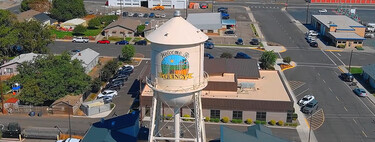
A 27 meter neighbor. The project envisages a building 22 meters high, which will reach 27 meters at its chimney. 84 refrigeration units will be installed on the roof and the complex will have 44 emergency generator sets. In other words, residents are afraid to live with the risks associated with persistent noise, pollutant emissions and fuel savings.
Therefore, the Épinay-sur-Orge Association for the Environment (ASPE) launched a petition on September 24 demanding its abandonment, which had already collected more than 1,200 signatures at the time of publication.
Disneyland Paris four times. The figure that best illustrates the scale of the project is its expected electrical demand: up to 883 gigawatt hours per year at full capacity. That’s more than four times the annual electricity consumption of Disneyland Paris, according to a comparison compiled by French media based on 2025 data from the tourist complex.
To power the servers, a double underground electrical connection of nine kilometers to an RTE substation in Marcosis is planned. One point: This is an estimate of maximum future costs, not the electricity the facility is currently using.
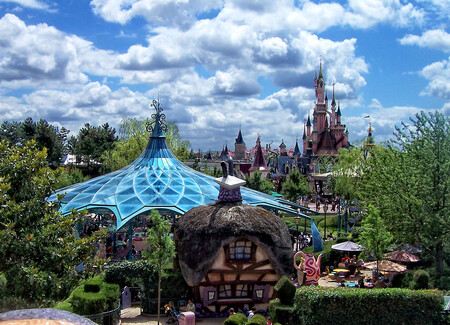
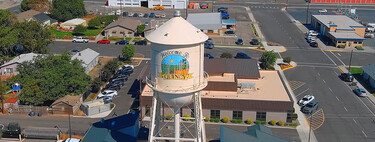
Disneyland Paris
Doubts about health. Neighboring concerns have also reached environmental agencies. In an opinion published on September 3, the French Regional Environment Authority (MRAe) considered the study of possible effects on health insufficient, especially due to noise, emissions from generators and potential leaks of refrigerants.
Goodman maintains that the project must adhere to strict regulations and be subject to state oversight. Residents are preparing complaints for a public inquiry scheduled for mid-November, a critical stage before approval of the facilities can progress.
Paris is full of data centers. Balenvilliers is part of a much bigger transformation. According to a count compiled by Le Parisien, the Ile-de-France region has 213 data centers, existing or planned, spread over 139 locations.
Essonne is particularly attractive due to its available land, density of fiber optics and its high-voltage electrical connections. Proximity to Paris and large business clients explain why former industrial and logistics facilities are being transformed into large-scale digital infrastructure.
AI Bill. No doubt, the rise of AI is accelerating this expansion. In Marcoussis, also in Essonne, Data4 has a campus with a capacity of 250 MW, while the future AI campus in Fouju envisages a capacity of more than 1.4 GW. These are levels that illustrate the growing pressure on the French electricity grid and the need to plan where these facilities are located.
The debate extends to the land occupied, the availability of energy for other uses, and the use of heat generated by servers.
What will benefit the municipality? The local authority highlighted some possible compensations from the Balenvilliers project: the announcement of around 100 jobs, the transfer of plots of land to build a health center and municipal offices, and the possibility of reusing some of the heat from the servers in nearby agricultural facilities.
Neighbors, of course, question the extent of these benefits and fear that the inconvenience will fall mainly on those who live next to the compound. For all these reasons, the issue will remain open during the administrative process, a public investigation that is convened from November 16 to December 18, 2026 and whose holding is not equivalent to a specific sanction.
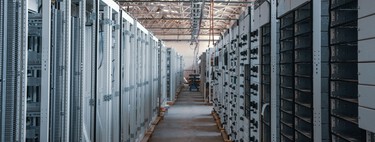
One more thing. The case epitomizes an increasingly visible contradiction in the expansion of artificial intelligence: The infrastructures that support digital services require large amounts of electricity and physical space, and it seems that someone must live with them, or “carry the dead.”
In Balainvilliers, a family that has lived for more than a quarter of a century next to a plot where an installation is now being planned that is capable of consuming no less than four times the electricity. the monster Disneyland is like Paris.
Picture | Ian Karadek, Andrei Dan Suciu
In Xataka | One company is building the Tesla of excavators: physical AI and lots of sensors to lift data centers
In Xataka | Amazon is doubling down on its commitment to nuclear power and has announced a new plant in Indiana for its data centers