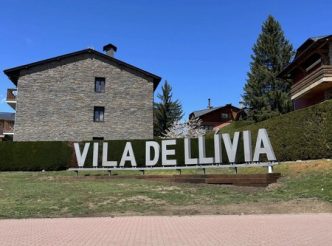
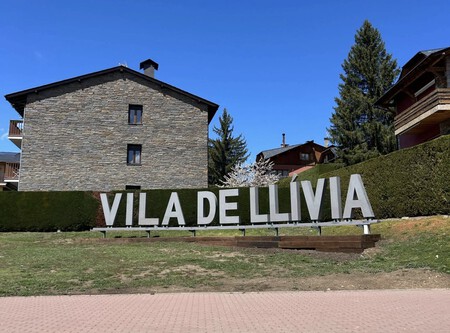
There are few border disputes in Spain, such as Ventoros de Balerma or the eternal fight between Teruel and Cuenca for a handful of hectares of land. But, of them all, the most surprising is a Spanish villa isolated in France. It seems designed to test the nerve of a cartographer. Llívia is a Spanish municipality located in the heart of French Cerdanya, completely surrounded by France and connected to the rest of Spain by a road that crosses French soil. This is not an error on the map, but the pure consequence of a diplomatic negotiation in the 17th century.
The story is usually summarized this way: When Spain had to cede the 33 cities of Cerdania to France, its negotiators argued that Livia was a city, not a city. But what is interesting here is its history, because it goes beyond mere discussion.
24 years war. To understand this, we need to go back to 1659. Spain and France had been engaged in a war for European supremacy since 1635, which ended with the Treaty of the Pyrenees signed on Pheasant Island in Bidasoa. Spain ceded Roussillon and Conflent, among other territories, to France, but the route to Cerdania was put on hold because historical boundaries, local jurisdictions, and geography did not fit. The treaty allowed commissioners from both crowns to decide which territories passed to France.
The National Historical Archive, through PARES, distinguishes between the peace of 1659 and the subsequent treaty that finalized the division of Cerdagon, a process that Alice Marcet studied in Annales du Midi in 1981. Negotiations had to be done on the border ground.
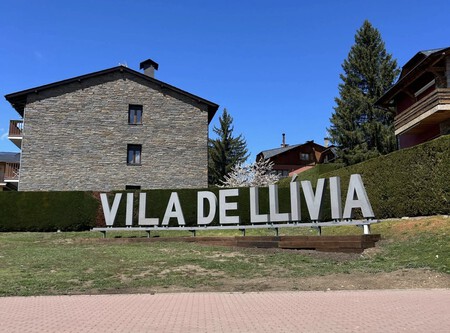
magic word Llívia had a long history as a strategic center of Cerdanya and received the title of city under Charles I in 1528 (I recommend reading more on the history of the municipality). This gave the Spanish negotiators an argument: the treaty spoke of the city and not of Livia. The difference was then the legal department. It was valid.
And it worked, yes. According to historian Augusti Alcobero, the Commission of Experts concluded on May 31, 1660 that 33 cities would go to France, and France recognized the exception of Livia on November 12, 1660, a year after the original treaty. That day the Treaty of Livia was signed, the text of which released the cities. This does not mean that everything was reduced to one word, because there was a discussion of jurisdiction and historical rights, but the title of the city was the decisive part.
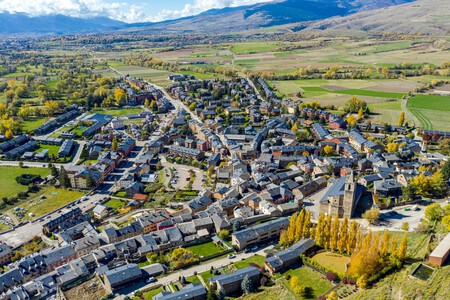
In the middle of France. The result is a municipality surrounded by French territory of about 13 square kilometers. It’s not a physical island, it’s an enclave: by road, you have to cross France to get to the rest of Spain. This road has a special regime, although it was not born in 1660: the Third Treaty of Bayonne in 1866, according to Wikipedia, declared it free circulation to facilitate access to the Livia pastures on French soil.

stop fighting In the early 1970s, France installed stop signs on those streets, forcing the French to give way, and residents repeatedly tore them down, claiming it violated their freedom of movement. The documentary ‘Crazy Borders’ documents this well: it may seem like a ridiculous fight, but the French were wrong.
The so-called “stop war” lasted until the eighties: Spain financed a bridge over a French highway, and France changed priorities for another crossing. A traffic signal has become a matter of sovereignty.
Historic Pharmacy. Livia has another uniqueness: the Esteva Pharmacy, whose collection is preserved in the Municipal Museum. It is presented as one of the oldest in Europe, dating back to the early 15th century and headed by the same family from the beginning. But it is advisable to separate tradition and documentation. The Municipal Museum says the first record of a pharmacy in the city dates back to 1594.
A study published in 2025 maintains that both issues, medieval origins and continued family property, were refuted in the last third of the 20th century. The legend doesn’t have to be accurate for heritage to be extraordinary: the furniture, containers, equipment and books remain an exceptional testimony to the pharmacy’s history.
In any case, Livia’s story is often told as a diplomatic triumph for a word, and there is some truth in that. But also note that European borders do not always follow natural accidents: they are the result of wars, treaties and legal divisions that seemed reasonable at the time. Livia survived the Partition because its status as a city allowed it to preserve its exceptions. Thus, today it continues, with great respect, Spanish.
Picture | Google Maps, Kasia Lech, Flickr
In Xataka | NATO has designed a nightmare for the day Russia crosses the border: turning it into the most expensive traffic jam on the planet.