About 40 years ago, a group of biology professionals captured the last free-flying California condor, thus completing the tragedy: the species was officially extinct, at least in the wild. However, this capture was for a good purpose: the United States Fish and Wildlife Service thus began programs to restore it. Condor inventories exceeded 600 specimens for the first time at the end of last year, with about 400 already in the wild.
But that recovery cost blood, sweat and tears. Well, it has to be said: it involved a lot of money, conflict and a lot of debate about the value of maintaining biodiversity. At the UN Biodiversity Conference in Yerevan yesterday, October 30, the question was discussed: who decides which species to save and who bears the costs. And what one person is missing from that conversation: local communities and indigenous peoples. They are the ones who suffer the most, but their role in decision-making is complimentary.
We want to save species but don’t know how. In 2022, countries signed the Kunming-Montreal Global Biodiversity Framework, which aims to protect 30% of the planet’s land and seas, halt human-caused extinctions, and raise $200 billion a year by 2030. This agreement does not specify which species to save, but it does specify all national funds and which national funds are designated.
B side of conservation. Let’s return to the case of the condor because it is a classic example to illustrate this: it went from 22 birds in 1982 to more than 600 and was also criticized for cost, for land use restrictions in rural communities and for the ban on the use of lead ammunition in opposition to hunting groups, one of the causes of death.
The return of wolves to Europe has not been without controversy: the coexistence takes a toll, and complaints and pressure from herders have led to their hunting being allowed in some areas of Spain, although there are currently EU funds to protect livestock. There is an extreme case of “human cost” in Tanzania, where the Maasai have for years resisted orders to abandon their land because they are in a conservation area, the Ngorongoro Conservation Area.
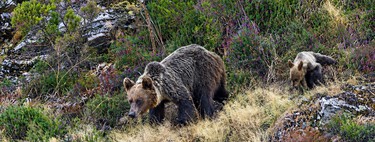
And in Spain. In addition to wolves, there are other cases of recovery of species such as the Iberian lynx, which went from less than a hundred specimens in 2002 to 2,663 censused in the peninsula in 2025, a figure that the ministry itself considers minimal. In fact, the IUCN has downgraded the threat from “endangered” to “vulnerable”. Like the condor, much of the blame for its comeback lies in captive breeding and reintroduction, and like it, it has had little success: 77.9% of recorded deaths are due to roadkill. In short: for it to be guaranteed support, options must be explored within the infrastructure to protect them.
The bearded vulture, which lives in the Pyrenees from Navarre to Catalonia, followed the same path: in 1986 it disappeared from Andalusia, leaving about 40 pairs in the Pyrenees, and today continues to reintroduce in Andalusia, Picos de Europa and the Iberian and Central System. As with the condor, SEO points to the problem of lead in hunting ammunition in addition to birdlife poison. And again, its recovery required human action: the Picos de Europa LIFE project included anti-venom patrols, feeders with carrion supplies, and a network of schools. Because protecting the species is only half the job, the other half consists of maintaining the conditions and local involvement so that they allow the species to establish itself and not fall again.
Why is it important?. Because a million species across the planet are at risk of extinction and we’re already late on our goal. Taking into account that the budget is limited, it is necessary to choose what to protect and what to leave, and the choice is not completely neutral: according to a study analyzing more than 14,000 projects between 1992 and 2016, five groups of mammals (primates, carnivores, whales, elephants and 6% of rhinos) received funding. The rest, for everything else.
However, ugly ducklings were plants and invertebrates: despite being essential for pollination, they accounted for only 6.6%. A friendly reminder that neglecting pollinators threatens both plant diversity and what reaches our plates.
In Xataka | In 1997 they released 1,541 elk into an old open pit coal mine. 30 years later, there is a herd of 13,000
In Xataka | That’s when the Australian army took out tanks against the Emu… and lost
cover Thomas Fuhrman