
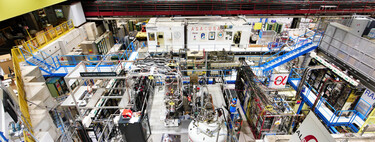
Antimatter is, by definition, an experimental nightmare. And it’s a nightmare because the moment it comes into contact with ordinary matter, both are destroyed in a flash of energy, isolating it as one of the greatest technological challenges of modern science. But that changed thanks to a team of physicists who managed to capture a single positron, the electron’s antiparticle, and trap it for months.
It is an achievement which is published in the newspaper Physical review letter And which is presented as a way to test the pillars based on modern physics. And this is fundamental, since for the leader of the research, Gérard Gabrieles, “if it turns out that they are not the same (electron and positron), it will be the greatest discovery of physics of the last century.”
The art of hunting. To understand the enormity of this work, you need to know that the team didn’t limit themselves to creating antimatter, but built what they call a “single-positron quantum cyclotron.” And it’s something that borders on science fiction, as one researcher points out.
And it’s no surprise, because the positron is born from a radioactive source of sodium-22 that emits a lot of energy, and to study it, scientists need to cool it down to 300 millikelvin, just a fraction of a degree above absolute zero. That is, we are talking about reducing its power by more than ten orders of magnitude in a very short period of time.
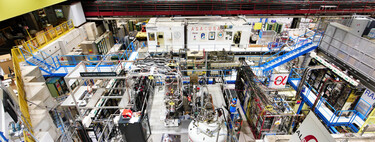
magic trick It’s really how they manage to put it in a magnetic trap so they can study it. And here the researchers allow the positron to bond briefly with an electron to form positronium, an exotic and electrically neutral atom. Thus, with no charge, this atom can pass through a tiny hole of only 625 micrometers into a “trap” where an intense electric field ionizes the atom so that the positron is completely trapped.
But it is not easy, since we are talking about a process so complex that it takes 8 to 11 hours to load a single positron. However, when this is achieved, we have the flexibility of the particle and are stuck for months to study it.
The reason? There’s a reason behind so much trouble catching a particle, and the answer lies in the mystery that haunts so many of us: Why do we exist? According to the Standard Model of particle physics, the Big Bang should have created an equal amount of matter with antimatter, but the universe today is made of matter. That’s why something must have broken that symmetry, and physicists have been searching for the anomaly for decades.
If we are a little more specific, with this equilibrium, an electron and a positron must be perfect reflections, having the same mass and a magnetic moment, known as the ‘g factor’, of identical but opposite sign.

what we knew In 2023, this same team at Northwestern University was able to measure the electron’s g factor with an astonishing precision of 0.13 parts per billion. However, the current record comparing electrons and positrons dates back to 1987, which established that they are equal to an accuracy of 2.1 parts per billion.
With this new quantum cyclotron, the positron is so perfectly isolated that the researchers estimate that they will be able to improve the accuracy of measuring its magnetic moment by about 30 times.
There is time left. With this achievement, what we have on the table is that the machine that was invented works, but we still don’t have that high precision measurement. Now, the season is open so that, once the “beast” is tamed, anyone who wants to can find some meaning behind it to extrapolate the big questions we have.
Picture | Atlantic environment
In Xataka | CERN has pulled off an incredible stunt: its latest invention has the potential to revolutionize quantum computing