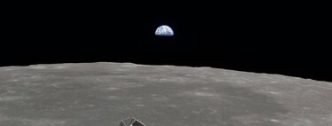
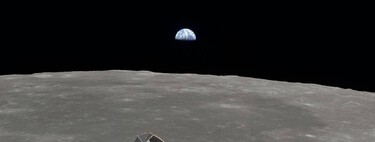
Most unmanned missions share the same hurdle: samples or data must be sent back to Earth for analysis. This is something that is slowly being resolved. There are already rovers equipped with internal laboratories that run all kinds of experiments on site. However, things change with computer processing. Data must be processed on our planet with a high dependence on bandwidth. To solve this, the HPE company developed the Spaceborne Computer-4, a high-performance computing system designed to operate directly on the moon.
hardware. The 1.2 kg hardware package consists of a lightweight, self-contained module with low-power CPU and GPU without fans. The latter is important for resistance to lunar conditions; Whereas, the more pieces there are, the easier it is to be damaged by elements like dust. Additionally, the Spaceborne Computer-4 features a Kioxia solid state drive, a storage drive with no moving parts that stores data on flash memory chips.
The tests. Once on the moon, this system will run several tests. Initially, it will be responsible for performing performance tests (benchmarks) in lunar conditions. On the other hand, it will run language models with Retrieval Augmented Generation (RAG), which queries documents before providing answers. It will test a LiDAR data processing system for mapping and navigation, and deploy and operate various applications to see if it can be reliably done on the Moon.
when. All equipment will be launched within NASA’s CLPS program. It will be part of Astrolab’s FLIP rover, which will travel on Voyager Technologies’ Griffin-1 lander. If all goes well, this set will be launched to land on the lunar south pole in late 2026.
other partners. In addition to HPE hardware and software, the mission will also include AI experiments developed by NASA. The algorithm in question is called FLUID and consists of a federated learning system that combines three neural networks trained from Earth, the Moon and the International Space Station. A consistent language model for searching and interpreting documents on board will also be tested. And of course, just as computer systems must be secured on Earth, there will come a time when it will be essential on the Moon. For this reason, Deloitte will provide a cyber security system called Silent Shield, which is responsible for detecting anomalous activities and intrusions in near real time.
All this, if it works properly, will be useful for unmanned missions, but also for the future development of inhabited bases on the Moon. Astronauts will have their own data processing systems, so data will flow much faster than a permanent connection to Earth.
Picture | Astrolabe
In Xataka | We knew there was water on the moon, but not why some craters were empty. Finally we have the answer